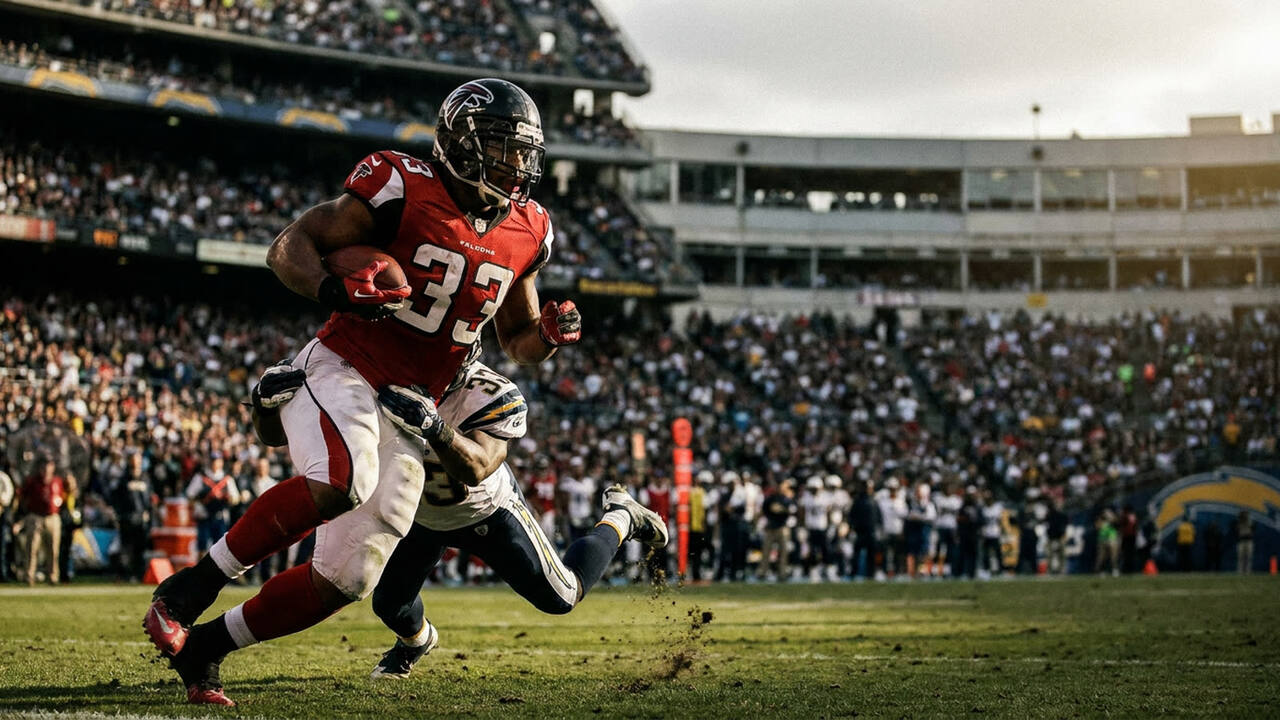
Michael Turner earned approximately $30 million during his NFL career, made a Pro Bowl, and once led the league in rushing touchdowns. Now, seventeen years after his final snap, the former Atlanta Falcons star is navigating the grim machinery of bankruptcy proceedings — a fate that, according to various studies, befalls somewhere between 15 and 78 percent of retired NFL players within a decade of leaving the game, depending on whom you ask and how you define financial distress.
The exact circumstances of Turner's filing remain partially obscured by legal filings, but the broad contours are familiar to anyone who has followed the post-career trajectories of professional athletes. A combination of lifestyle inflation, questionable investments, hangers-on with expensive ideas, and the sudden cessation of income that comes with retirement at 30 creates a perfect storm that financial literacy courses cannot fully address.
The arithmetic of athletic wealth
Turner's career earnings sound substantial until you apply the relevant deductions: agent fees (typically 3 percent), taxes (often exceeding 40 percent when you account for playing in multiple states), and the cost of maintaining the entourage and lifestyle that successful athletes are culturally expected to sustain. His actual take-home over a nine-year career was likely closer to $15 million — still life-changing money, but not the generational wealth it appears to be on paper.
The problem compounds when you consider that NFL careers average just over three years, and even successful backs like Turner are typically finished by their early thirties. That means whatever wealth they've accumulated must stretch across five or six decades of post-football life, a mathematical reality that conflicts sharply with the spending patterns established during peak earning years.
Why the league's interventions keep failing
The NFL has implemented financial education programs, rookie symposiums, and various support structures designed to prevent exactly this outcome. Yet the bankruptcies keep coming — from Antoine Walker to Warren Sapp to Vince Young to now Turner. The programs fail for the same reason that telling teenagers about compound interest fails to prevent credit card debt: knowledge is not behavior, and behavior is shaped by environment.
Professional athletes exist in an ecosystem that actively encourages financial destruction. They are surrounded by people whose livelihoods depend on the athlete spending money — agents, managers, family members, friends, business partners with can't-miss opportunities. The culture of professional sports valorizes conspicuous consumption as evidence of success. And the psychological transition from being celebrated and compensated at extraordinary levels to being ordinary and unemployed is brutal in ways that no seminar can adequately prepare someone for.
Our take
Michael Turner's bankruptcy is not a story about personal failure or financial illiteracy, though both may have played roles. It is a story about a system that extracts extraordinary physical labor from young men, compensates them in ways that create the illusion of permanent security, and then releases them into a world they are structurally unprepared to navigate. The NFL generates billions annually; it could afford to structure player compensation in ways that genuinely protect long-term financial health — mandatory deferred compensation, lifetime financial planning, post-career support systems with teeth. It simply chooses not to. Turner's story will repeat itself, because the incentives that produce it remain unchanged.