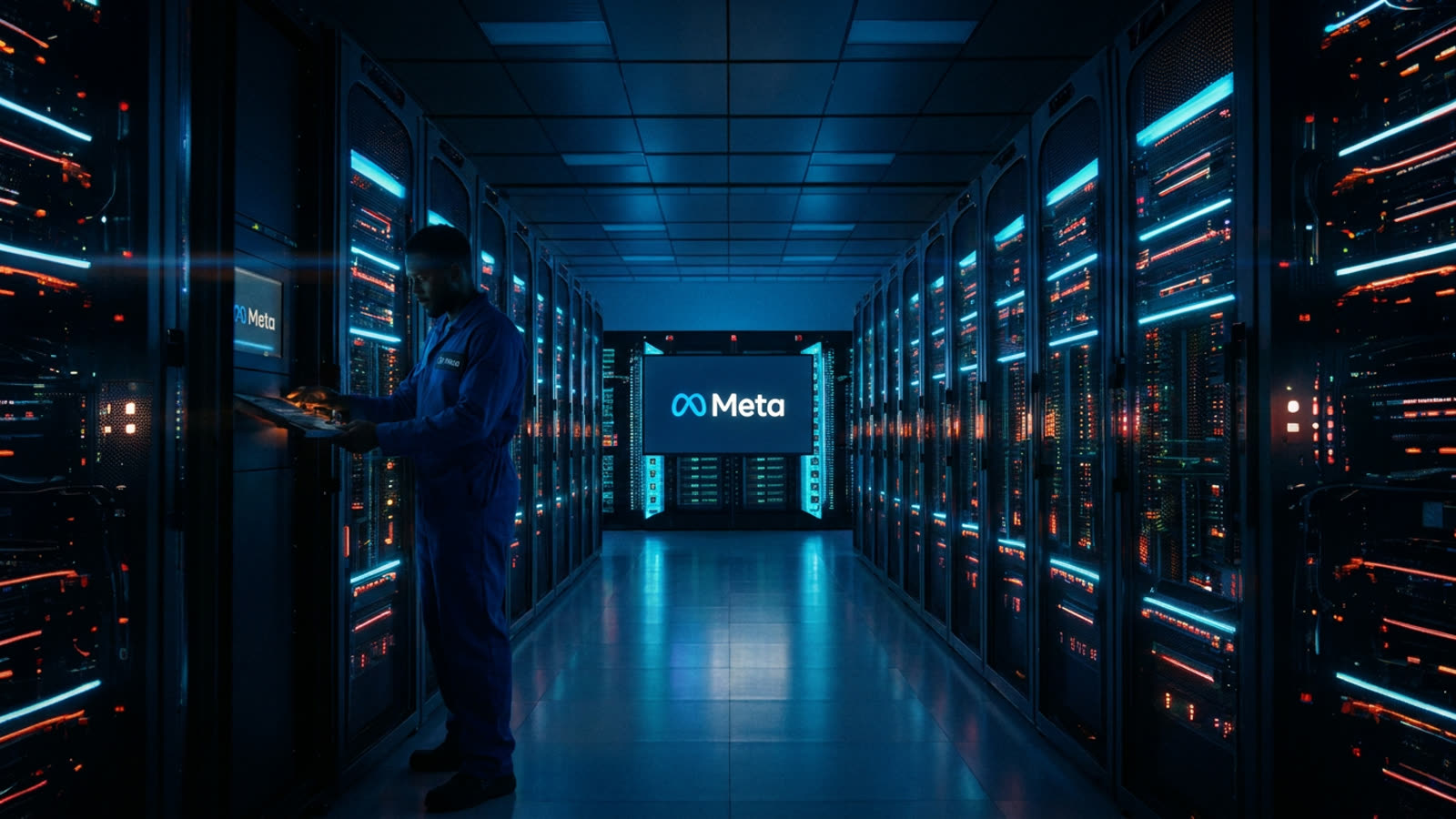
Meta's decision to commercialize its surplus AI compute capacity marks a philosophical shift as significant as any in the company's two-decade history. The firm that built its fortune on attention arbitrage—harvesting eyeballs and selling them to advertisers—now wants to become a utility, renting raw computational power to anyone who needs it.
The move follows SpaceX's playbook of turning infrastructure overcapacity into a secondary revenue stream, but the implications for Meta are more profound. Elon Musk's rocket company always had launch services as its core business; excess Starlink bandwidth was gravy. For Meta, advertising remains the overwhelming majority of revenue. Compute rental represents something closer to a hedge against its own obsolescence.
The hardware gamble pays unexpected dividends
Meta has spent aggressively on AI infrastructure over the past several years, building out data centers stuffed with Nvidia's most advanced chips. The original justification was internal: training foundation models, running recommendation algorithms, powering the nascent metaverse. But AI workloads are spiky. Training runs end. Inference demand fluctuates. The result is idle capacity—expensive silicon sitting dark.
Rather than let those GPUs gather metaphorical dust, Meta now proposes to rent them out. The customer base is obvious: startups that cannot afford their own clusters, enterprises experimenting with AI before committing to infrastructure, researchers priced out of the hyperscaler market. Amazon, Microsoft, and Google already dominate cloud compute, but their AI-specific offerings come with platform lock-in and premium pricing. Meta could undercut them on price while offering comparable hardware.
The advertising insurance policy
The strategic logic runs deeper than opportunistic revenue. Meta's advertising business faces structural headwinds: Apple's privacy changes, regulatory pressure in Europe, the slow erosion of attention to short-form video competitors. AI itself threatens to disintermediate the ad model entirely—if users can get answers from a chatbot, they may never see the sponsored post.
By becoming an AI infrastructure provider, Meta hedges against a future where its consumer products matter less. If the AI boom continues, compute demand will grow regardless of which applications win. Meta would collect rent from the entire ecosystem rather than betting solely on its own products. It is the picks-and-shovels play executed by a company that already owns the mine.
The competitive moat question
Skeptics will note that compute is a commodity. Amazon Web Services, Microsoft Azure, and Google Cloud have years of operational expertise, enterprise sales relationships, and geographic distribution that Meta lacks. Nvidia itself is expanding into cloud services. Why would customers choose Meta?
The answer may lie in specialization. Meta's infrastructure is optimized for AI workloads specifically—large-scale training and inference rather than general-purpose cloud computing. If the company can offer superior performance per dollar for machine learning tasks, it carves out a defensible niche. The risk is that AI workloads eventually commoditize too, leaving Meta as just another undifferentiated compute vendor.
Our take
This is Zuckerberg's most interesting strategic move in years—not because it will transform Meta's financials overnight, but because it reveals how seriously the company takes the possibility that its core business is a melting ice cube. Turning excess GPUs into a revenue stream is clever. Positioning the company as essential infrastructure for an AI-dominated future is existential planning. Whether Meta can execute against entrenched cloud giants remains uncertain, but the willingness to try suggests a company more adaptable than its critics assume.