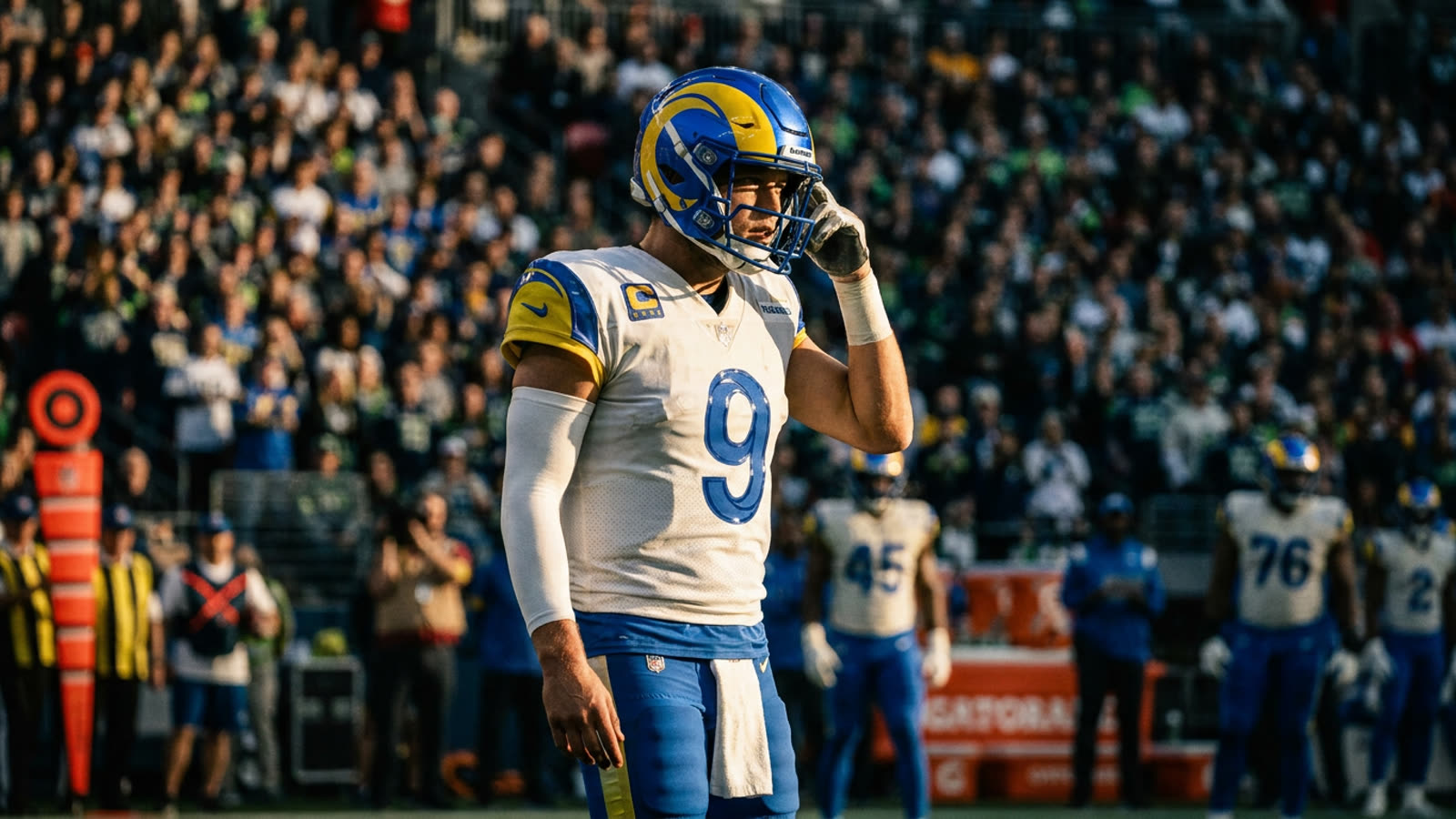
The Los Angeles Rams have decided that Matthew Stafford, who will turn 39 during the 2026 season, is worth $55 million for one more year of service. This is either a testament to his enduring value or a confession that the franchise has no viable alternative—probably both.
The extension, first reported by ESPN sources, makes Stafford one of the highest-paid quarterbacks in the league on an annual basis, a distinction that would have seemed improbable when he was grinding through losing seasons in Detroit. But Stafford delivered Los Angeles a Super Bowl in 2022, and in the NFL's current economic reality, that buys you remarkable leverage even as your arm enters its fifth decade.
The math of desperation
The Rams' calculus is straightforward, if expensive. Sean McVay's offense remains built around a quarterback who can push the ball downfield and process information quickly. Stafford, despite mounting injury concerns over recent seasons, still checks both boxes. The alternative—drafting a replacement or pursuing the thin free-agent market—would require a multi-year rebuild that neither McVay nor the front office appears willing to stomach.
The $55 million figure also reflects the broader inflation in quarterback contracts. What once seemed like outlier money for Patrick Mahomes has become the baseline for any starter with a winning playoff record. Stafford's Super Bowl ring functions as a permanent salary multiplier.
The durability question
Stafford has absorbed punishment throughout his career, from his early years behind porous Detroit offensive lines to the hits he's taken in Los Angeles's increasingly aggressive scheme. He's dealt with elbow issues, back problems, and the general accumulation of damage that comes with 15 NFL seasons. The one-year structure of this deal acknowledges that reality—the Rams are buying a single season of Stafford's services, not betting on his long-term future.
For Stafford, the arrangement offers security without commitment. If his body holds up, he'll have earned another massive payday. If it doesn't, he walks away having maximized his earnings in the twilight of his career.
Our take
This is the NFL's version of a luxury tax payment—the Rams are spending premium dollars to maintain competitive relevance rather than enduring the painful process of finding Stafford's successor. It's defensible, even smart, given McVay's window and the organization's recent history. But it also highlights the league's fundamental quarterback problem: there simply aren't enough good ones, and the teams that have them will pay almost anything to keep them. Stafford at 38 commanding $55 million isn't an anomaly. It's the market working exactly as designed.