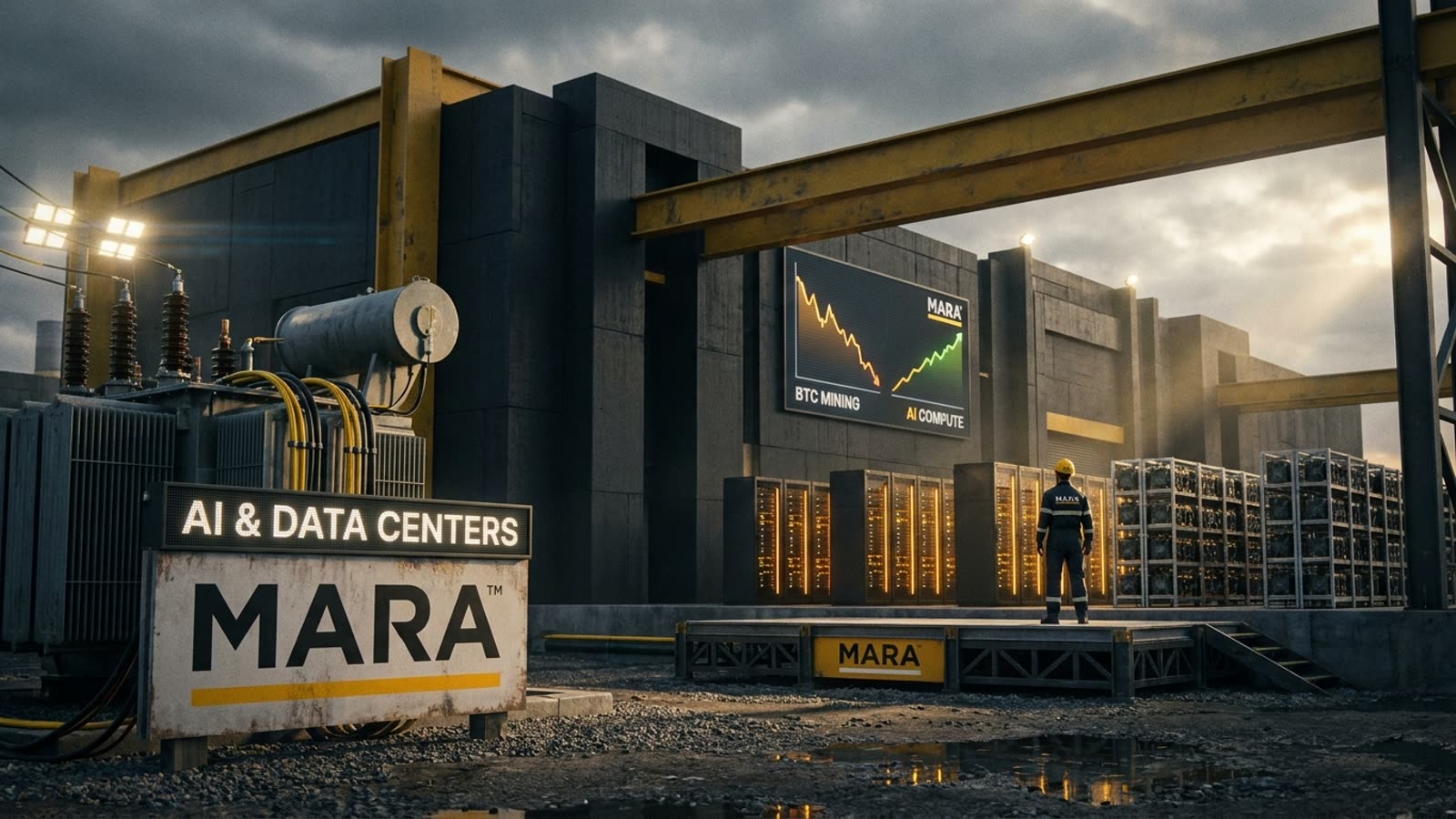
The thesis is brutally simple: when the world's largest Bitcoin miner would rather own a power plant than hold Bitcoin, the original crypto dream is officially over.
MARA Holdings, the publicly traded mining giant that once embodied the HODLer ethos, disclosed this week that it liquidated $1.5 billion worth of Bitcoin in Q1 2026 while posting a staggering $1.26 billion loss. The proceeds didn't go toward buying the dip. They went toward acquiring energy infrastructure and retiring debt—a pivot that tells you everything about where the smart money in crypto actually sees value.
The Great Rebranding
MARA isn't alone in this migration. Across the mining industry, companies that spent years accumulating specialized ASIC hardware and Bitcoin reserves are now repositioning themselves as AI infrastructure plays. The logic is straightforward: the same cheap electricity and cooling systems that mine cryptocurrency can power the GPU clusters that train large language models. But while Bitcoin mining produces an asset of volatile and contested value, AI compute produces something corporations will pay premium rates for today.
The company's decision to acquire a power plant rather than more mining rigs reveals a fundamental reassessment. Energy itself—not the digital tokens it produces—has become the core asset. In a world where AI companies are desperate for megawatts and willing to sign long-term contracts, owning generation capacity beats owning Bitcoin on a balance sheet.
The Numbers Don't Lie
That $1.26 billion quarterly loss deserves scrutiny. Bitcoin has traded in a relatively stable range this year, so the loss isn't purely mark-to-market carnage. It reflects the brutal economics of mining at scale: rising difficulty, compressed margins, and the relentless capital expenditure required to stay competitive. When your core business produces losses of that magnitude, selling the product to fund a strategic pivot isn't capitulation—it's survival.
The timing also matters. With inflation jumping on war-driven energy costs and the Federal Reserve signaling continued caution, risk assets face persistent headwinds. MARA's management appears to have concluded that Bitcoin's upside doesn't compensate for holding an unproductive asset when productive alternatives exist.
Our Take
There's something poetic about Bitcoin miners—the true believers who were supposed to secure the network and accumulate sats forever—becoming the first to abandon ship for AI's greener pastures. MARA's move isn't a betrayal of crypto principles; it's an acknowledgment that those principles never quite aligned with shareholder value. The company has made a rational calculation that electrons flowing to Nvidia chips are worth more than electrons solving cryptographic puzzles. They're probably right. And if the industry's largest miner thinks so, the retail investors still clutching their hardware wallets might want to ask what they know that MARA doesn't.