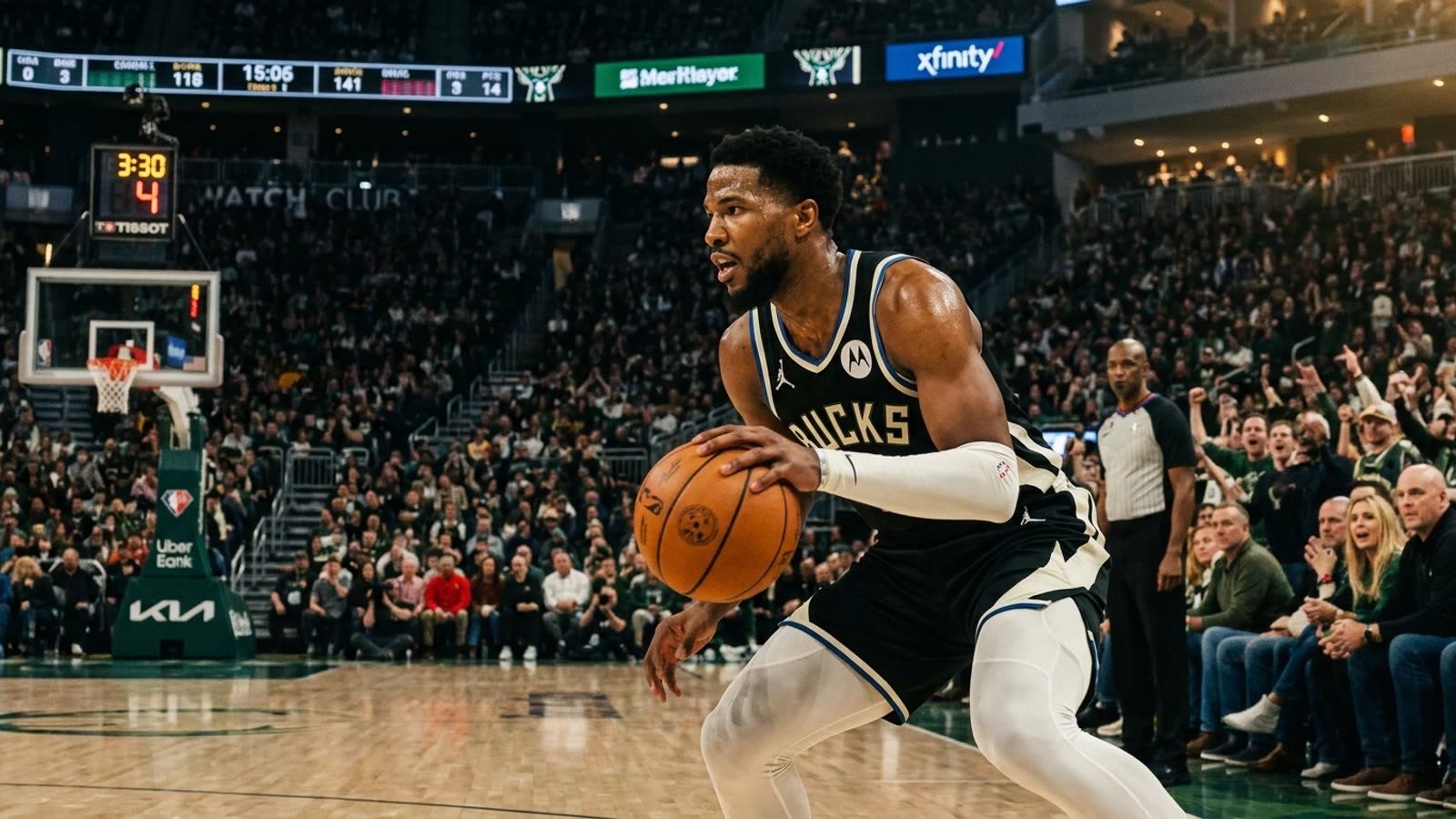
The Department of Justice does not negotiate plea deals with innocent men. That Malik Beasley's attorneys confirmed Friday that the former NBA guard is working toward such an agreement tells us everything we need to know about where this case is headed—and what it reveals about the league's increasingly fraught relationship with legalized gambling.
Beasley, who last played meaningful minutes in the NBA during the 2024-25 season, stands accused of manipulating his own statistics to help associates win prop bets. The scheme allegedly involved Beasley deliberately inflating or suppressing specific stat categories—assists, rebounds, three-point attempts—based on the wagers placed by his co-conspirators. It is, in essence, the nightmare scenario that gambling skeptics warned about when the league began plastering sportsbook logos across arena floors.
The prop bet problem
The NBA's gambling partnerships have always contained a fundamental tension. The league profits enormously from betting integration—the sponsorship dollars, the engagement metrics, the second-screen addiction that keeps casual fans watching blowouts. But those same prop bets that drive engagement create perverse incentives for players whose stat lines directly determine payouts.
Beasley's case is not the first to expose this vulnerability. Jontay Porter received a lifetime ban in 2024 for a similar scheme. But Beasley's situation carries different weight. He was a rotation player on playoff teams, a $14.5 million-per-year earner at his peak, someone with enough to lose that his alleged participation suggests the temptation runs deeper than desperation.
What a plea means
The negotiation of a plea deal suggests Beasley's legal team sees the government's evidence as formidable. Federal prosecutors do not typically offer deals unless they have cooperating witnesses, documented communications, or betting records that trace directly to the accused. That Beasley is seeking terms rather than trial indicates the paper trail is damning.
The more interesting question is whether Beasley becomes a cooperating witness himself. Gambling schemes rarely involve just one player. If prosecutors are building a broader case against the network that facilitated these bets, Beasley's testimony could implicate others—players, agents, or the sophisticated bettors who identified and exploited willing participants.
The league's uncomfortable silence
The NBA has said nothing substantive about Beasley since the DOJ's investigation became public. This is understandable from a legal standpoint but revealing nonetheless. The league cannot simultaneously trumpet its gambling partnerships as fan engagement tools and acknowledge that those same tools create corruption vectors for its workforce.
Commissioner Adam Silver has long positioned himself as gambling's reasonable advocate, the adult in the room who understood that prohibition was futile and regulation preferable. That argument has merit. But regulation requires enforcement, and enforcement requires acknowledging that the players most capable of manipulation are the ones with the most to gain from it.
Our take
Beasley's plea negotiation is not a crisis for the NBA—it is a clarification. The league bet that legalized gambling would bring more money than problems. For the owners and the television partners, that bet has paid off handsomely. For the players navigating a world where their box scores are currency, the calculation is more complicated. Beasley will likely serve time, lose whatever remains of his NBA earnings, and become a cautionary tale in rookie orientation sessions. The sportsbook ads will continue running during timeouts. The house, as always, wins.