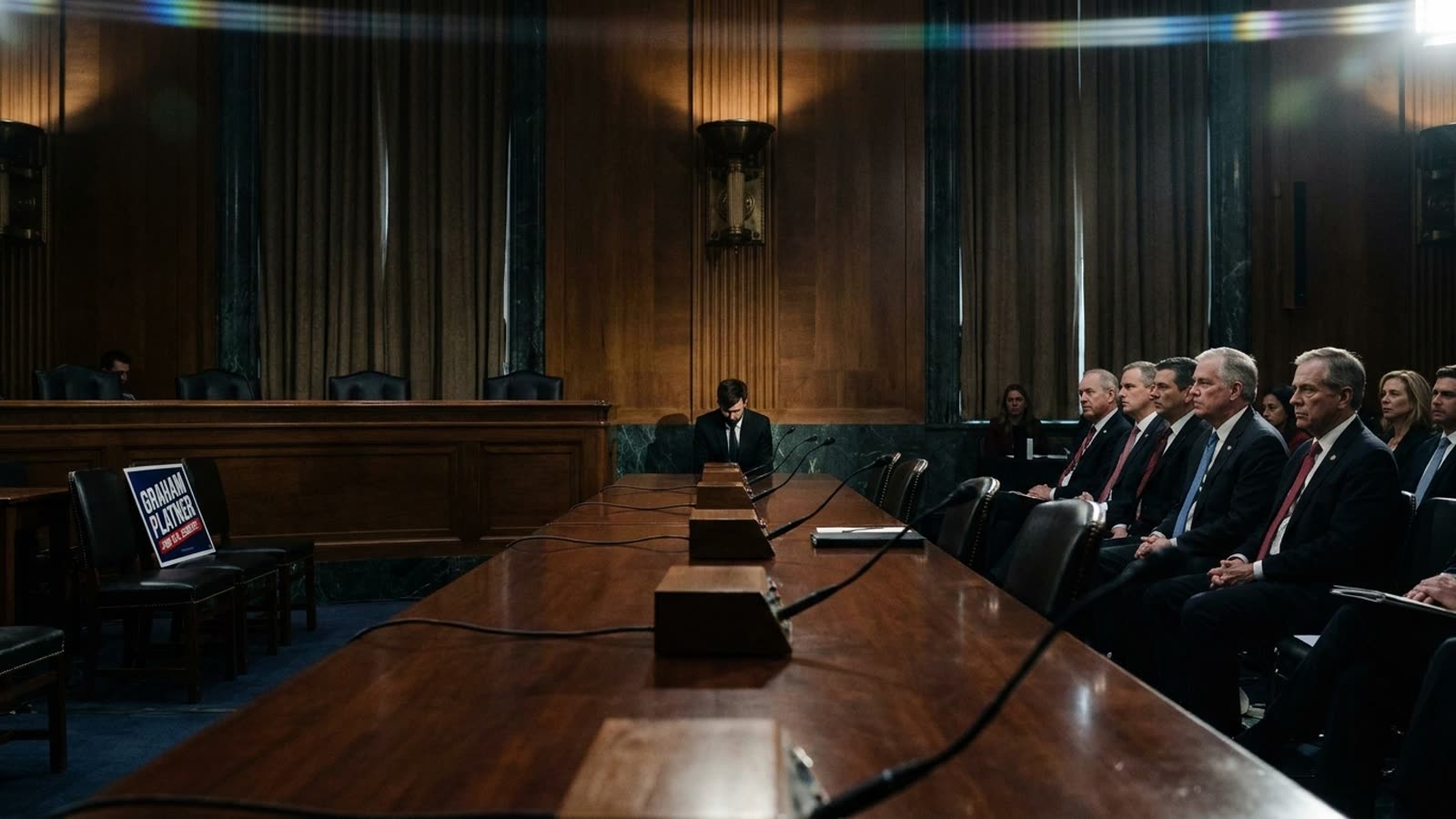
The most damaging opposition research in a political campaign is often the kind that never leaves the building. In Maine's increasingly competitive Senate race, that research came from inside the candidate's own home.
According to TMZ, the wife of Republican Senate candidate Platner flagged sexually explicit text messages her husband had sent to multiple women directly to campaign staff weeks before the story became public. The campaign's response, per the report: containment rather than transparency. Staffers were reportedly instructed to treat the matter as a private family issue, not a liability requiring disclosure to donors or party leadership.
The cover-up calculus
The decision to suppress rather than address the texts reflects a familiar political gamble—that embarrassing personal conduct can be managed if it never reaches voters. It rarely works. The modern media environment, with its overlapping ecosystems of opposition researchers, disgruntled insiders, and tabloid tip lines, makes containment a losing bet. What the Platner campaign bought itself was not protection but delay, and delay that came at the cost of credibility once the story inevitably surfaced.
The wife's role complicates the narrative further. Spouses who flag misconduct to campaigns occupy an impossible position: loyal enough to warn, betrayed enough to document. Her decision to go through official channels rather than leak directly suggests she hoped for accountability within the family and the organization. She got neither.
Maine's Senate math
The state's Senate seat matters beyond its borders. With the chamber balanced on a razor's edge, every competitive race carries national implications. Maine, with its independent streak and split-ticket history, was already a reach for Republicans. A scandal involving a cover-up—not just the texts themselves—transforms a difficult race into a potentially unwinnable one. Voters can forgive indiscretion more easily than they forgive being lied to about it.
Party leadership now faces an uncomfortable choice: continue backing a wounded candidate or recruit a replacement with weeks lost and a primary electorate already fractured. Neither option is good.
Our take
The texts are bad. The cover-up is worse. And the fact that it was the candidate's own wife who tried to force accountability—only to be ignored—adds a layer of personal tragedy to the political malpractice. Platner's campaign made the classic error of assuming that problems managed are problems solved. They are not. They are problems deferred, and deferred problems collect interest.