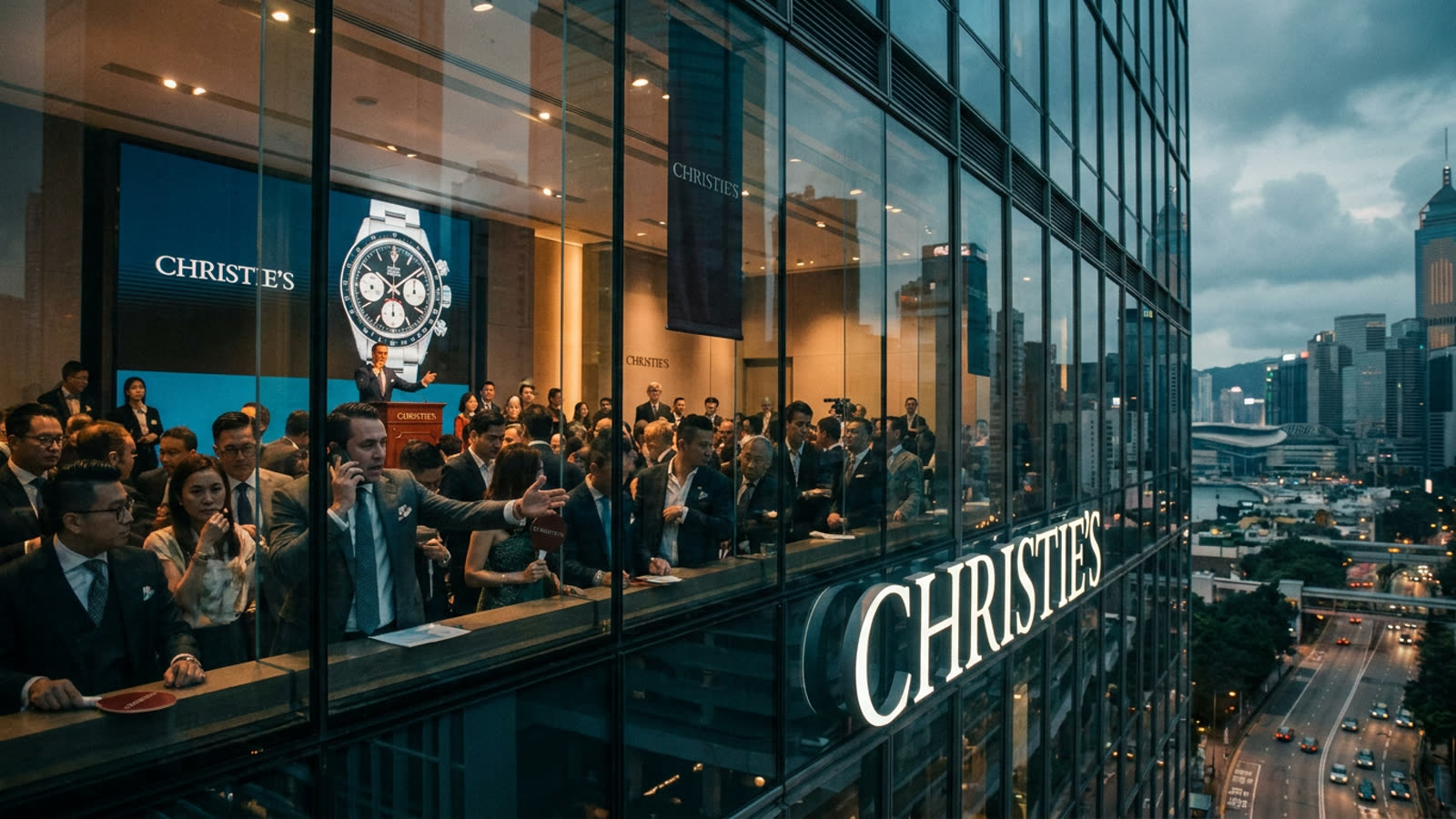
The most expensive wristwatch ever sold at auction—a Patek Philippe Grandmaster Chime—changed hands for $31 million at a Geneva sale. The underbidder, who lost by a single bid increment, was sitting three seats away from the winner. They had dinner together that night.
This is the strange, clubby world of high-end watch auctions, where the same few hundred players gather in Geneva, Hong Kong, and New York to bid millions on vintage steel sports watches and complicated pocket watches from centuries past. The economics of this market are unlike any other luxury category, driven by peculiar dynamics that make it both wildly profitable and surprisingly fragile.
The auction house paradox
Christie's, Sotheby's, and Phillips dominate the luxury watch auction market, but their business model differs radically from how they handle art. Watch departments operate on razor-thin margins—typically 12-15% buyer's premium versus 25% for paintings—yet generate enormous profits through volume and velocity. A good watch specialist can evaluate 100 pieces in a day; an Old Masters expert might spend weeks on a single attribution.
The real money isn't in the commission. It's in the private sales that happen in the shadows of the public auctions. When a collector flies to Geneva for a sale, they rarely leave with just their auction purchases. The houses maintain private selling exhibitions, often in hotel suites, where seven-figure deals happen with a handshake. These off-book transactions can equal or exceed the public auction totals, but they're never reported.
The dealer's dilemma
Professional dealers face an existential challenge in this market. Unlike art, where dealers can cultivate artists and build long-term gallery relationships, watch dealers are essentially high-stakes arbitrageurs. They must spot undervalued pieces at auction, often bidding against their own clients, then flip them quickly before market tastes shift.
The most successful dealers have evolved into hybrid authenticators-influencers. They build Instagram followings in the hundreds of thousands, turning their taste into market-moving power. When a prominent dealer posts about an obscure 1960s chronograph, prices can double within months. This influence creates ethical minefields—dealers often own examples of the very watches they're promoting as the next big thing.
Why geography matters
The watch auction calendar is carefully orchestrated around three cities, each with distinct market dynamics. Geneva remains the emotional heart, where European old money meets new Asian wealth. Hong Kong serves the greater China market, which can absorb unlimited quantities of certain brands but shows zero interest in others. New York attracts American collectors who prefer sporty tool watches over dressy complications.
Timing matters as much as location. The houses learned long ago that scheduling matters: Geneva sales happen in May and November, timed around the Swiss watch fairs. Hong Kong follows two weeks later, allowing dealers to shuttle inventory between markets. This geographic arbitrage—buying in one city to sell in another—can yield 30-40% profits for those who read the room correctly.
Our take
The luxury watch auction market is a fascinating economic experiment in artificial scarcity. Unlike stocks or real estate, the supply of vintage watches is genuinely finite and shrinking—pieces disappear into long-term collections or get damaged beyond repair. This creates a market where inside information and social capital matter more than pure financial resources. The recent emergence of online-only sales and NFT authentication threatens to democratize this closed world, but don't bet on it. The same 200 people who've controlled this market for decades aren't going anywhere. They just might start bidding from their phones instead of paddle number 8.