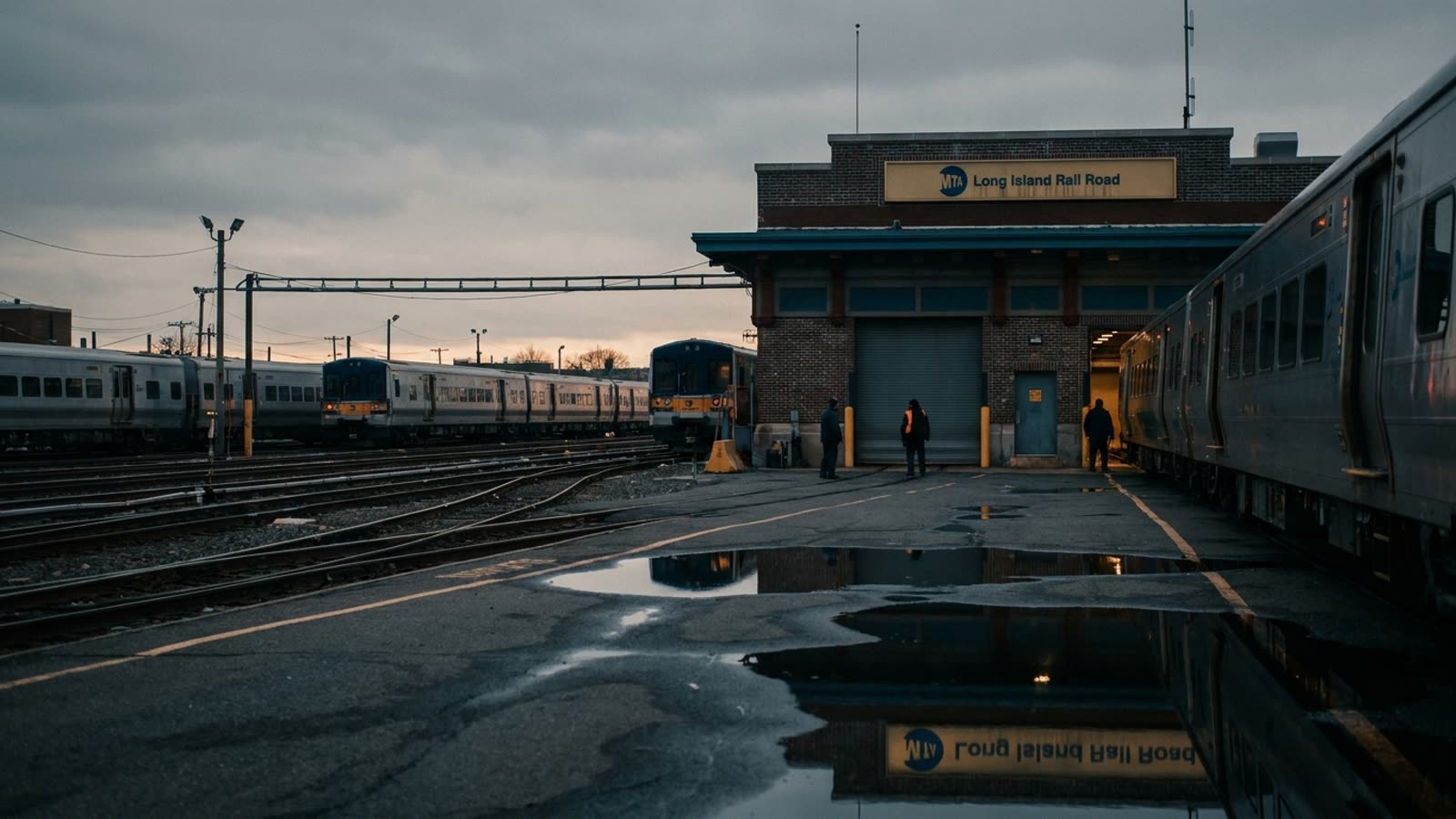
The Long Island Rail Road, the busiest commuter rail system in North America, ground to a halt this weekend after union workers walked off the job for the first time since 1994. The strike follows three years of failed contract negotiations, two federal interventions that went nowhere, and a final week of bargaining that produced nothing but recriminations. For the roughly 400,000 people who depend on the LIRR to reach Manhattan each day, Monday morning will be an exercise in creative problem-solving—or simply not showing up.
The immediate economic damage is substantial. Long Island's economy is deeply intertwined with New York City; the railroad isn't a convenience but a load-bearing wall. When it collapses, so does the daily flow of workers into finance, healthcare, media, and the service industries that keep Manhattan running. Employers are already scrambling to arrange remote work accommodations, but not every job can be done from a kitchen table in Ronkonkoma.
How we got here
The breakdown has been telegraphed for years. The Metropolitan Transportation Authority, which operates the LIRR, has been locked in negotiations with twelve unions representing conductors, engineers, and maintenance workers since 2023. The sticking points are familiar: wages that haven't kept pace with inflation, healthcare costs that keep shifting onto workers, and scheduling rules that management calls archaic and unions call essential to safety. Two Presidential Emergency Boards—the federal mechanism designed to prevent exactly this outcome—issued recommendations that neither side fully accepted. The union wanted more; the MTA said it couldn't afford what was already on the table.
Governor Kathy Hochul, who controls the MTA, spent the final days urging both sides to keep talking. But her leverage was limited. New York law prohibits strikes by public employees, but the LIRR workers are covered by federal railroad labor law, which has different rules and different teeth. When the cooling-off period expired at midnight Friday, the workers were legally free to walk—and they did.
The ripple effects
The strike's timing is particularly brutal. May is wedding season, graduation season, and the unofficial start of summer travel. Jones Beach, the Hamptons, and Fire Island are suddenly much harder to reach. Businesses on Long Island that depend on New York customers will see traffic drop. And the secondary effects on roads will be punishing: the Long Island Expressway, already one of the most congested highways in America, will become a parking lot.
There's also a political dimension. Hochul faces reelection pressure and has staked her reputation on improving the MTA's performance. A prolonged strike makes her look ineffective. Meanwhile, Republicans in Washington are already using the walkout to argue that federal labor law gives unions too much power—a talking point that will intensify if commuters remain stranded into next week.
Our take
The LIRR strike is a failure of imagination as much as negotiation. For three years, everyone involved assumed that a strike was unthinkable, that someone would blink, that the federal process would produce a compromise. No one built a real contingency plan because no one believed they'd need one. Now 400,000 people are paying for that complacency. The workers aren't wrong to want better wages after years of inflation. The MTA isn't wrong to worry about costs. But the inability to find middle ground—despite years of warning—is a reminder that infrastructure isn't just tracks and trains. It's also the willingness to do the hard work of governing before the crisis arrives.