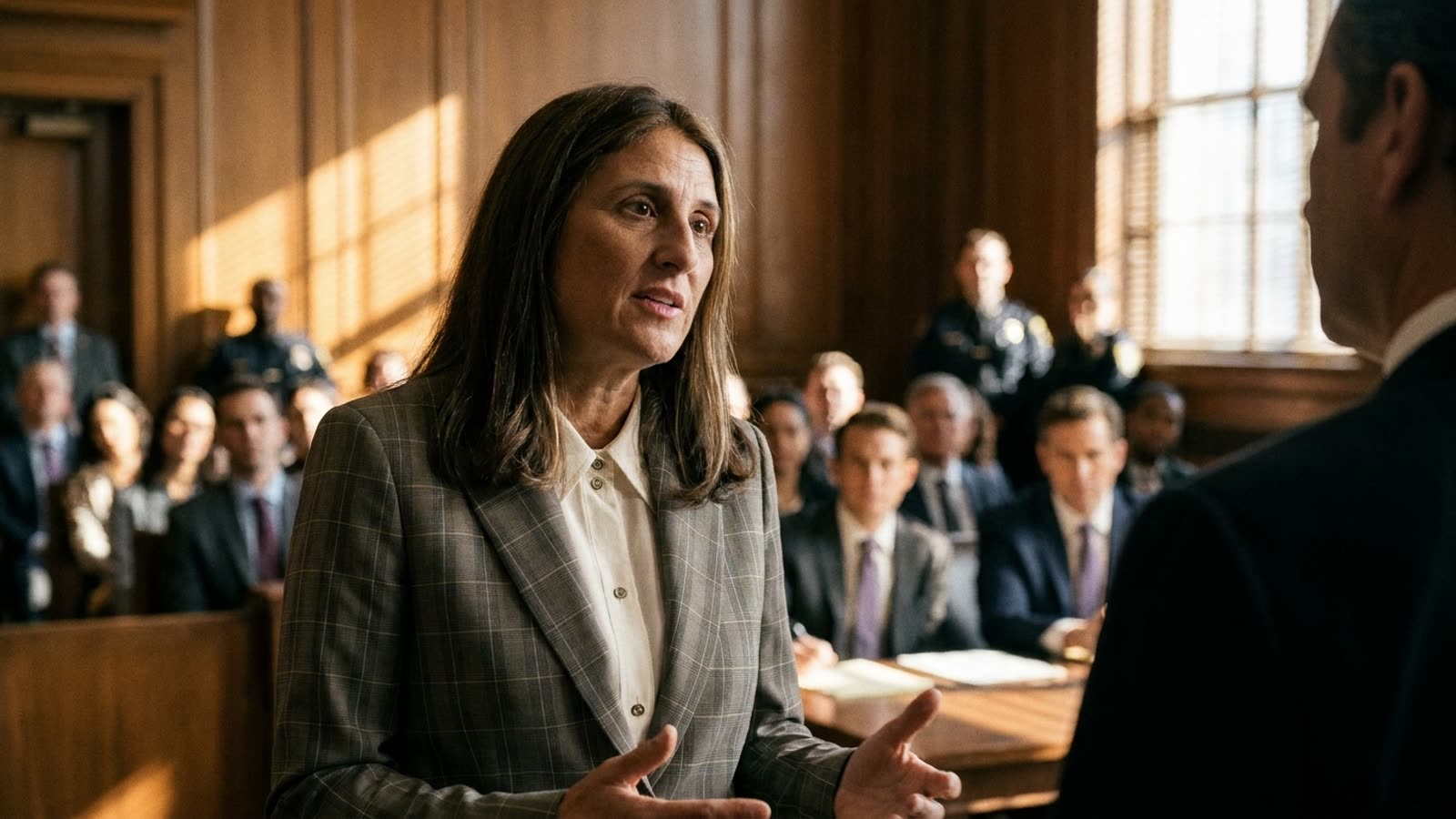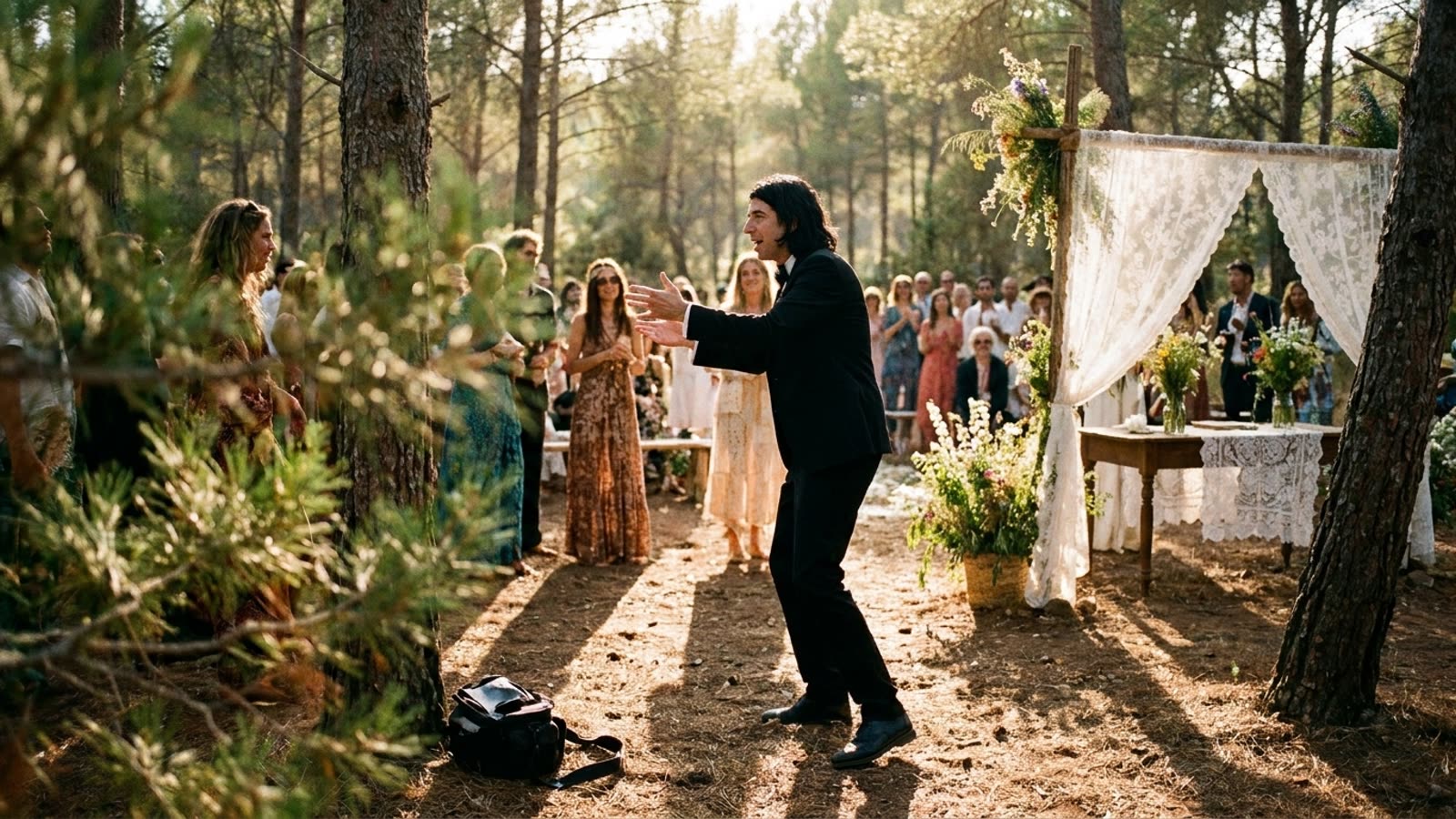
There is a particular kind of confidence required to walk down the aisle without shoes when your father has photographed every major fashion campaign of the last three decades and your mother has styled the covers that defined them. Lola Teller, marrying Freddie Woodruff last weekend in a pine grove on Ibiza, demonstrated that confidence in abundance—and in doing so, offered a quiet corrective to the maximalist wedding industrial complex that has consumed the fashion world's attention in recent years.
The ceremony was exactly what you would expect from the offspring of Juergen Teller and Venetia Scott, which is to say: nothing like what you would expect from a fashion scion wedding in 2026. No destination takeover of an Italian palazzo. No custom couture requiring six fittings across three continents. No influencer seating chart optimized for Instagram grid potential. Instead: a pine grove, bare feet, lace dresses with the easy drape of something borrowed rather than something commissioned, and dancing that reportedly continued until the Balearic sun made its reappearance.
The Anti-Spectacle Spectacle
Lola walked down the aisle flanked by both parents—a detail that reads as sweetly traditional until you remember that Juergen Teller's photographic eye has spent decades finding the beauty in the deliberately unglamorous, the accidentally perfect, the anti-posed pose. His daughter's wedding appears to have been styled with the same philosophy: elegance achieved through the radical act of not trying too hard.
This is, of course, its own form of luxury—one available primarily to those whose taste is so unimpeachable that they need not prove it through expenditure. When your mother literally invented the aesthetic vocabulary that a generation of stylists now copies, you can afford to wear lace that looks like it might have come from a vintage market rather than a atelier. The provenance is beside the point; the eye is the credential.
A Generational Shift in Fashion Wedding Culture
The Teller-Woodruff wedding arrives at an interesting moment in fashion's relationship with matrimony. The past decade has seen industry weddings balloon into multi-day productions requiring the logistical complexity of a runway show and the budget of a small film. Designers have married in custom gowns requiring hundreds of hours of atelier labor; editors have transformed Tuscan villages into personal fiefdoms for long weekends of carefully documented celebration.
There is nothing wrong with any of this, exactly, except that it has begun to feel obligatory rather than joyful—another content opportunity rather than a private celebration that happens to involve people who work in public-facing industries. The Teller approach suggests an alternative: that perhaps the most fashionable thing a fashion person can do in 2026 is decline to perform fashion at their own wedding.
Our take
The barefoot bride is hardly a new concept, but when the barefoot bride's father is Juergen Teller, the gesture transcends boho cliché and becomes something closer to manifesto. This is a family that has spent decades understanding exactly how images work, how aspiration functions, how the fashion system manufactures desire. That they chose pine needles over marble, lace over couture, dawn dancing over midnight departures, suggests they understand something the rest of the industry is still learning: that true luxury in an age of infinite content is the freedom to keep some moments for yourself. The fact that we are writing about it anyway is, perhaps, the final irony—but at least the photographs, presumably, will be magnificent.