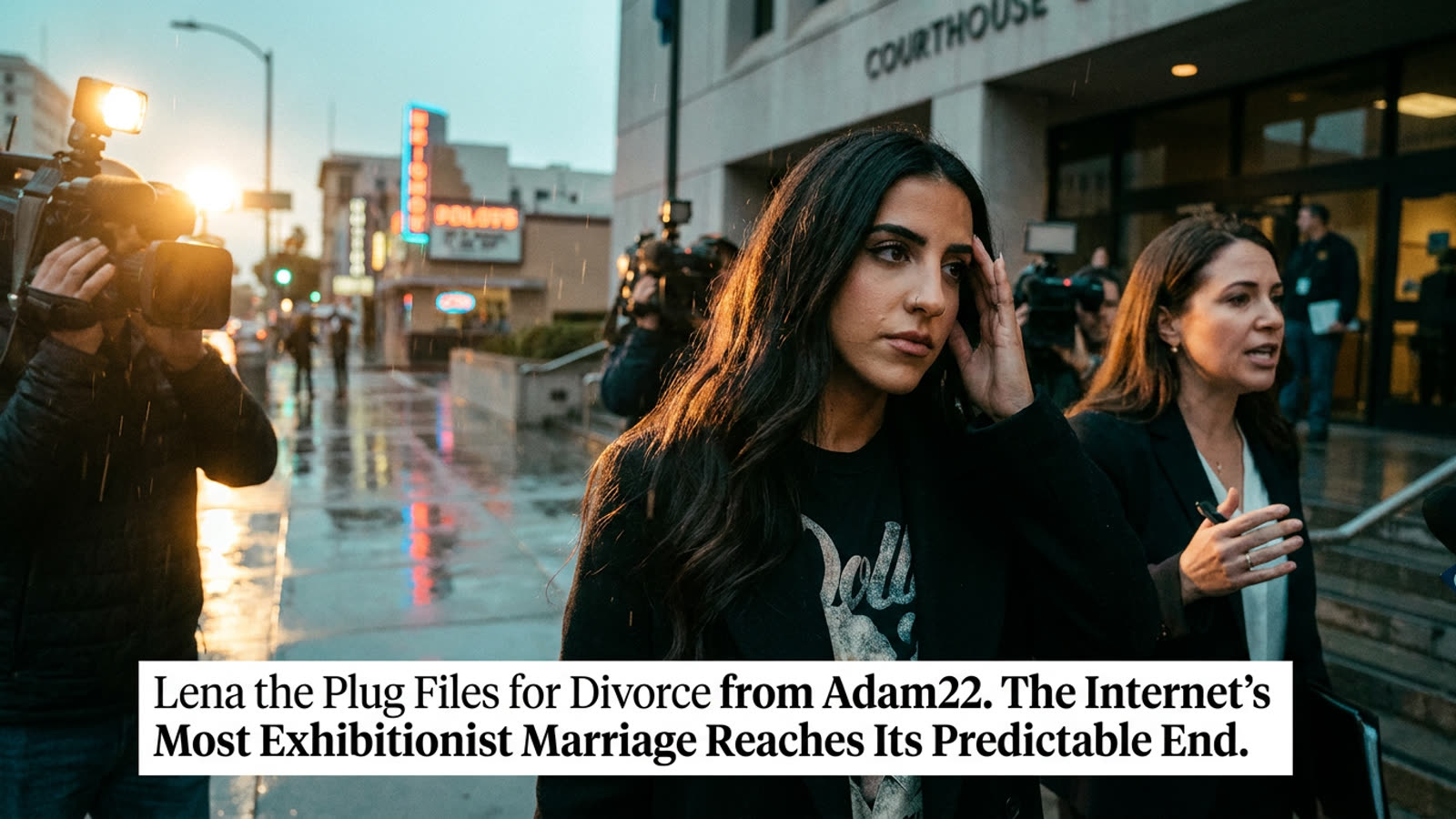
The content-creator marriage that treated nothing as private is about to discover what happens when the cameras keep rolling through a divorce.
Lena Nersesian, better known as Lena the Plug, has filed for divorce from Adam Grandmaison, the podcast host known as Adam22, ending a union that served as both genuine relationship and elaborate content strategy. The couple, who share a young daughter, built complementary empires—his No Jumper podcast interviewing hip-hop artists and adult performers, her OnlyFans presence generating millions—on the premise that absolute openness about their open marriage was itself the product.
The transparency trap
For years, the Grandmaisons monetized every boundary other couples keep sacred. Lena's sexual encounters with other partners became content. Adam's commentary on those encounters became more content. Their wedding, their pregnancy, their parenting philosophy—all fed into an ecosystem where the line between lived experience and performance dissolved entirely. The strategy worked commercially: No Jumper became one of hip-hop's most influential interview platforms, while Lena ranked among OnlyFans' top earners.
But the model contained its own destruction. When you've already broadcast everything, divorce doesn't offer the clean break civilians enjoy. Every asset is entangled with content libraries. Every grievance has a potential audience. The same radical transparency that built the brand now threatens to make the dissolution unbearably public.
The creator-divorce playbook
They join a growing cohort of influencer couples learning that internet fame complicates separation exponentially. Unlike traditional celebrity divorces, where publicists manage narratives, creator divorces play out in real-time across platforms where the audience feels ownership of the relationship. Fans who watched the marriage become content expect the divorce to be content too—and both parties have financial incentives to provide it.
The timing is notable: just weeks ago, Adam was fielding DMs from women while publicly still married, a detail that emerged and circulated widely. Whether that factors into the filing remains unclear, but in their world, such details rarely stay private long.
Our take
The Grandmaison divorce is less a surprise than a case study in the sustainability of performative intimacy. They proved you could build a business on exhibitionism; they're about to test whether that business survives when the exhibition turns adversarial. The audience that watched them marry, reproduce, and open their relationship will now watch them divide assets and, presumably, custody. It's the logical endpoint of a content philosophy that refused limits—and a reminder that some boundaries exist not as prudishness but as protection.