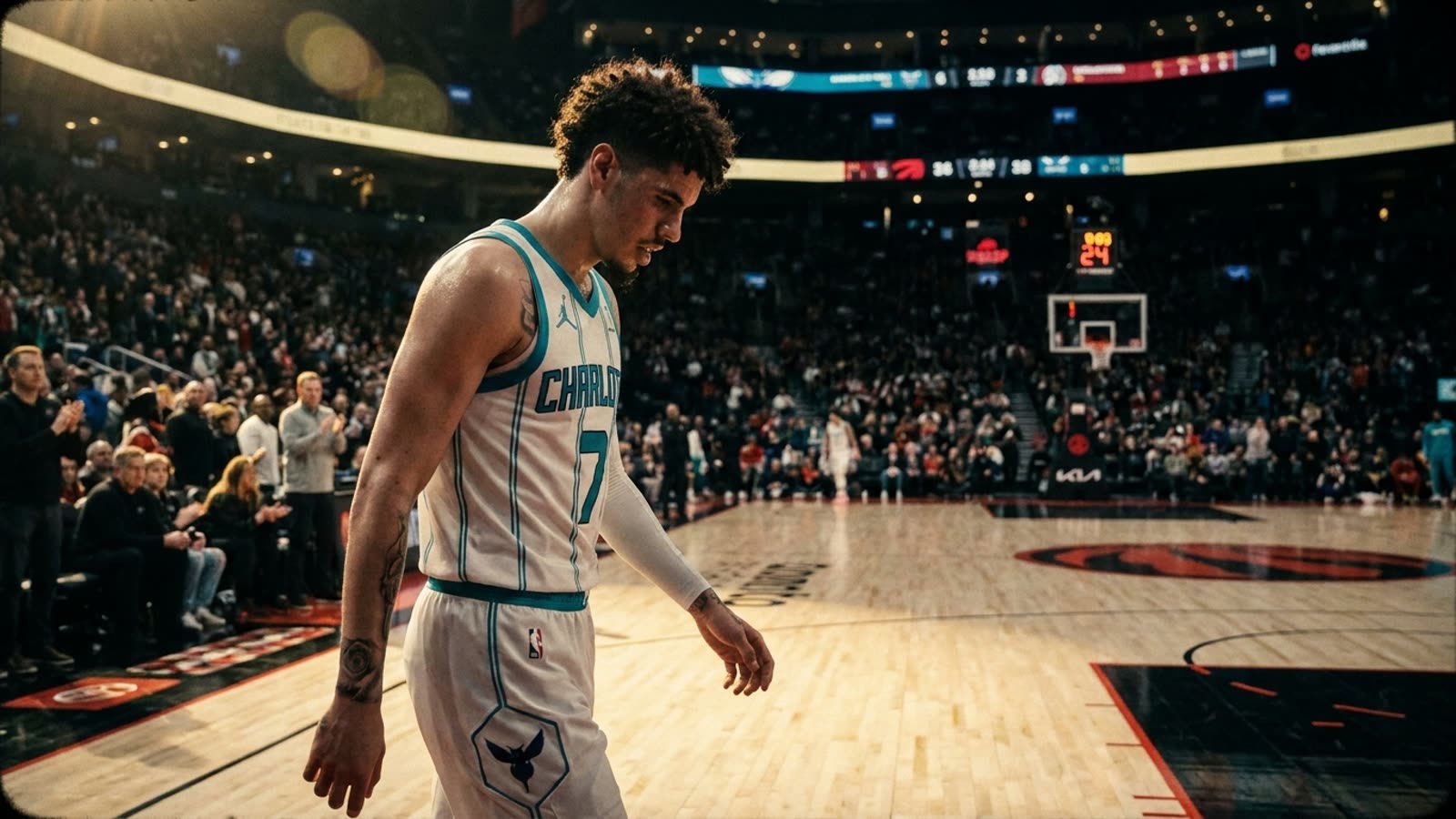
The Charlotte Hornets have entered trade discussions centered on LaMelo Ball, according to ESPN sources, a development that sounds like breaking news but reads more like an obituary for a franchise that never figured out how to build around its most talented player in decades.
Ball, who turns 25 in August, was supposed to be the answer to Charlotte's quarter-century of irrelevance. The 2021 Rookie of the Year arrived with the handle, the vision, and the charisma to sell tickets in a market that had largely stopped caring. Four seasons later, the Hornets have won exactly zero playoff games, Ball has played more than 60 games just once, and the franchise is quietly acknowledging what observers have suspected for two years: this isn't working.
The injury math doesn't add up
Ball has appeared in just 58 games over the past two seasons combined, missing time with ankle, shoulder, and wrist injuries that have transformed him from a dynamic playmaker into an expensive question mark. His per-game numbers when healthy remain impressive — he averaged 23.8 points and 8.2 assists in his limited 2025-26 appearances — but availability is the best ability, and Ball has proven chronically unavailable.
The Hornets owe him approximately $170 million over the next four seasons, a commitment that made sense when they signed the extension in 2023 and looks increasingly like an albatross now. Any acquiring team would be betting that Ball's body holds up through his late twenties, a wager that his recent medical history does nothing to encourage.
The market for damaged goods
Charlotte's leverage here is limited, and everyone in the league knows it. Ball's trade value peaked two years ago; today, he's a max-contract player with durability concerns on a team desperate to move him. That desperation will be priced into every offer.
The Hornets reportedly want a young star or multiple first-round picks in return. They're unlikely to get either. More realistic is a package of expiring contracts, protected picks, and perhaps a reclamation project heading the other direction. Teams like Sacramento, Miami, and Phoenix have been mentioned as potential suitors, but none appear willing to mortgage their futures for a player who might miss 40 games next season.
Our take
Charlotte's willingness to shop Ball isn't a pivot — it's a surrender. The Hornets had four years to surround him with competent players and a coherent system; instead, they cycled through coaches, whiffed on draft picks, and watched their franchise player's body break down in real time. Ball deserves some blame for his conditioning and shot selection, but the organizational failure here is comprehensive. Whoever trades for him is buying a lottery ticket with long odds. The Hornets are selling one because they've already scratched it and found nothing.