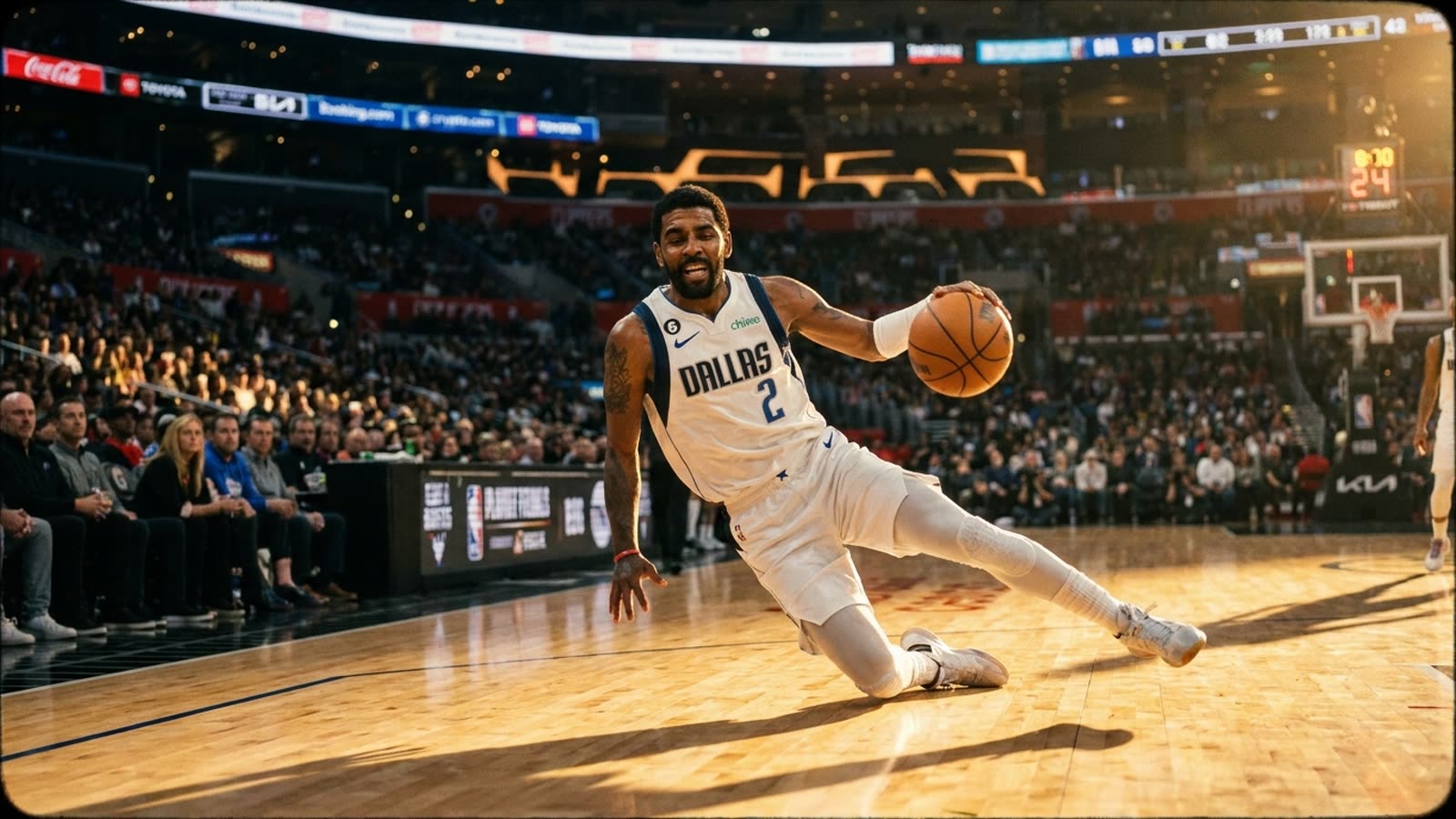
The transaction was simple: $13,659 from Kyrie Irving's account to cover the NFL fine levied against Jacksonville Jaguars linebacker Azeez Al-Shaair, who had written the name of Hind Rajab — a six-year-old Palestinian girl killed in Gaza — on his cleats during a game. Irving called it a "selfless act" that deserved support. The NBA, for its part, said nothing.
This is the same league that draped itself in social justice messaging four years ago, painting slogans on courts and encouraging jersey patches. That was activism the sponsors could stomach — corporate-friendly, poll-tested, unlikely to alienate anyone who might buy a jersey. Irving's wire transfer occupies different territory entirely.
The geometry of acceptable dissent
American professional sports have spent the post-Kaepernick era trying to thread an impossible needle: appear socially conscious without offending any significant consumer bloc. The NBA mastered this performance better than most, positioning itself as the progressive league while carefully policing the boundaries of that progressivism. China remains a reliable example — when Daryl Morey tweeted support for Hong Kong protesters in 2019, the league's response was apologetic and swift.
Irving has always been a problematic figure for this calculus. His 2022 suspension over an antisemitic film he promoted on social media cost him games and endorsements. But his consistent advocacy for Palestinian causes predates that controversy and continues despite it. He is, in the league's framing, a repeat offender against the norms of acceptable athlete speech.
Al-Shaair's tribute to Hind Rajab — whose death in an Israeli strike on her family's car was documented by her final phone call to emergency services — drew the NFL's standard response to unauthorized uniform modifications. The fine was unremarkable. Irving's decision to pay it was not.
Cross-league solidarity as statement
What makes this moment notable is not the money, which is negligible to both athletes. It is the public nature of the exchange and what it reveals about the infrastructure of athlete activism in 2026. Irving did not quietly Venmo a colleague; he praised Al-Shaair publicly, using language — "honoring slain Palestinian children" — that forces a response or a conspicuous silence.
The NBA chose silence. No statement condemning Irving, no statement supporting him, no acknowledgment that one of its most prominent players had inserted himself into the most divisive geopolitical issue in American public life. This is its own form of message: the league would rather pretend the gesture did not happen than adjudicate its appropriateness.
For Irving, now in his third season with the Dallas Mavericks and coming off a productive campaign, the calculation appears straightforward. He has already lost major endorsements. He has already been suspended. The marginal cost of continued advocacy is lower than it would be for a player still building his commercial profile.
Our take
The NBA's studied silence is probably the smartest play available to it, and also the most cowardly. Irving's gesture was not antisemitic, not violent, not even particularly confrontational — it was one athlete paying another's fine for honoring a dead child. That the league cannot bring itself to comment on this tells you everything about the limits of its social justice branding. The courts are no longer painted with slogans. The moment has passed. What remains is a league that wants credit for caring without the inconvenience of actually having to care about anything that might cost it a broadcast deal.