The Wizards, for the third consecutive summer, have positioned themselves as the league's premier salary-disposal service—and business is booming.
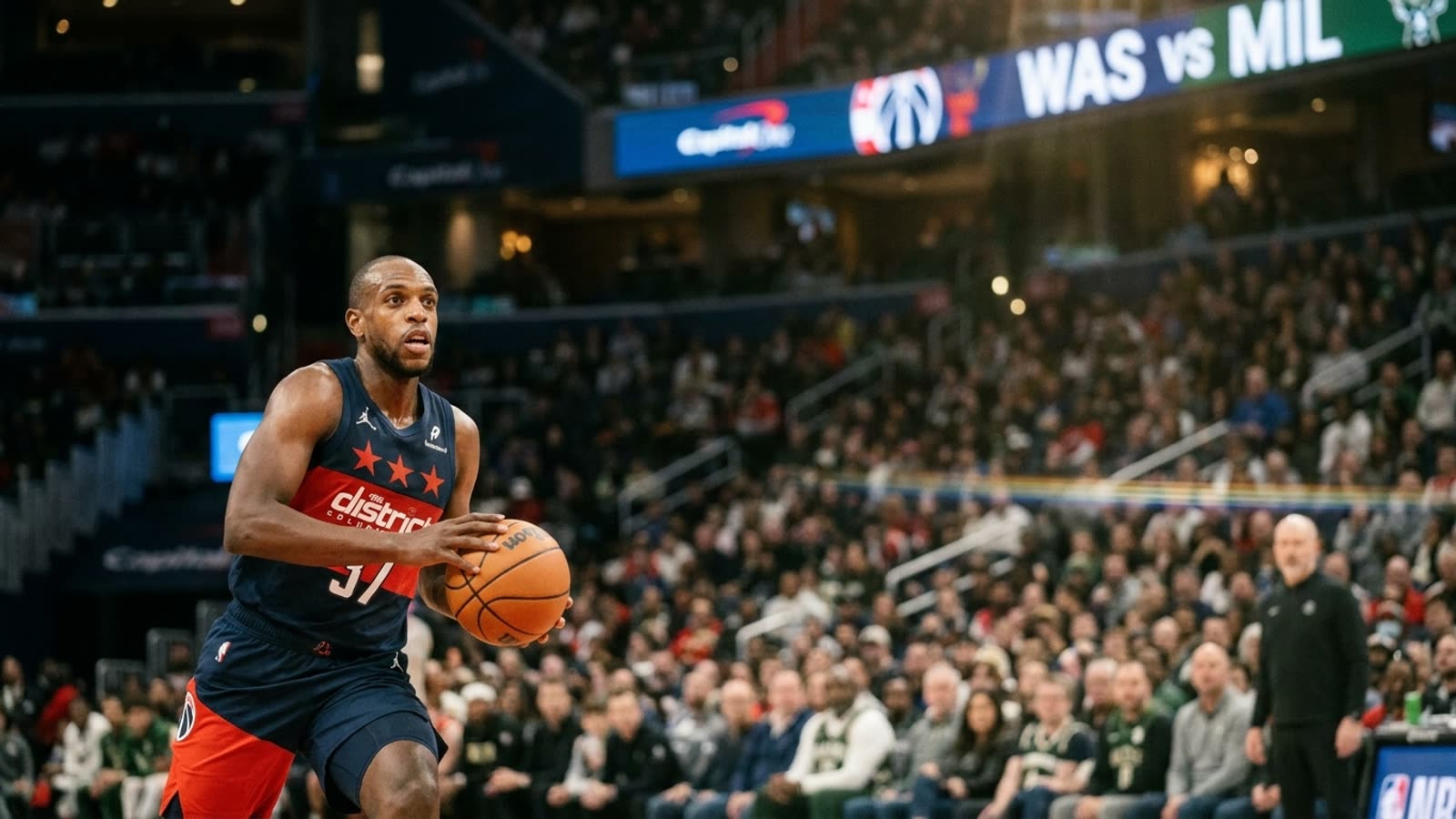
Washington is reportedly acquiring Khris Middleton from Milwaukee as part of a convoluted six-team trade that reads less like a basketball transaction and more like a multi-party debt restructuring. The Bucks, staring down second-apron tax penalties that would make a hedge-fund manager wince, needed to move Middleton's expiring contract to create financial breathing room around Giannis Antetokounmpo and Damian Lillard. The Wizards, who have spent two years accumulating draft capital by absorbing precisely these unwanted contracts, were happy to oblige.
The new CBA's invisible hand
This is what the 2023 collective bargaining agreement was designed to produce. The second apron's restrictions—no traded-player aggregation, frozen draft picks, limited sign-and-trade participation—have transformed luxury-tax management from an accounting nuisance into an existential strategic concern. Milwaukee, already committed to max deals for its two stars, simply could not afford to keep a 34-year-old wing earning north of $30 million, no matter how many playoff games he has won them.
The result is a new class of NBA trade: not the star-for-star blockbuster of previous eras, but the cap-sheet triage, where teams like Washington, Detroit, and Utah function as financial intermediaries. They accept contracts nobody else wants, extract draft compensation, and wait patiently for the picks to convey or the cap space to matter.
What Middleton still offers
Write off Khris Middleton at your peril. Yes, he missed significant time last season with ankle trouble. Yes, he shot a career-low 37 percent from three. But this is still the player who hit the dagger jumpers in the 2021 Finals, who averaged 24 points per game in that championship run, and whose mid-range game remains one of the purest in basketball. For a Wizards roster devoid of playoff experience, Middleton provides something no draft pick can: institutional memory of what winning feels like.
Whether Washington actually plays him substantial minutes or flips him at the deadline depends on how the young core develops. Jordan Poole's shot selection remains an open question. Bilal Coulibaly's ceiling is tantalizing but unproven. Middleton could mentor, or he could be packaged again. Either outcome serves the Wizards' long-term calculus.
Our take
The six-team trade is less about basketball than about the NBA's new economic physics. The league's luxury-tax structure has created a two-tier system: teams that can afford to compete and teams that profit from helping them try. Washington has chosen the latter path with clear eyes, and Middleton is simply the latest asset in a portfolio strategy. It is neither romantic nor particularly fun to watch, but it is ruthlessly rational—and in a salary-cap league, rationality eventually wins.