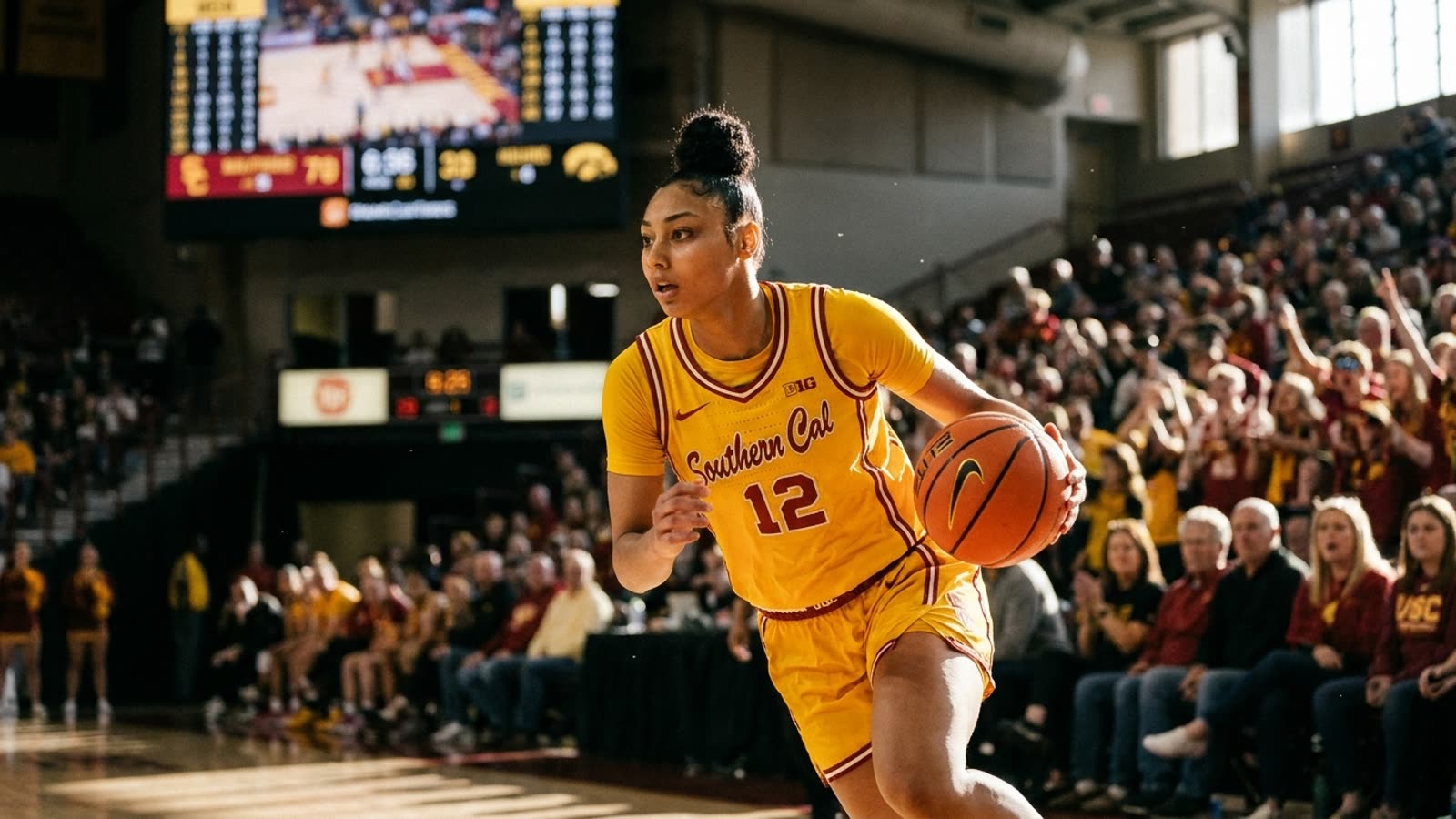
Women's college basketball has spent the past year learning what it looks like without its most magnetic young star. The answer: fine, but dimmer. JuJu Watkins's return to the court Monday night for USC wasn't just a comeback game; it was the sport reclaiming its best argument for why you should be paying attention.
Watkins dropped 21 points in her first competitive minutes since the injury that cost her all of last season, moving with the same explosive confidence that made her the most talked-about freshman in recent memory. Her teammates, who spent a year watching her cheer from the sideline in street clothes, finally got to play alongside her again. The emotion in the arena was palpable—not because USC needed the win, but because everyone present understood they were witnessing something the sport had been missing.
The absence that proved the point
Watkins's injury came at the worst possible moment for women's basketball's commercial ascent. The sport had just experienced its most-watched season ever, fueled by Caitlin Clark's senior campaign and the WNBA's subsequent ratings explosion. Watkins was supposed to be the next chapter—the heir apparent who would keep casual fans engaged after Clark went pro. Instead, she spent the season in a walking boot, and USC became an afterthought in the national conversation.
The Trojans went 19-13 without her, respectable but unremarkable. More importantly, the sport lost one of its few players capable of generating genuine crossover interest. Watkins has the rare combination of elite skill and undeniable charisma that makes non-fans care. Her absence was felt not just in Los Angeles but in the broader cultural conversation about women's sports.
What Monday revealed
Twenty-one points in a return game tells you the talent survived the layoff. But the more significant detail was how Watkins moved—without hesitation, without the tentativeness that often plagues athletes returning from serious injury. She attacked the basket with the same fearlessness that defined her freshman year, when she averaged over 27 points per game and announced herself as a future professional star.
USC head coach Lindsay Gottlieb had spent months managing expectations, but Watkins clearly had no interest in a cautious reintegration. She played 32 minutes and looked, by all accounts, like someone who had been waiting impatiently for this moment rather than dreading it.
Our take
Women's basketball doesn't need JuJu Watkins to survive—the sport's infrastructure is stronger than any single player. But it needs her to thrive in the way it has started to. The WNBA's attendance records and television ratings prove there's an audience hungry for this product; Watkins is one of the few college players capable of feeding that hunger while it's still growing. Her return isn't just good news for USC. It's good news for everyone who has been arguing that women's basketball deserves the spotlight. Now the spotlight has something worthy of its glare.