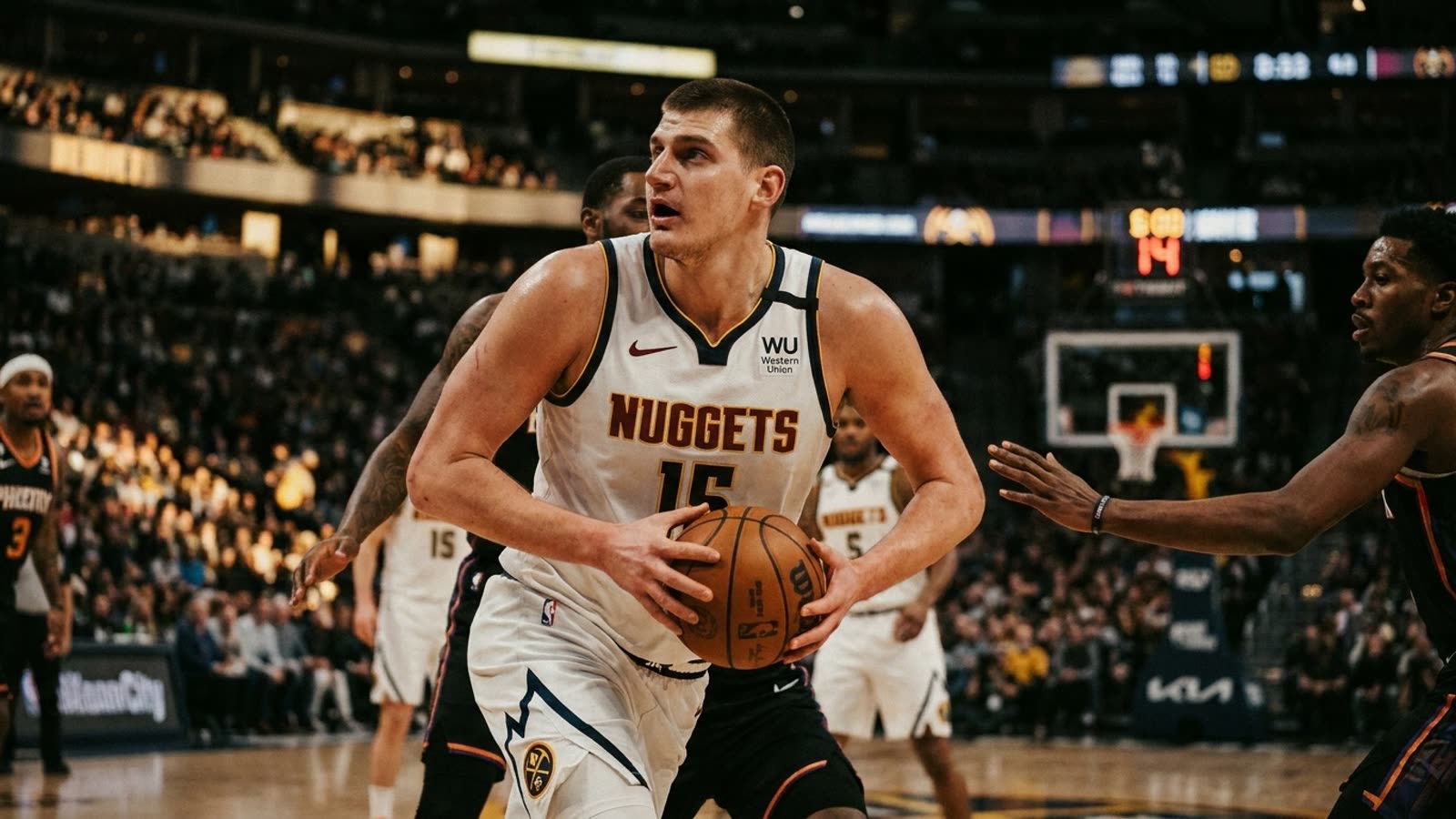
There is something almost tedious about Nikola Jokic's excellence. On Wednesday night in Denver, the Nuggets center posted 21 points, 13 rebounds, and 10 assists against the Pelicans — numbers that would define most players' careers but barely warranted a second glance from the home crowd. It was his 200th career triple-double, a figure that places him ten behind Russell Westbrook's all-time record of 210 and firmly establishes him as the most complete offensive player of his generation.
The milestone arrived without fanfare because Jokic has made the extraordinary ordinary. He is averaging a triple-double for the fourth time in five seasons, a feat that once seemed impossible for anyone who wasn't a point guard with a green light and a sympathetic stat crew. Westbrook accumulated his record through sheer volume and velocity, hunting rebounds and pushing pace with a frenetic energy that divided opinion. Jokic does it by standing still, surveying the floor, and making decisions that seem obvious only in retrospect.
The geometry of inevitability
At 31, Jokic shows no signs of physical decline. His game has never relied on athleticism — he entered the league as a second-round pick who looked like he'd wandered in from a Serbian basketball camp's buffet line — which means there's no cliff to fall off. Westbrook's record, set during his final productive seasons before injuries and diminished roles took their toll, was once considered unassailable. Now it looks like a target Jokic will reach sometime around January, barring catastrophe.
The mathematics are straightforward. Jokic has recorded triple-doubles in roughly 30 percent of his games over the past four seasons. If that rate holds, he'll surpass Westbrook before the All-Star break. If Denver makes another deep playoff run, he could end the season with 220 or more.
What records don't capture
Triple-doubles have always been a flawed metric, rewarding accumulation over efficiency and sometimes encouraging stat-padding over winning basketball. Westbrook's critics pointed to this throughout his career, noting that his Oklahoma City teams often performed better when he scored fewer points and chased fewer rebounds. Jokic faces no such criticism because his triple-doubles are byproducts of Denver's offensive system rather than its purpose. He averages a triple-double because passing and rebounding are what he does, not because he's hunting them.
This distinction matters. Westbrook's 210 triple-doubles came with a usage rate that often exceeded 30 percent; Jokic operates closer to 25 percent while producing similar counting stats. The Serbian's efficiency — career 56 percent true shooting, three MVPs, one championship — makes his statistical accumulation feel earned rather than manufactured.
Our take
Records exist to be broken, and Jokic will break this one. But the more interesting question is what comes after. At his current pace, Jokic could finish his career with 300 or more triple-doubles, a number so absurd it would require a generational talent playing the same way for another decade to approach. He has already redefined what a center can be; now he's redefining what statistical dominance looks like. Westbrook's record will fall not because Jokic is chasing it, but because he can't help but reach it.