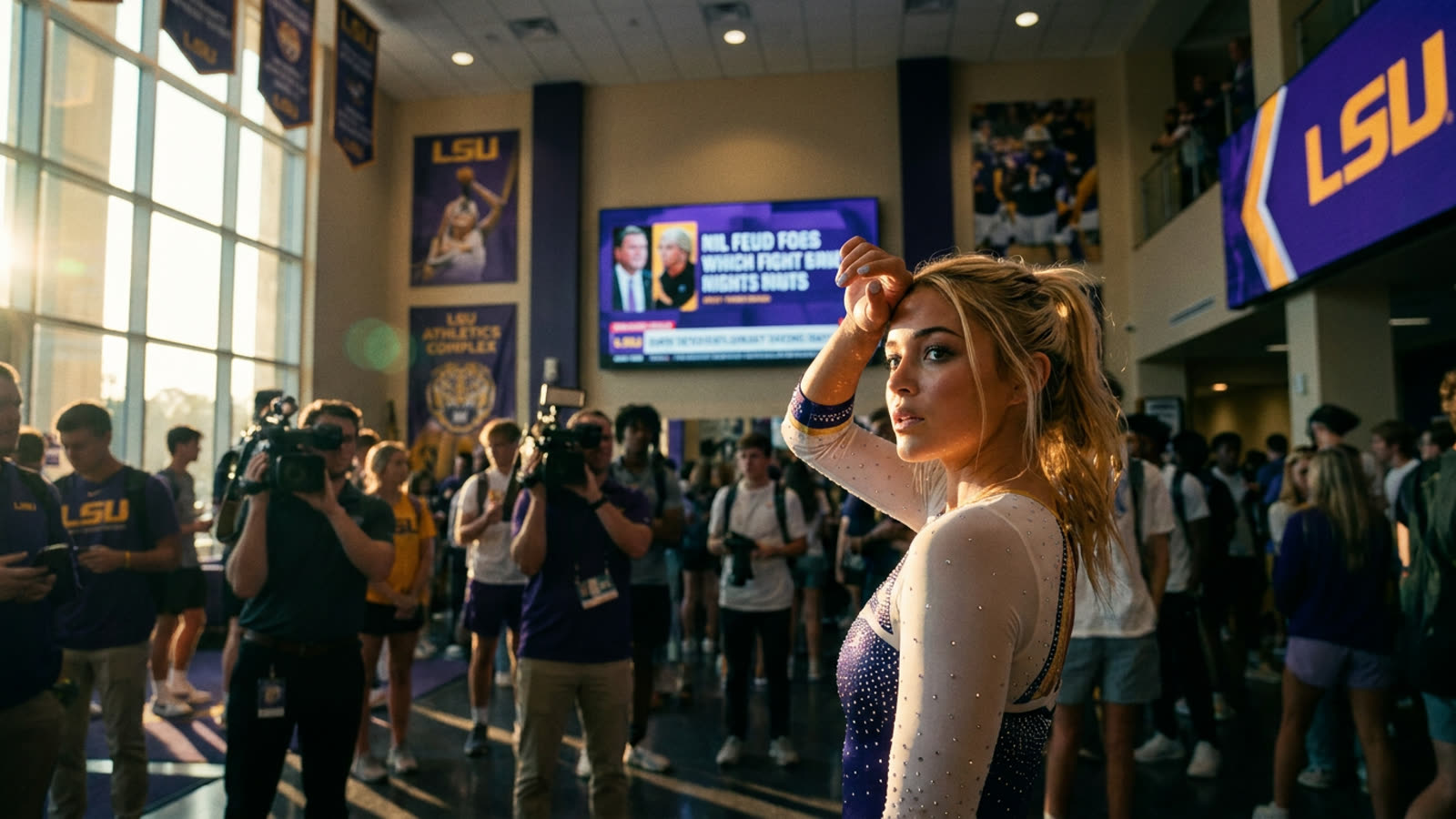
The collision was inevitable. When the NCAA lifted its amateur restrictions in 2021, it created a new class of celebrity: the college athlete influencer, young enough to be relatable, athletic enough to be aspirational, and suddenly permitted to monetize both. Five years later, the first generation of NIL stars is discovering what Hollywood learned decades ago—there's only so much oxygen at the top, and the knives come out when the money gets serious.
Jessica Belkin, a former UCLA gymnast with 2.4 million TikTok followers, has filed a defamation lawsuit against Olivia "Livvy" Dunne, the LSU gymnast and undisputed queen of the NIL economy, whose estimated annual earnings exceed $3 million. The dispute centers on comments Dunne allegedly made suggesting Belkin copied her content strategy and aesthetic—accusations that, in the influencer economy, amount to professional assassination.
The economics of being first
Dunne's dominance in the NIL space has been so complete that her name has become shorthand for the phenomenon itself. Sports Illustrated covers, brand deals with American Eagle and Vuori, a reported $9.5 million in total NIL earnings since 2021—she didn't just enter the market, she defined it. Belkin's lawsuit implicitly argues that Dunne has weaponized this first-mover advantage, using her platform to delegitimize competitors rather than simply outcompete them.
The irony is that both women are selling essentially the same product: a particular blend of athletic credibility, girl-next-door accessibility, and carefully curated sexuality that performs extraordinarily well on short-form video platforms. The market for this product is vast but not infinite, and the algorithmic attention economy rewards differentiation. When two creators occupy nearly identical niches, the incentive structure encourages exactly this kind of conflict.
What the lawsuit reveals
Beyond the personal drama, Belkin v. Dunne offers a window into how profoundly NIL has transformed college athletics. These are not amateur athletes who happen to have social media accounts; they are professional content creators who happen to compete in NCAA sports. Their primary revenue streams come not from their athletic performance but from their ability to convert attention into advertising impressions.
This creates a peculiar set of incentives. A gymnast's floor routine matters less for the points it scores than for the clips it generates. The sport becomes content; the athlete becomes a brand. And brands, as any marketing executive will tell you, must be defended aggressively against perceived infringement.
Our take
The Belkin-Dunne feud is being covered as celebrity gossip, but it's really a business story disguised in leotards. The NIL era promised to compensate athletes for their market value; it delivered a parallel economy where the most valuable skill isn't athletic excellence but platform optimization. That this economy would eventually produce litigation was never in doubt—only the timing. The real question is whether the NCAA, having opened Pandora's box, has any interest in regulating the chaos inside. Early evidence suggests it does not.