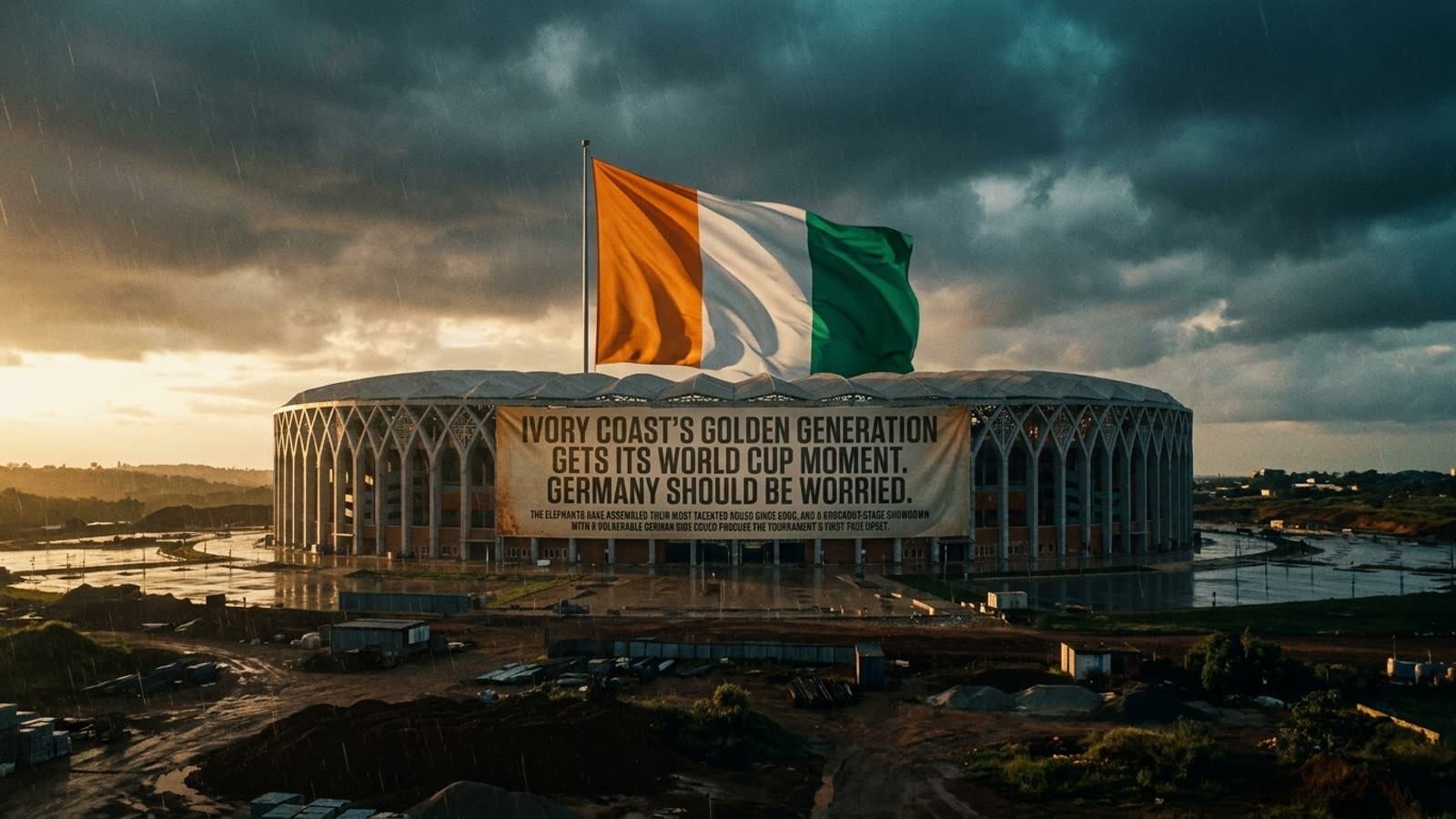
Germany entered this World Cup as a team still searching for its identity, and Ivory Coast may have found the perfect moment to exploit that confusion.
The Elephants advanced from Group F with a swagger that belied their underdog status, combining the Premier League pedigree of Nicolas Pépé and Wilfried Zaha with the midfield intelligence of Franck Kessié and the emerging brilliance of Simon Adingra. This is not the Ivory Coast of Didier Drogba's era—that team was built around a single transcendent talent. This squad is deeper, younger, and arguably more tactically sophisticated.
The German vulnerability
Die Mannschaft's group-stage performances offered little reassurance to a nation still processing the humiliations of 2018 and 2022. Julian Nagelsmann's side has struggled to control matches against opponents willing to press high, and their defensive transitions remain a liability. Florian Wirtz has been brilliant in flashes, but the team lacks the midfield metronome that defined Germany's greatest sides. Against disciplined opponents who can absorb pressure and counter, the four-time champions look beatable.
Ivory Coast's defensive record in the group stage was quietly impressive. Odilon Kossounou has marshaled the backline with the composure he shows at Bayer Leverkusen, and the team's willingness to defend deep before unleashing their considerable pace on the counter is precisely the approach that has troubled Germany.
Why this generation is different
Ivorian football has produced individual stars for decades, but coordination between the federation and its diaspora talents has historically been fraught. This cycle, something clicked. Manager Emerse Faé, who took over in 2024 after guiding the country to an Africa Cup of Nations triumph, has built genuine cohesion. Players who might have represented France or Belgium chose the Elephants, and the squad's chemistry is evident in their movement off the ball.
The knockout rounds demand a different mentality than group play, and African nations have often stumbled at this stage—only three have ever reached the quarterfinals. But Ivory Coast's blend of European tactical education and African flair feels purpose-built for a single-elimination environment where one moment of brilliance can decide everything.
Our take
Germany remains the favorite, as they should be. Their talent ceiling is higher, their tournament experience deeper. But this is precisely the kind of match that produces iconic World Cup upsets—a proud European power caught between eras, facing a hungry African side with nothing to lose and everything to prove. If Ivory Coast can keep the match tight into the final twenty minutes, anything becomes possible. The Elephants have waited a generation for this opportunity. They may not get another.