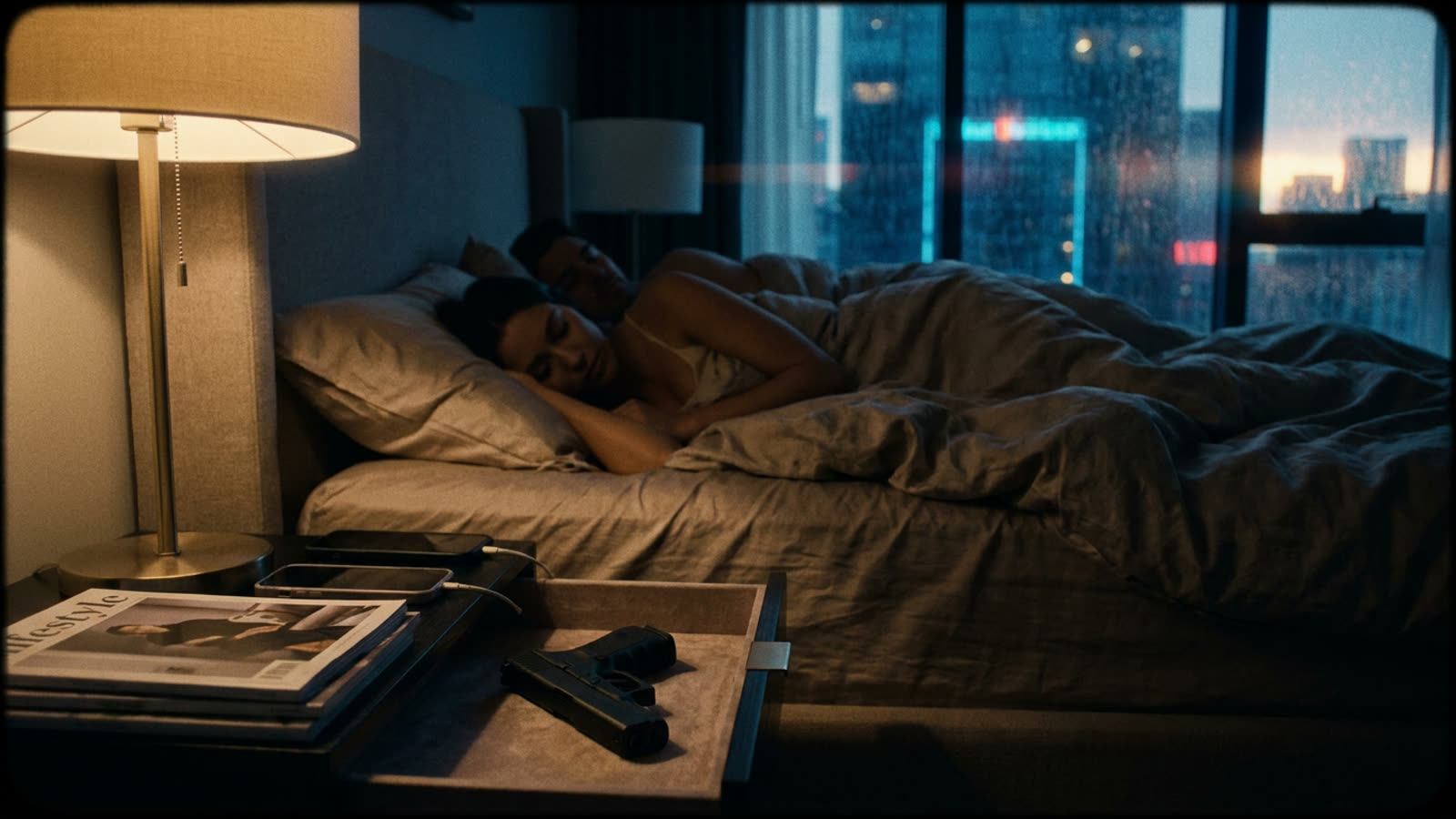
When your livelihood depends on strangers feeling like they know you, those strangers eventually feel entitled to your life.
An influencer couple has revealed they now sleep with a firearm within arm's reach after receiving a sustained campaign of death threats following their public discussion of abortion. The disclosure, which surfaced this week, offers a bleak window into the occupational hazards of the attention economy in 2026—a landscape where sharing personal views has become indistinguishable from painting a target on your home.
The parasocial paradox
The couple built their following the way most successful creators do: by cultivating intimacy at scale. They shared their relationship, their daily routines, their vulnerabilities. The algorithm rewarded authenticity, and authenticity meant letting strangers into the private corners of their lives. What they did not anticipate was that this manufactured closeness would curdle into something darker when they expressed a political opinion that a vocal minority found unforgivable.
The threats escalated from the predictable cesspool of comment sections to direct messages, then to communications that suggested knowledge of their physical location. The gun by the bedside is not a political statement—it is a security measure, the kind of calculus that used to be reserved for politicians and public figures with actual institutional power.
Content creation's silent crisis
The influencer economy has always traded on the illusion that creators are just regular people who happen to have cameras. But regular people do not need to factor personal security into their content calendars. The industry has been slow to acknowledge this reality. Management companies offer brand deal negotiations and thumbnail optimization; threat assessment remains largely a do-it-yourself affair.
What makes this case particularly instructive is its ordinariness. This is not a mega-celebrity with a dedicated stalker unit at a major agency. This is a mid-tier couple whose crime was having an opinion about one of America's most divisive issues. The barrier to entry for receiving death threats has never been lower.
The abortion dimension
The specific trigger here—abortion—matters. Since the Dobbs decision four years ago, the topic has become a third rail that electrifies in both directions. Creators who discuss it, regardless of their position, report disproportionate harassment compared to other political content. The issue has become a litmus test that a certain segment of audiences treats as a moral absolute, where disagreement is not merely wrong but existentially threatening.
The couple's decision to go public with their security situation is itself a calculated content move—vulnerability packaged as transparency. But it also serves as a warning shot to other creators considering whether to wade into contested territory. The message is clear: speak freely, but understand the price.
Our take
The gun by the bedside is a symbol of a broken social contract. We asked creators to be authentic, to share themselves completely, to treat their audiences as friends. We did not mention that some of those friends would turn feral. The influencer economy has created a class of workers who bear all the risks of public life with none of the institutional protections. Until platforms, agencies, and the legal system catch up to this reality, the cost of having opinions online will continue to be measured in sleepless nights and loaded chambers.