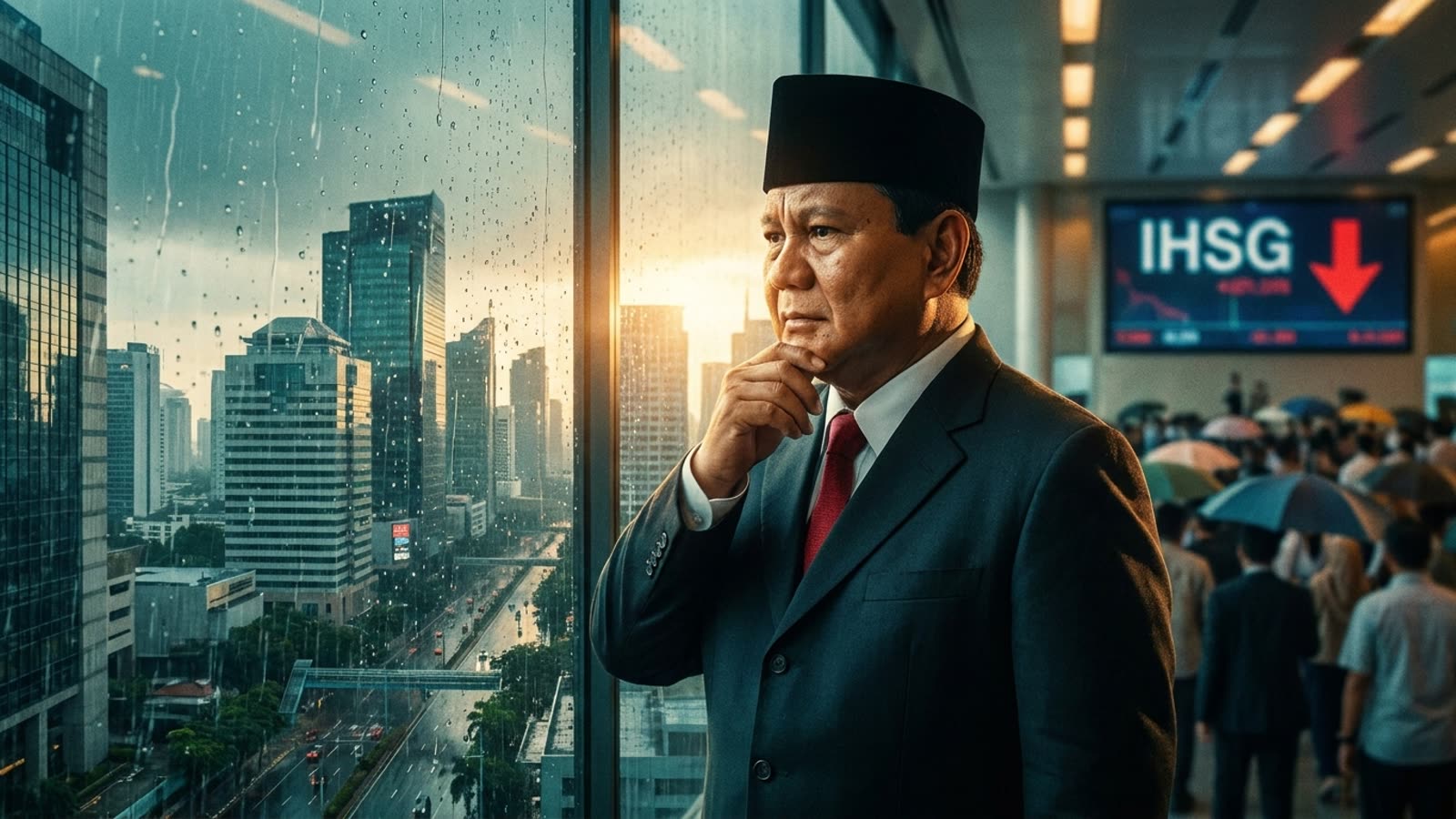
The prospect of Indonesia being stripped of its emerging-market status would have seemed absurd two years ago. The archipelago nation was the darling of frontier-to-mainstream investors, a demographic goldmine with 280 million consumers and a nickel bounty that made it indispensable to the electric-vehicle supply chain. Now MSCI, the index provider whose benchmarks guide trillions in passive capital flows, is threatening to relegate Jakarta to the investment wilderness — and the fault lies squarely with President Prabowo Subianto's increasingly erratic economic stewardship.
The Jakarta Composite Index plunged on the news, extending losses that have made Indonesian equities among the worst performers in Asia this year. Foreign investors have been net sellers for months, but an MSCI downgrade would mechanically force index-tracking funds to dump holdings regardless of fundamentals. The last time MSCI made such a move against a market of comparable size was Argentina's 2021 reclassification to standalone status — a financial purgatory from which Buenos Aires has yet to escape.
The Prabowo problem
Indonesia's troubles are not cyclical. They are policy-made. Since taking office, Prabowo has pursued a grab-bag of nationalist interventions: capital controls that spooked foreign direct investment, commodity export bans that backfired when trading partners retaliated, and a fiscal expansion funded by central-bank money-printing that has sent the rupiah to multi-year lows. The president's advisers have dismissed market concerns as speculative noise, a posture that has only deepened the credibility gap.
MSCI's criteria for emerging-market inclusion emphasize market accessibility, settlement efficiency, and the absence of capital restrictions. Indonesia has regressed on all three fronts. The index provider's review, expected to conclude in the coming weeks, will weigh whether Jakarta's recent measures constitute temporary crisis management or a structural retreat from the openness that earned its place in the benchmark.
Contagion risk and regional stakes
A downgrade would ripple beyond Indonesia's borders. The country is ASEAN's anchor economy; its distress would raise borrowing costs across the region and embolden skeptics who argue that Southeast Asia's growth story has peaked. Vietnam and the Philippines, both angling for MSCI upgrades of their own, would find the committee scrutinizing their capital-account regimes with renewed suspicion.
For global allocators, the episode is a reminder that emerging-market investing remains a governance bet as much as a growth bet. Indonesia's fundamentals — young population, resource wealth, strategic geography — have not changed. Its leadership has.
Our take
Prabowo inherited a strong hand and has played it badly. Index providers are not moral arbiters, but they are ruthlessly practical: their job is to ensure that the money tracking their benchmarks can actually get in and out of a market. Indonesia is failing that test. The president can reverse course, reopen the capital account, and restore central-bank independence. Or he can watch his country join Argentina in the penalty box. The market has already cast its vote.