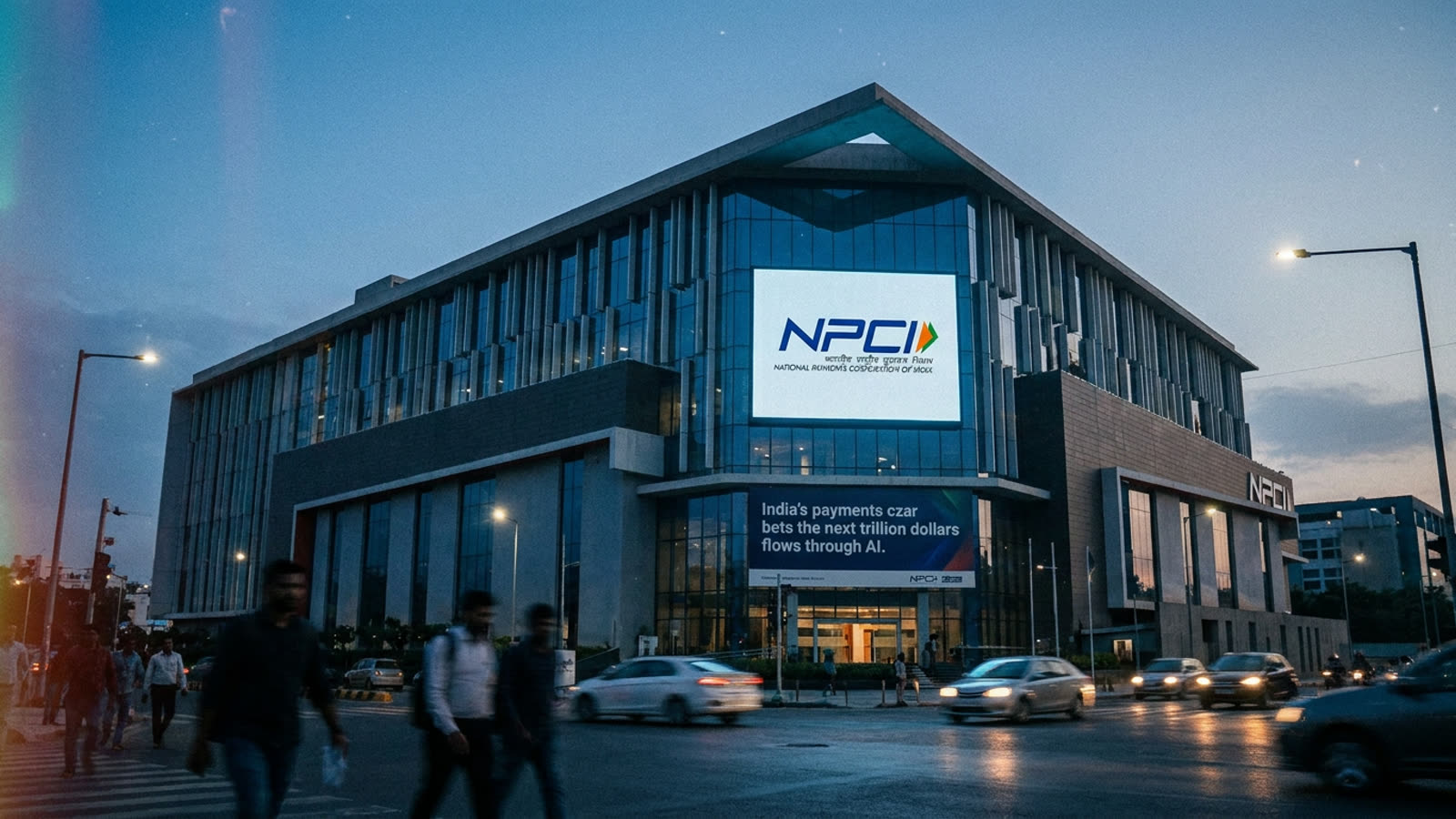
India has already built the world's most successful real-time payments system. Now its architects believe artificial intelligence will determine whether that system becomes a domestic convenience or a global standard.
Dilip Asbe, managing director of the National Payments Corporation of India, told an industry gathering this week that AI will be "heavily involved" in the next era of digital payment growth—not as a novelty feature but as core infrastructure. The statement matters because NPCI isn't a startup making promises; it's the organization that built the Unified Payments Interface, the system that processes more real-time transactions than any other on Earth.
The scale advantage
UPI's numbers are staggering by any measure. The platform now handles over 14 billion transactions monthly, dwarfing the combined volume of Visa and Mastercard in India. More importantly for AI applications, this generates an extraordinary dataset of financial behavior across income levels, geographies, and use cases that simply doesn't exist elsewhere.
Asbe's vision centers on using this data to solve problems that have resisted traditional approaches: fraud detection that adapts in real-time, credit scoring for the hundreds of millions of Indians with thin or nonexistent credit files, and personalized financial services that don't require expensive human intermediaries. The infrastructure cost advantage is significant—India's per-transaction cost is a fraction of what Western payment networks charge.
The export ambitions
What makes this more than a domestic story is India's increasingly aggressive push to internationalize UPI. The system already operates in Singapore, the UAE, France, and several other markets, with more integrations announced regularly. If AI-enhanced UPI can demonstrate superior fraud prevention and lower costs, the competitive pressure on established payment networks becomes substantial.
The timing aligns with growing Western interest in real-time payment modernization. The Federal Reserve's FedNow system launched in 2023 but remains far behind UPI in adoption. European instant payment mandates are still being implemented. India sees an opportunity to set standards while competitors are still building.
Our take
The developed world spent decades assuming financial infrastructure innovation would flow from West to East. India's payments revolution suggests the opposite trajectory is now plausible. Whether AI becomes the accelerant Asbe envisions depends on execution and regulation, but the underlying asset—a billion-person dataset of real-time financial behavior—is genuinely unique. Western payment incumbents should be paying closer attention than they appear to be.