The genius of Ina Garten has never been her recipes. It has been her understanding that what Americans want from a cooking show is not competence but absolution—permission to use store-bought stock, to serve the same roast chicken to guests that they made last month, to treat entertaining as pleasure rather than performance.
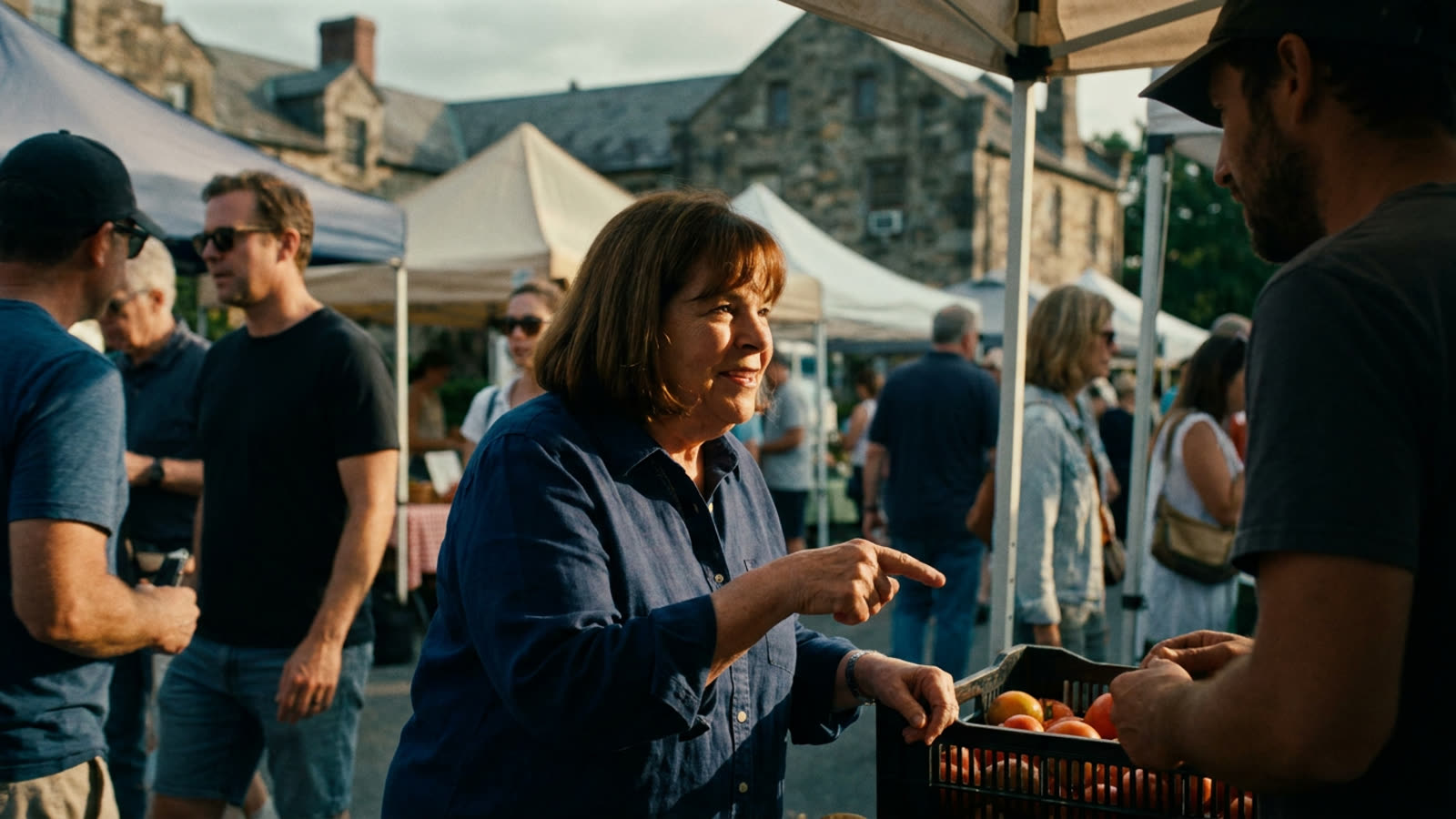
Garten, who left a White House budget analyst job to buy a specialty food store in the Hamptons in 1978, has spent four decades perfecting a persona that appears effortless precisely because every element is meticulously controlled. The linen shirts. The barn kitchen. The husband Jeffrey, summoned at episode's end to validate each dish with the enthusiasm of a man who has learned his lines. The effect is not spontaneity but its simulation—a theater of ease that her audience recognizes as theater and loves anyway.
The economics of approachability
What distinguishes the Barefoot Contessa brand from its competitors is its refusal to scale in ways that would compromise the illusion. Garten has never launched a cookware line, never opened a restaurant, never franchised her name onto frozen dinners. Her empire—cookbooks, a long-running Food Network show, occasional media appearances—remains deliberately circumscribed. This restraint is itself a form of marketing. By declining opportunities that would make her ubiquitous, she preserves the aspirational distance that makes her valuable.
The business model depends on a specific demographic: affluent women, typically over forty, who possess both the resources to buy high-quality ingredients and the cultural anxiety about whether they are entertaining correctly. Garten's message to this audience is that they already know how to cook; they simply need someone to tell them that good butter and fresh herbs are sufficient. The recipes are secondary to the reassurance.
Why the fantasy endures
Garten's longevity is remarkable in a media landscape that cycles through food personalities with increasing speed. She has survived the farm-to-table movement, the Instagram era, the pandemic baking boom, and the rise of TikTok recipe videos, all while changing almost nothing about her presentation. The barn kitchen looks the same as it did two decades ago. The format remains unchanged. Jeffrey still appears at the end.
This consistency is not stubbornness but strategy. Garten understood before most of her peers that her audience was not seeking novelty but stability—a vision of domestic life that remained constant while everything else accelerated. The Barefoot Contessa offers a world where dinner parties still happen, where friends arrive at noon for lunch in the garden, where the greatest crisis is whether the cake will set in time. It is a fantasy, but it is a fantasy her viewers have chosen to inhabit.
Our take
Garten's achievement is not culinary but psychological. She grasped that the American relationship to cooking is fundamentally anxious—that home cooks feel judged, inadequate, afraid of failure—and built a brand around alleviating that anxiety. The roast chicken is fine. The recipes work. But what she is really selling is the permission to believe that you, too, could live in a barn in East Hampton and make everything look effortless, if only circumstances were slightly different. The circumstances will never be different. That is what makes the fantasy so durable.