The papal conclave is often described in mystical terms — a gathering of holy men sequestered from the world, guided by the Holy Spirit to select Christ's vicar on Earth. This framing is useful to the Church and comforting to the faithful. It is also incomplete. The conclave is an election, and like all elections, it runs on coalition-building, factional maneuvering, and the careful accumulation of commitments that can never be explicitly made.
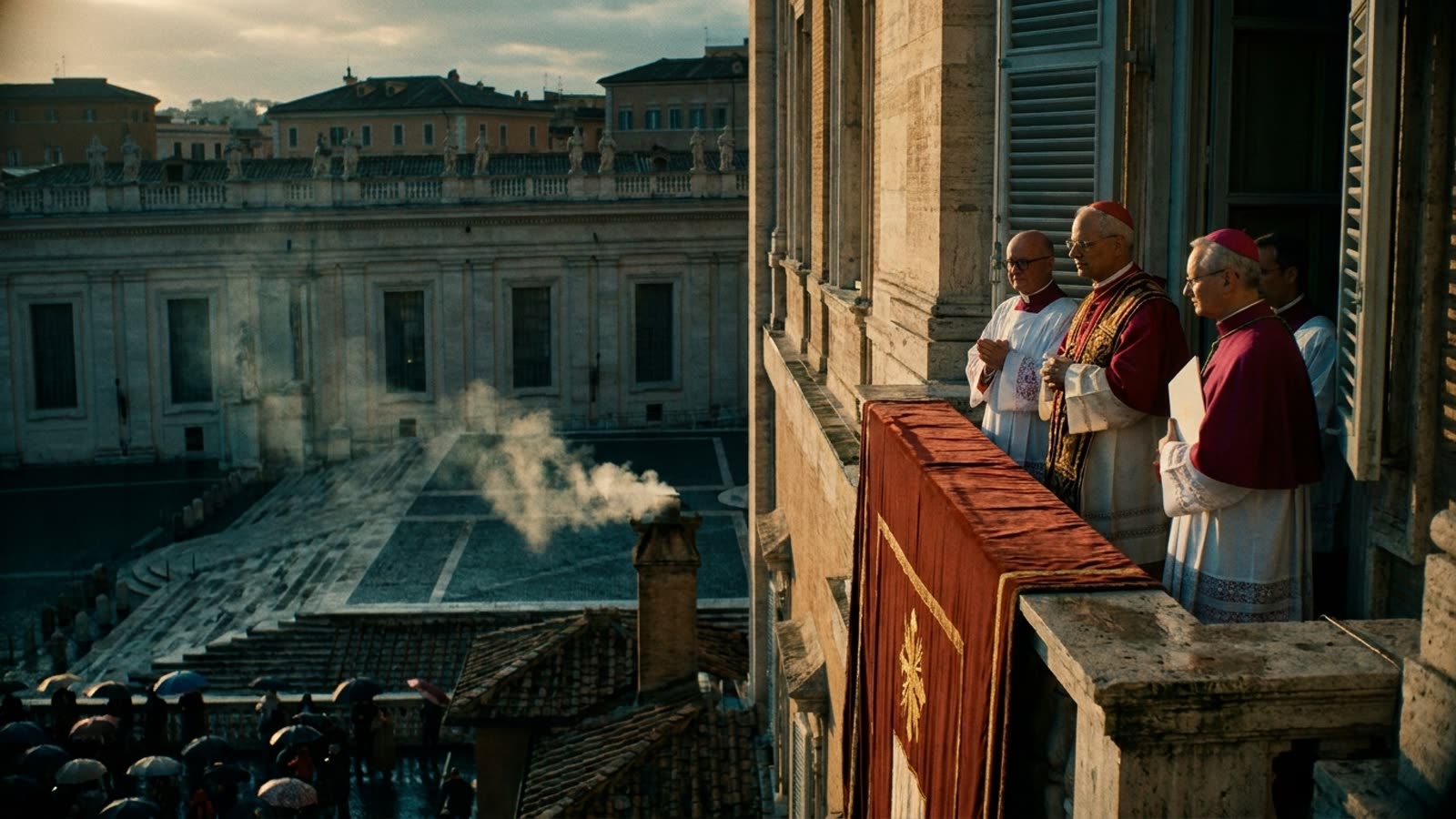
The mechanics are deceptively simple. Cardinals under eighty gather in the Sistine Chapel, swear oaths of secrecy, and vote by paper ballot until someone achieves a two-thirds supermajority. Black smoke signals failure; white smoke signals a new pope. What this tidy summary obscures is the elaborate dance that precedes the locked doors — and the sophisticated game theory that unfolds once they close.
The campaign that cannot exist
Canon law forbids cardinals from seeking the papacy or making deals to secure votes. The penalty for simony — buying ecclesiastical office — is automatic excommunication. This creates a peculiar dynamic: candidates must campaign without appearing to campaign, building support through years of curial relationships, theological positioning, and strategic visibility at synods and consistories.
The period between a pope's death and the conclave's start, called the interregnum, becomes a flurry of coded activity. Cardinals gather for "general congregations" ostensibly to plan the funeral and discuss Church business. In practice, these meetings function as candidate forums. A cardinal who speaks eloquently about the Church's challenges is not campaigning; he is merely sharing his pastoral concerns. The distinction is canonical, not practical.
The mathematics of supermajority
The two-thirds threshold is the conclave's most consequential rule. It means that roughly forty cardinals can block any candidate indefinitely — a veto coalition that forces consensus-building rather than simple majority rule. This arithmetic explains why conclaves often bypass obvious frontrunners.
A cardinal who enters with strong support from one faction may find himself unable to grow beyond it. The conclave's secret ballots allow cardinals to assess momentum without commitment; a candidate whose vote count stagnates over several rounds signals weakness, prompting supporters to seek alternatives. The process rewards candidates who are acceptable to multiple factions over those beloved by one.
Geography as ideology
The College of Cardinals' composition reflects decades of papal appointments, making each conclave partly a referendum on previous pontificates. European cardinals, once dominant, now represent a shrinking share of the electorate. Latin American, African, and Asian cardinals have grown in numbers and influence, shifting the institution's center of gravity.
This geographic diversity maps imperfectly onto theological divisions. Cardinals from the Global South often hold traditional views on sexuality and marriage while emphasizing economic justice and migration — a combination that defies Western political categories. The conclave must navigate these crosscutting cleavages, often producing compromise candidates whose appeal lies precisely in their ambiguity.
Our take
The conclave's genius is forcing consensus through exhaustion. The two-thirds rule, the sequestration, the prohibition on explicit deals — these constraints don't eliminate politics; they channel it toward moderation. A system designed in the medieval period turns out to be surprisingly well-suited to governing a fractious global institution. The Holy Spirit may indeed guide the cardinals' hands. But She works through game theory.