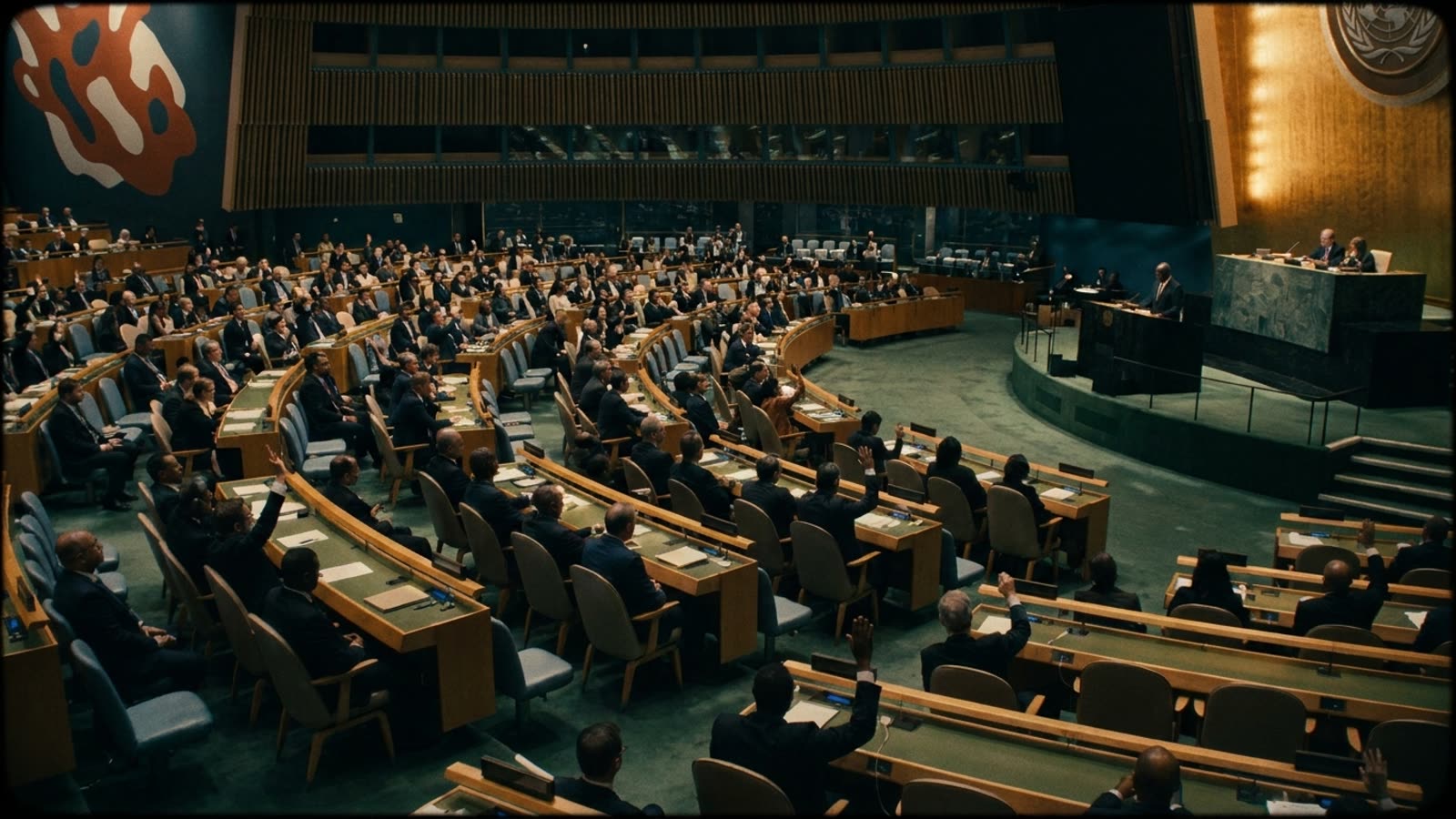
The most consequential word in international diplomacy is often the one that goes unspoken. When a permanent member of the United Nations Security Council signals it will veto a resolution, the resolution typically never reaches a vote at all. The threat alone reshapes what the world attempts.
This is the architecture of global paralysis, and it was designed that way.
The original bargain
When the UN Charter was drafted in San Francisco in 1945, the five victorious powers of the Second World War—the United States, the Soviet Union, Britain, France, and China—insisted on a mechanism that would prevent the organization from ever acting against their core interests. The logic was coldly pragmatic: a world body that could compel great powers to act against their will would either be ignored or would trigger another catastrophic war. Better to build in the escape hatch from the start.
The result was Article 27, which requires the "concurring votes" of all five permanent members for any substantive Security Council decision. In practice, this means any one of the P5 can block action on matters of international peace and security—from authorizing military intervention to imposing sanctions to referring situations to the International Criminal Court.
The veto was not an afterthought. It was the price of admission. Without it, neither the Americans nor the Soviets would have joined, and the UN would have been stillborn like its predecessor, the League of Nations.
How the veto actually operates
The formal veto is only the visible portion of the mechanism. Far more common is the "pocket veto"—the private indication that a resolution will be blocked, which causes sponsors to withdraw or water down their proposals before any public vote. Diplomats estimate that for every veto cast, dozens of resolutions are quietly abandoned or neutered in backroom negotiations.
This creates a peculiar dynamic. The Security Council can appear busy and productive, passing resolutions on topics where no P5 member objects, while remaining entirely frozen on the conflicts that matter most. Syria, Kashmir, Taiwan, the Palestinian territories—wherever a permanent member has a stake, the Council becomes a theater of impotence.
The veto also shapes which crises receive attention in the first place. Secretaries-General and member states learn not to waste political capital on initiatives doomed to fail. The anticipation of the veto narrows the imagination of international diplomacy before any proposal is even drafted.
Reform that never arrives
For decades, reformers have proposed changes: requiring vetoes to be cast publicly with explanations, limiting veto use in cases of mass atrocities, expanding the P5 to include rising powers like India, Brazil, or Germany. None have succeeded, for a reason embedded in the Charter itself. Amending the UN Charter requires ratification by two-thirds of member states, including all five permanent members. Any reform that would dilute the veto can be vetoed.
The permanent members have occasionally shown restraint—abstaining rather than vetoing to allow action they privately oppose—but such gestures remain gifts, not obligations. The fundamental asymmetry persists: the P5 exist in a different legal universe than the other 188 member states.
Our take
The Security Council veto is not a bug in the international system; it is the system's foundational feature. Critics who demand reform are asking the powerful to voluntarily surrender power, which is not how power works. The veto ensures that the UN can never become a genuine world government, only a forum where great powers occasionally find it convenient to cooperate. Understanding this explains why so many humanitarian catastrophes proceed unimpeded while the "international community" issues statements of concern. The architecture was built for stalemate, and stalemate is what it reliably delivers.