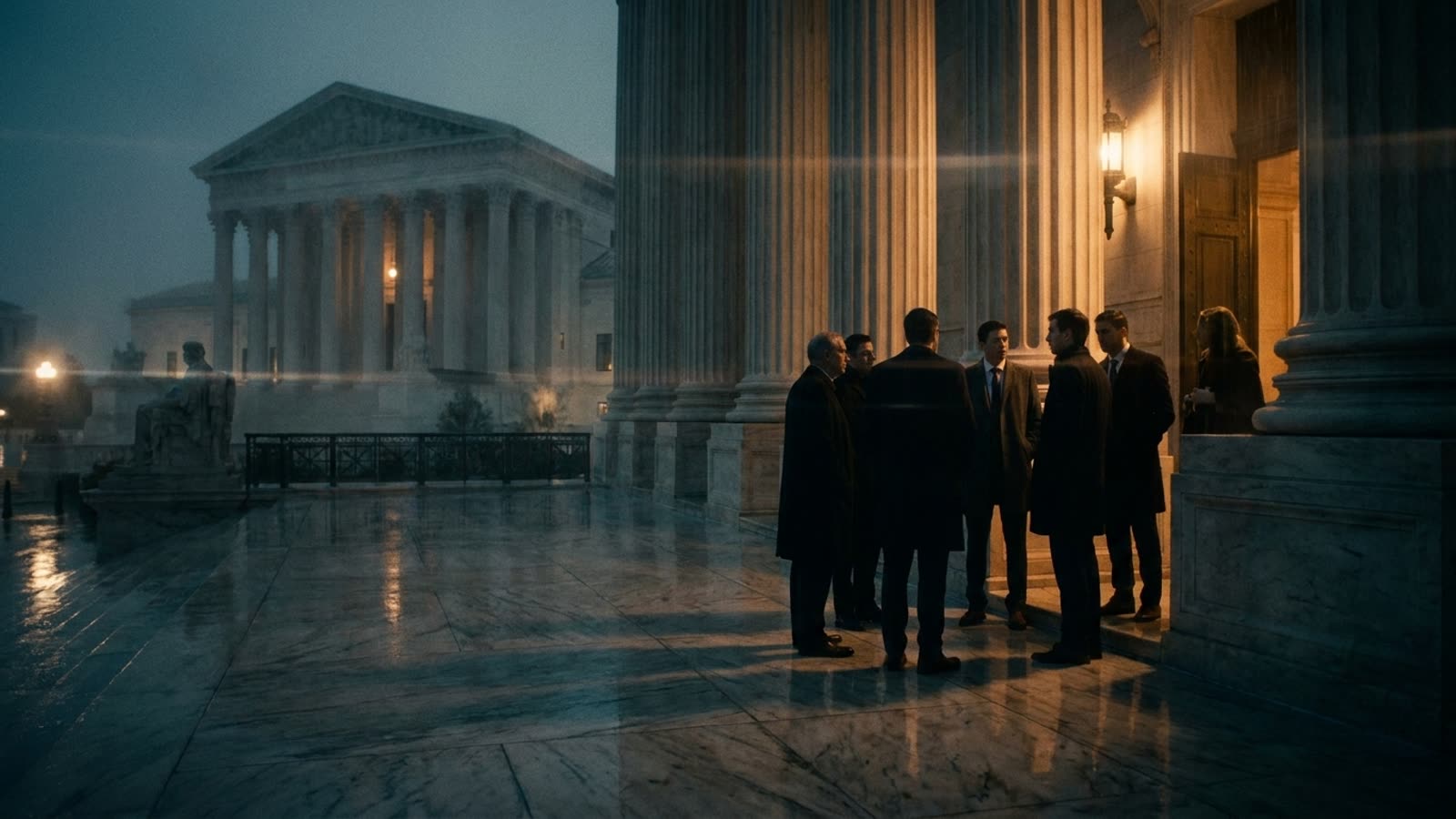
The Justices of the United States Supreme Court are appointed for life, confirmed by the Senate, and scrutinized by the press. Their law clerks are none of these things. Yet these young attorneys—typically hired straight from prestigious clerkships on the federal appellate courts—draft the language that becomes binding precedent, research the arguments that sway deliberations, and serve as the intellectual sparring partners for the nine most consequential jurists in the American legal system.
The clerkship institution has evolved from administrative assistance into something closer to collaborative authorship. Understanding how it works reveals much about how American law actually gets made.
The selection tournament
The path to a Supreme Court clerkship is one of the most competitive credentialing exercises in professional life. Candidates almost universally attended a handful of elite law schools, graduated near the top of their class, served on law review, and completed a "feeder" clerkship with a respected appellate judge known for placing clerks at the high court. The process resembles a medieval guild more than a modern hiring system: personal relationships between feeder judges and Justices matter enormously, and the timeline has historically been chaotic, with offers sometimes extended years in advance.
The result is a remarkably homogeneous group. Studies of clerk backgrounds consistently show overwhelming representation from fewer than ten law schools, with Harvard and Yale typically accounting for the majority. Geographic diversity is minimal; socioeconomic diversity, while harder to measure, appears similarly constrained. The clerks are brilliant by any reasonable standard, but they are brilliant in a very particular way.
The scope of influence
Each Justice typically employs four clerks per term. Their duties vary by chambers—some Justices delegate more than others—but the core functions are consistent. Clerks review the thousands of petitions seeking Supreme Court review each year, writing memoranda recommending which cases merit the Court's attention. They research legal questions, draft sections of opinions, and critique their Justice's reasoning. In a Court that decides roughly sixty to seventy cases per term, each clerk may work intensively on fifteen to twenty opinions.
The extent of clerk influence on final opinion language is a closely guarded secret, varying by Justice and by case. Some Justices are known to write extensively themselves; others rely more heavily on clerk drafts. What is clear is that the analytical frameworks, the string citations, and often the rhetorical moves in Supreme Court opinions bear the fingerprints of twenty-somethings who arrived at the Court months earlier.
The pipeline after
Supreme Court clerks command signing bonuses from major law firms that can exceed several hundred thousand dollars—a premium that reflects both the credential's prestige and the training it represents. Many go on to become federal judges themselves, law professors, or partners at elite firms. A striking number have later argued cases before the Court, appearing before Justices they once served.
This creates a self-reinforcing ecosystem. Former clerks hire future clerks, argue before Justices whose thinking they helped shape, and populate the professorships that train the next generation. The institution perpetuates a particular style of legal reasoning and a particular network of legal elites.
Our take
The clerkship system is neither a scandal nor a secret conspiracy—it is simply the unglamorous reality of how a small institution handles an enormous workload. But its implications deserve more attention than they receive. When three dozen young lawyers, selected through an opaque process that favors a narrow slice of the profession, help craft the language that governs three hundred million people, questions of legitimacy inevitably arise. The Justices bear ultimate responsibility for their decisions. Whether they bear sufficient responsibility for the institution that shapes those decisions is a question American legal culture has largely declined to ask.