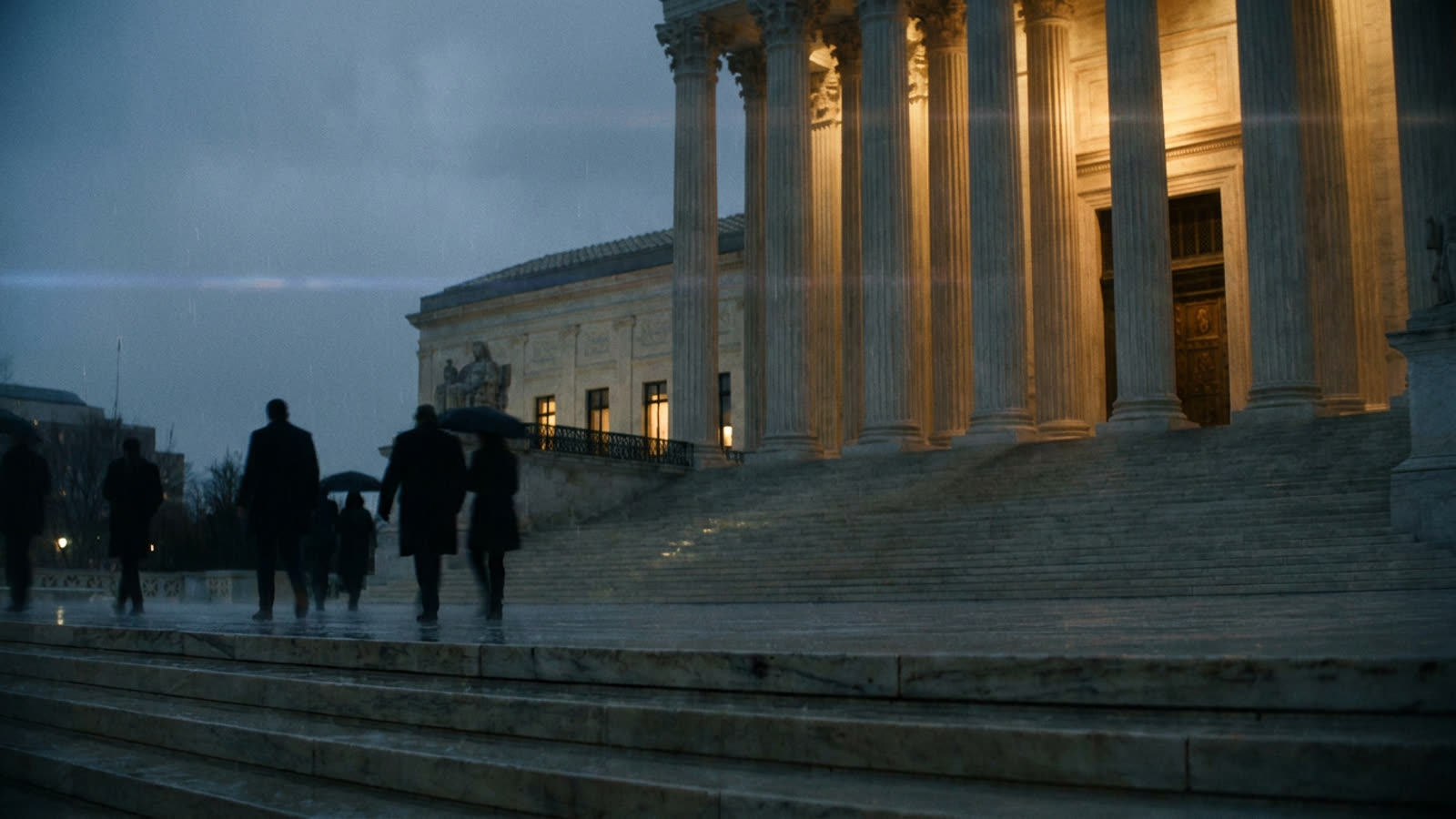
The United States Supreme Court receives roughly seven thousand petitions for review each term and grants fewer than eighty. That ratio alone should command attention: the highest court in the land declines to hear more than ninety-eight percent of the cases brought before it, often without explanation, frequently over vigorous dissent. The mechanism governing this selection—the writ of certiorari—is among the least understood and most consequential features of American constitutional government.
Unlike appellate courts that must hear qualifying appeals, the Supreme Court operates almost entirely on discretionary review. Congress granted this power in the Judiciary Act of 1925, championed by Chief Justice William Howard Taft, who argued that the Court's docket had become unmanageable. The result was a transformation: the Court became less a court of error correction and more a policymaking body that chooses which legal questions deserve national resolution.
The Rule of Four and its discontents
No statute requires four justices to agree before a case is heard. The Rule of Four is a self-imposed norm dating to the 1920s, designed to prevent a five-justice majority from controlling the docket entirely. In practice, it means a determined minority can force the Court to confront issues the majority might prefer to avoid. Yet the rule creates its own pathologies. Justices sometimes vote to grant certiorari strategically, believing they can assemble a majority once argument occurs—or vote to deny because they fear the opposite. The cert pool, where law clerks from multiple chambers jointly review petitions, adds another layer of filtration that critics argue homogenizes analysis and disadvantages pro se petitioners who cannot afford the Supreme Court bar's specialized formatting conventions.
What makes a case certworthy
The Court's own rules identify circuit splits—conflicting interpretations of federal law among appellate courts—as the paradigmatic reason to grant review. A citizen in California should not face different federal rights than one in Georgia simply because of geography. Yet circuit splits alone do not guarantee review. Some persist for decades while the justices wait for the question to "percolate," a euphemism for hoping lower courts will resolve the conflict themselves. Other cases leap the queue because they involve challenges to federal statutes, constitutional questions of first impression, or matters where the Solicitor General—whose office enjoys an extraordinary success rate in obtaining certiorari—urges review.
The Court also grants cases when it believes a lower court has egregiously misapplied precedent, though this "error correction" function has diminished. What rarely appears in the formal criteria but plainly influences outcomes: whether at least four justices believe the case presents an opportunity to move doctrine in a direction they favor. Certiorari is not neutral sorting; it is the first act of adjudication.
Our take
The certiorari process reveals something the civics textbook version of the Court obscures: this is an institution that actively constructs its own agenda, choosing not just how to decide but what to decide. The discretion is enormous and largely unreviewable. When the Court denies certiorari, it offers no reasoning, sets no precedent, and leaves lower court rulings intact without endorsing them. For litigants, this opacity can feel arbitrary. For the republic, it concentrates extraordinary power in the hands of nine unelected jurists who determine which injustices merit their attention and which must wait—sometimes forever.