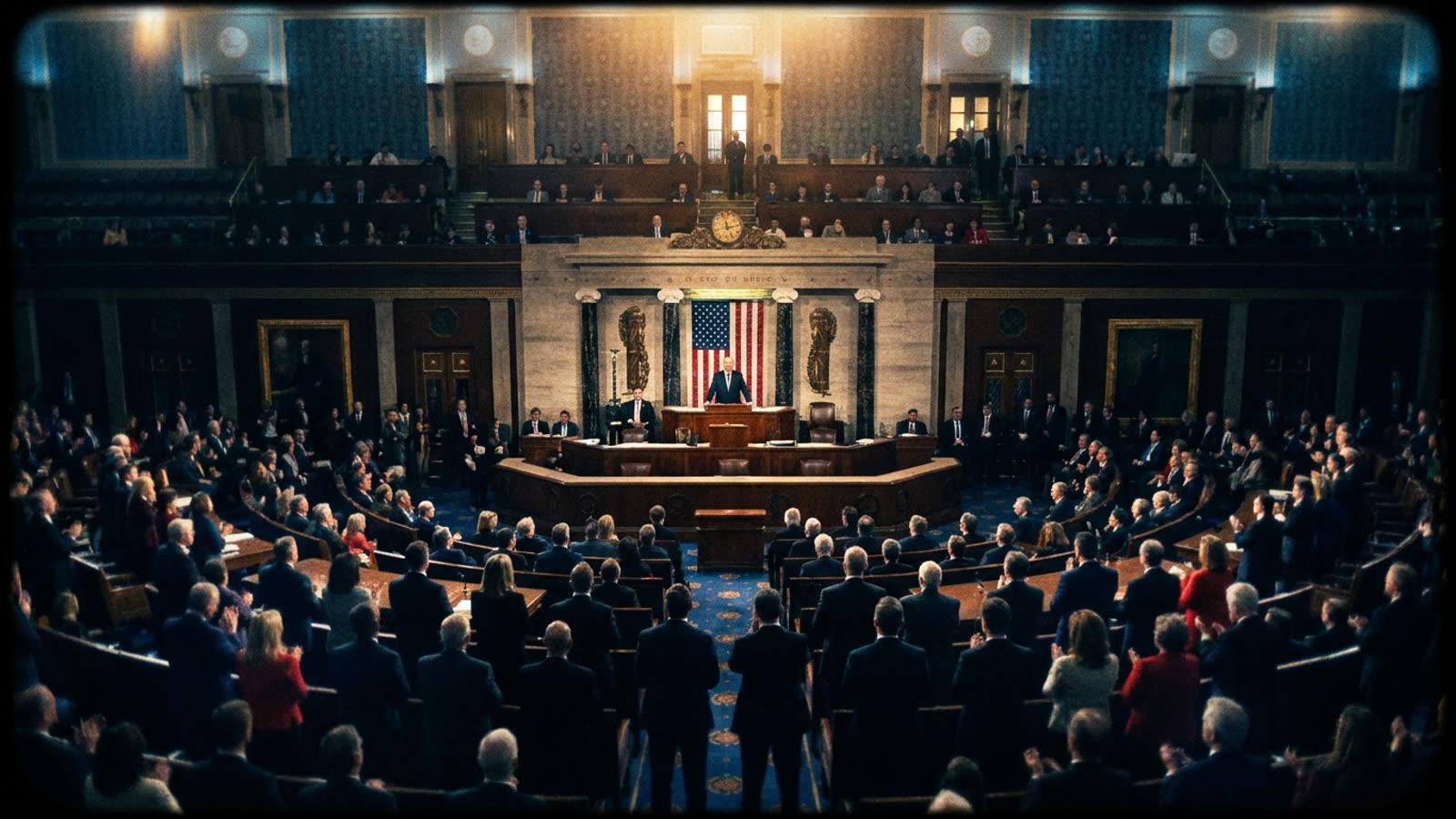
The Constitution mentions the Speaker of the House exactly once, in a single clause that says the House "shall chuse their Speaker." It offers no job description, no enumerated powers, no guidance whatsoever. Everything that makes the speakership the most consequential and most precarious position in American government has been invented, negotiated, and fought over in the two centuries since.
This constitutional silence is the point. The speakership is less an office than a continuous negotiation, a role whose power exists only so long as a fractious coalition agrees it does. Understanding how that negotiation actually works—the carrots, the sticks, the procedural arcana—illuminates why Congress so often appears paralyzed even when one party holds unified control.
The myth of the gavel
Americans tend to imagine the Speaker as a kind of legislative prime minister, someone who commands a disciplined majority and schedules votes to enact a coherent agenda. The reality is closer to a medieval monarch managing feudal lords. The Speaker controls the floor schedule, yes, but that power is only as strong as the willingness of members to show up and vote correctly. Unlike a prime minister, the Speaker cannot dissolve the legislature, call snap elections, or credibly threaten to end a member's career through party mechanisms alone.
What the Speaker actually controls is access: to committee assignments, to floor time for pet bills, to fundraising networks, to the literal physical space of the Capitol. These are patronage tools, not command-and-control levers. A determined faction of even fifteen or twenty members can make governance impossible by threatening to withhold votes on procedural motions that require a simple majority. The Speaker's real job is preventing that faction from forming, or, failing that, buying it off before it metastasizes.
The procedural knife drawer
The House Rules Committee is often called the Speaker's committee, and for good reason. It determines which bills reach the floor, under what terms, with which amendments allowed. A "closed rule" that permits no amendments is a gift to leadership; an "open rule" invites chaos. The Speaker's influence over the Rules Committee is the closest thing to genuine agenda control the office possesses.
But even this power has limits. The discharge petition—a procedural mechanism allowing a majority of members to force a bill to the floor over leadership's objection—exists as a constant implicit threat. It is rarely successful, but its existence shapes behavior. A Speaker who ignores a bill with genuine majority support risks humiliation. The mere collection of signatures on a discharge petition can force leadership to schedule a vote it would rather avoid.
Why speakers fall
Since the mid-twentieth century, the speakership has grown steadily more difficult to hold. The causes are structural: the decline of earmarks removed a key patronage tool; the rise of small-donor fundraising reduced members' dependence on party committees; primary elections empowered ideological activists over party regulars; and cable news created incentives for backbenchers to build personal brands through confrontation rather than cooperation.
The result is a job where the margin for error has collapsed. A Speaker who loses even a handful of members on a procedural vote—not a policy vote, but a vote on whether to proceed at all—faces instant crisis. The motion to vacate the chair, once an obscure parliamentary curiosity, has become a live weapon. The speakership now resembles a confidence government in a parliament without party discipline: perpetually one bad week from collapse.
Our take
The speakership's dysfunction is not a bug in the American system; it is the system working exactly as designed. The Founders wanted a legislature that could not easily be dominated by any single faction, and they got one. The price is a chamber where power is radically dispersed and leadership is an exercise in perpetual coalition maintenance rather than command. Anyone waiting for a strong Speaker to impose order on the House is waiting for a constitutional amendment, not a personnel change.