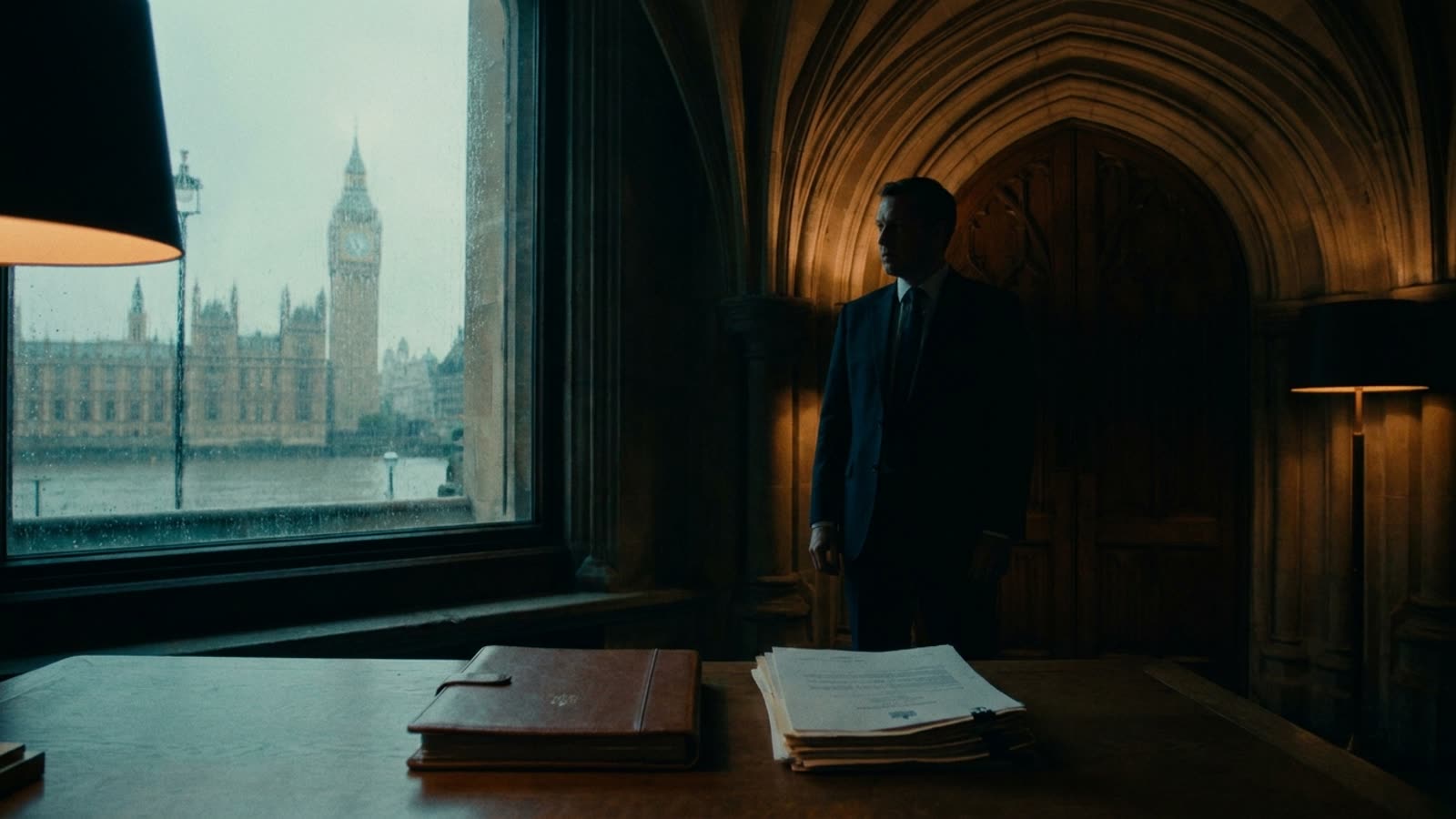
In most democracies, losing an election means retreating to the wilderness. In Westminster systems, it means forming a government-in-waiting and assigning your defeated colleagues ministerial portfolios they do not actually hold. The shadow cabinet is perhaps the oddest constitutional fiction in democratic politics: a parallel executive that exists purely to critique and prepare.
The arrangement seems almost theatrical. A politician who has never managed a hospital budget becomes Shadow Health Secretary. Someone with no foreign policy experience is named Shadow Foreign Secretary. They receive no classified briefings, command no civil servants, and control no budgets. Yet they are expected to speak with authority on their portfolios, hold actual ministers accountable, and be ready to assume real power at a moment's notice.
The Westminster invention
The shadow cabinet emerged organically in Britain during the nineteenth century, formalizing in the early twentieth. It rests on a crucial assumption: that the opposition is not merely an obstacle to governance but an alternative government temporarily out of office. This framing—Her Majesty's Loyal Opposition, in the British formulation—treats political competition as a rotation of equally legitimate governing teams rather than a contest between rulers and dissidents.
The Leader of the Opposition in Britain receives a state salary specifically for this role. Shadow cabinet members gain access to parliamentary resources and, in some systems, limited briefings on national security matters. The convention acknowledges that democracies function better when power transitions are seamless, and seamlessness requires preparation.
What shadows actually do
A shadow minister's job is threefold. First, they must master their portfolio well enough to credibly challenge the sitting minister during parliamentary debates and committee hearings. Second, they develop alternative policies their party would implement if elected. Third, they serve as their party's public voice on that issue, appearing in media and shaping public perception.
The role is simultaneously less and more demanding than actual ministerial office. Less, because there are no genuine decisions to make, no crises requiring immediate action, no civil service machinery to manage. More, because shadow ministers must be perpetually critical without appearing merely negative, must propose alternatives without the resources to fully cost them, and must maintain expertise on issues they cannot actually influence.
Why presidential systems lack equivalents
The United States has no shadow cabinet, and the difference illuminates something fundamental about parliamentary versus presidential democracy. In Westminster systems, the executive emerges from the legislature; the prime minister is simply the legislator who commands a parliamentary majority. The opposition leader is therefore always a potential prime minister, and their team are potential ministers.
In presidential systems, the executive is separately elected. A losing presidential candidate has no institutional role. They might become a senator or governor, but they are not designated leader of an alternative executive. This means presidential democracies lack a formal mechanism for preparing opposition figures for executive responsibility—one reason transitions can be chaotic and why incoming administrations often struggle with basic competence in their early months.
Our take
The shadow cabinet deserves more attention from democratic reformers than it receives. It solves a genuine problem: how do you ensure that people who might suddenly need to run a country have practiced thinking like people who run countries? The answer Westminster found—make them pretend to already be doing it, in public, under scrutiny—is elegant precisely because it is absurd. The fiction of the parallel government forces opposition politicians to be specific, to be accountable for their proposals, and to develop the habits of responsibility before responsibility arrives. That so few democracies have adopted anything similar suggests either that the convention is too culturally specific to export, or that most political systems prefer their oppositions unready.