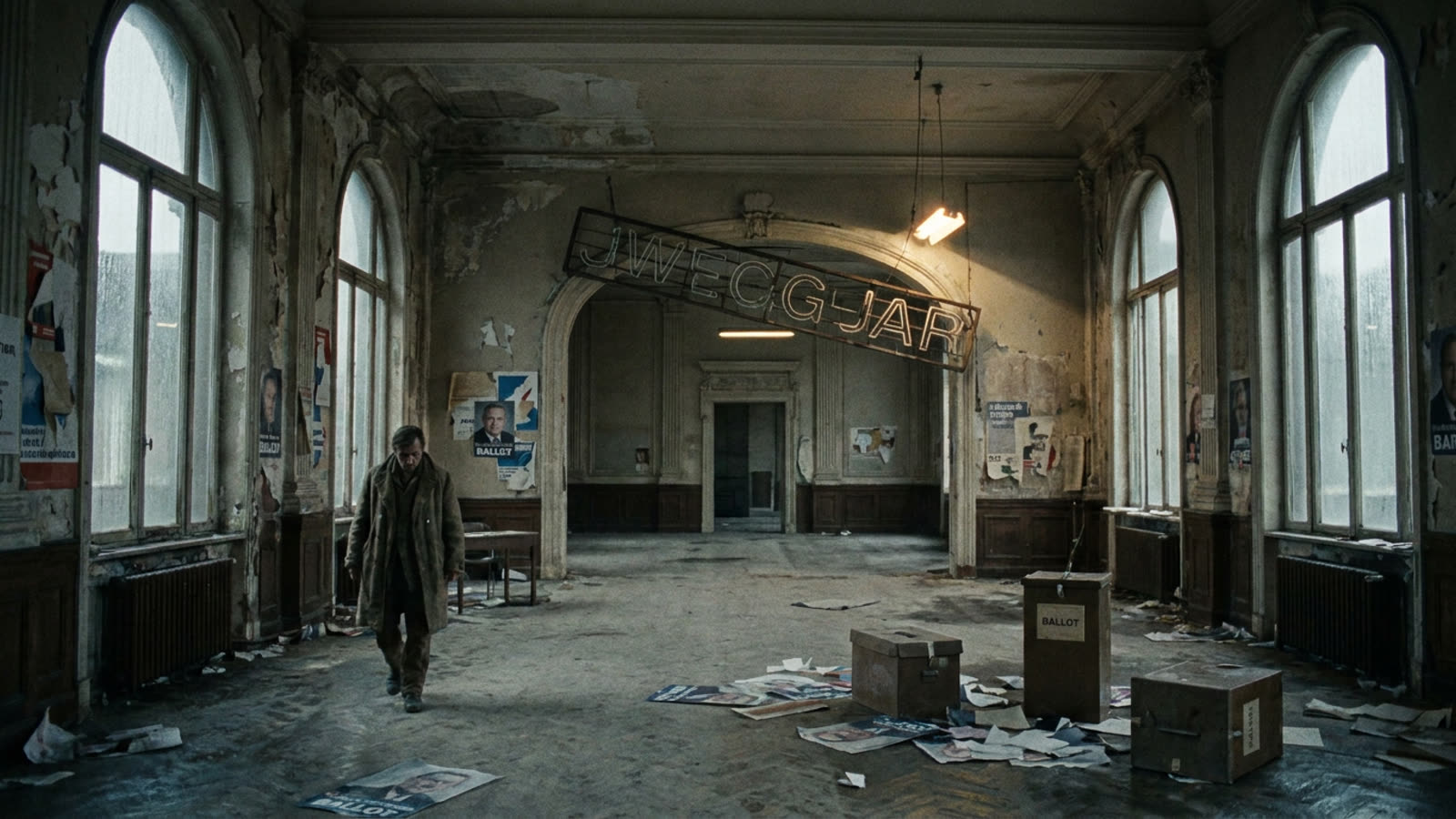
The death of a political party is never a single event. It is a slow hemorrhage of purpose, a gradual revelation that the coalition assembled to solve yesterday's crisis has nothing coherent to say about tomorrow's. The corpses of once-dominant parties litter democratic history, and their autopsies reveal strikingly similar causes of death.
The American Whig Party, which elected two presidents and controlled Congress, dissolved within a decade of its peak strength. The Italian Christian Democrats, who governed for nearly half a century, vanished almost overnight in the early 1990s. Britain's Liberal Party, which produced giants like Gladstone and Lloyd George, shrank to a parliamentary rump before merging itself out of independent existence. These were not fringe movements. They were the establishments of their eras.
The anatomy of collapse
Party death typically follows a three-stage pattern. First comes ideological exhaustion: the core issue that unified the coalition either gets resolved or becomes irrelevant. The Whigs built themselves around opposition to Andrew Jackson's executive overreach and support for internal improvements. Once Jackson left the scene and the improvements were built, what remained was a loose collection of interests with no shared enemy and no shared vision.
Second comes the fracturing crisis—usually a new issue that cuts across the existing coalition rather than reinforcing it. For the Whigs, it was slavery's expansion westward. For the Italian Christian Democrats, it was the end of the Cold War, which eliminated the specter of communism that had kept Catholic conservatives, urban moderates, and rural traditionalists voting together despite their differences. When the external threat vanished, so did the internal logic.
Third comes the talent exodus. Ambitious politicians are exquisitely sensitive to institutional decay. They begin defecting to rising alternatives before the collapse becomes obvious to voters. This accelerates the spiral: the party loses its most capable figures precisely when it needs them most.
Why establishments miss the signs
Party leaders almost never see their own obsolescence approaching. This is partly structural: the people who rise to the top of a party are those most invested in its existing arrangements. They mistake institutional loyalty for political health. They interpret warning signs—primary challenges, declining enthusiasm, defections—as problems of messaging or personality rather than symptoms of deeper irrelevance.
The British Liberals spent decades convinced that better candidates and sharper campaigns would restore their position, never quite accepting that the rise of Labour had permanently reorganized the electorate around a class divide the Liberals were poorly positioned to exploit. By the time they understood this, two generations of voters had grown up thinking of politics as a Conservative-Labour contest.
The survivors' playbook
Not every crisis kills a party. Some manage reinvention. The key appears to be whether the party can identify a new organizing principle before the talent exodus reaches critical mass. The American Democrats survived the loss of the South by building a coalition around civil rights and the welfare state. The British Conservatives have repeatedly shed ideological skins—from imperial preference to Thatcherite free markets to Brexit nationalism—while maintaining institutional continuity.
Successful reinvention requires leaders willing to alienate significant portions of the existing coalition in pursuit of a larger or more durable one. This is politically terrifying, which is why it rarely happens until the alternative is extinction.
Our take
The parties most vulnerable to collapse are those most convinced of their permanence. Dominance breeds complacency, and complacency breeds the assumption that voters have nowhere else to go. But voters always have somewhere else to go—they can stay home, they can drift to insurgent movements, they can wait for a new vehicle to emerge. The Whigs thought they were too established to fail. The Christian Democrats thought they were too essential to Italian stability to disappear. History suggests that no party is too big to die; they simply become too hollow to live.