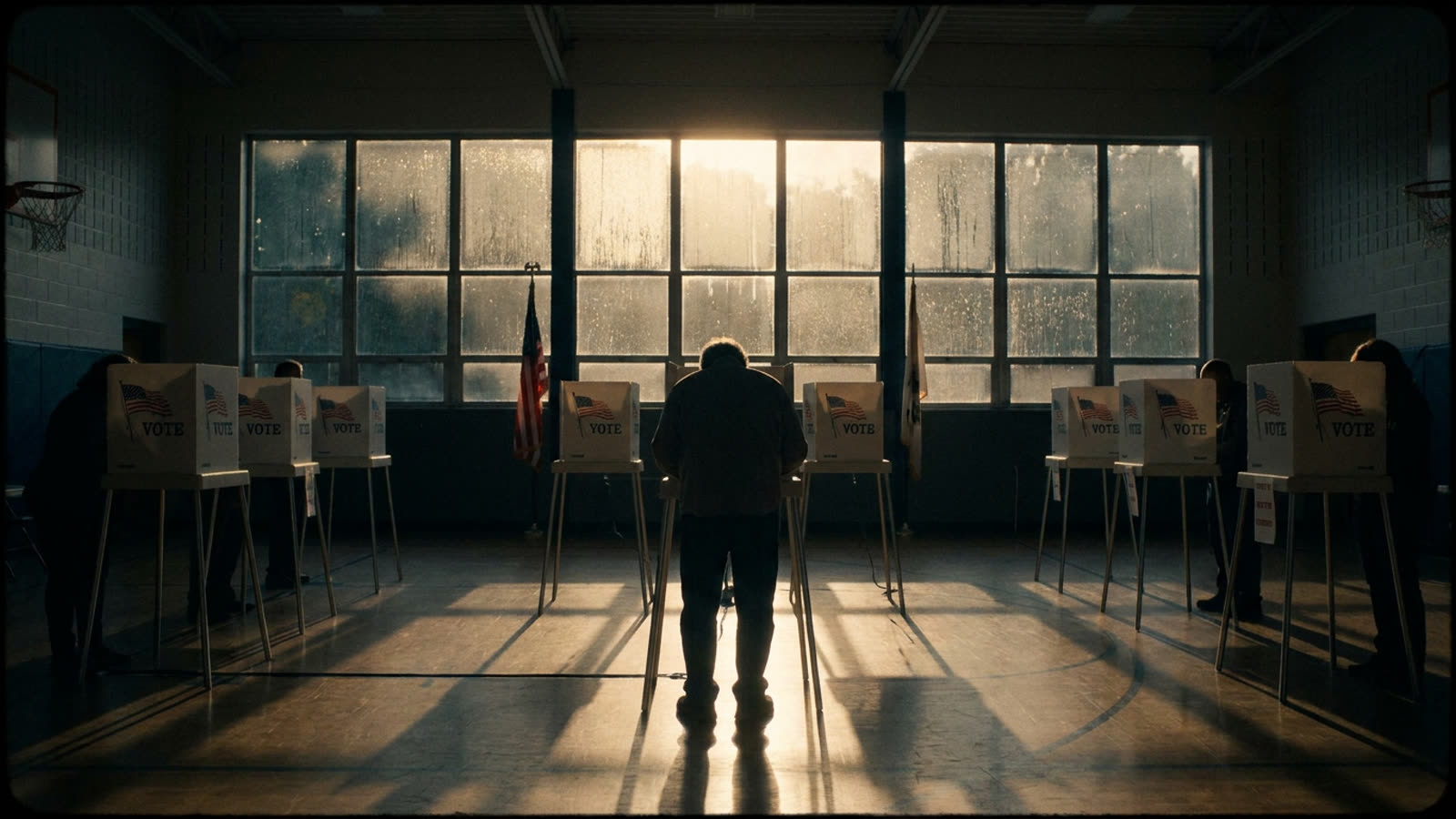
The most consequential elections in American politics are the ones almost nobody votes in. Congressional primaries routinely draw turnout below fifteen percent, yet these obscure contests determine which candidates appear on November ballots — and increasingly, which ideological faction controls the party.
This is not a bug in American democracy. It is the central feature of a system that has systematically transferred power from party professionals to the most motivated sliver of each party's base, with predictable results for governance.
The reform that backfired
For most of American history, party nominees were chosen by conventions of local leaders, ward bosses, and elected officials — the infamous smoke-filled rooms. The system was corrupt and exclusionary, but it produced candidates who could actually win general elections and, crucially, who owed their positions to colleagues they would need to work with in office.
The progressive movement of the early twentieth century attacked this arrangement as undemocratic. Wisconsin introduced the first statewide primary in 1903, and the model spread gradually. But the real transformation came after the chaotic 1968 Democratic convention, when party reforms mandated that delegates be chosen through primaries or caucuses open to ordinary voters.
The intention was noble: let the people decide. The consequence was perverse: the people who decide are overwhelmingly those with the time, motivation, and ideological intensity to vote in low-turnout elections held on random Tuesdays in spring.
The math of extremism
Primary electorates are not representative samples of general election voters, let alone the broader public. They skew older, wealthier, more educated, and far more ideologically committed. A Republican primary voter is substantially more conservative than the median Republican; a Democratic primary voter is substantially more liberal than the median Democrat.
This creates a structural incentive for candidates to position themselves at the ideological poles. A moderate Republican who might win a general election by twenty points can lose a primary to a hardliner who excites the base. The rational strategy is to secure the nomination first and worry about electability later — except in safely partisan districts, where the primary winner faces no meaningful general election at all.
The result is a Congress full of members who have never had to persuade a voter who disagreed with them on anything fundamental. Compromise becomes not just politically dangerous but personally alien.
Why reform is nearly impossible
Various alternatives exist. California and Washington use top-two primaries, where all candidates compete on a single ballot and the two highest vote-getters advance regardless of party. Alaska and Maine have experimented with ranked-choice voting. Some political scientists advocate returning some power to party leaders through superdelegates or endorsement processes.
But any reform must be enacted by legislators who won their seats under the current system — the very people least likely to change rules that favor them. Primary voters themselves have little incentive to dilute their own influence. And the activists, donors, and media figures who dominate primary politics have built entire careers around the existing structure.
Our take
The primary system is a textbook case of a reform that solved yesterday's problem while creating tomorrow's crisis. Smoke-filled rooms were genuinely undemocratic, but they produced politicians who understood that governing requires negotiation. The current arrangement is formally democratic but functionally oligarchic — controlled by a tiny, unrepresentative minority that demands ideological purity over practical competence. Until Americans recognize that more democracy in candidate selection has produced less representative government, the dysfunction in Washington will continue to mystify everyone except the people who benefit from it.