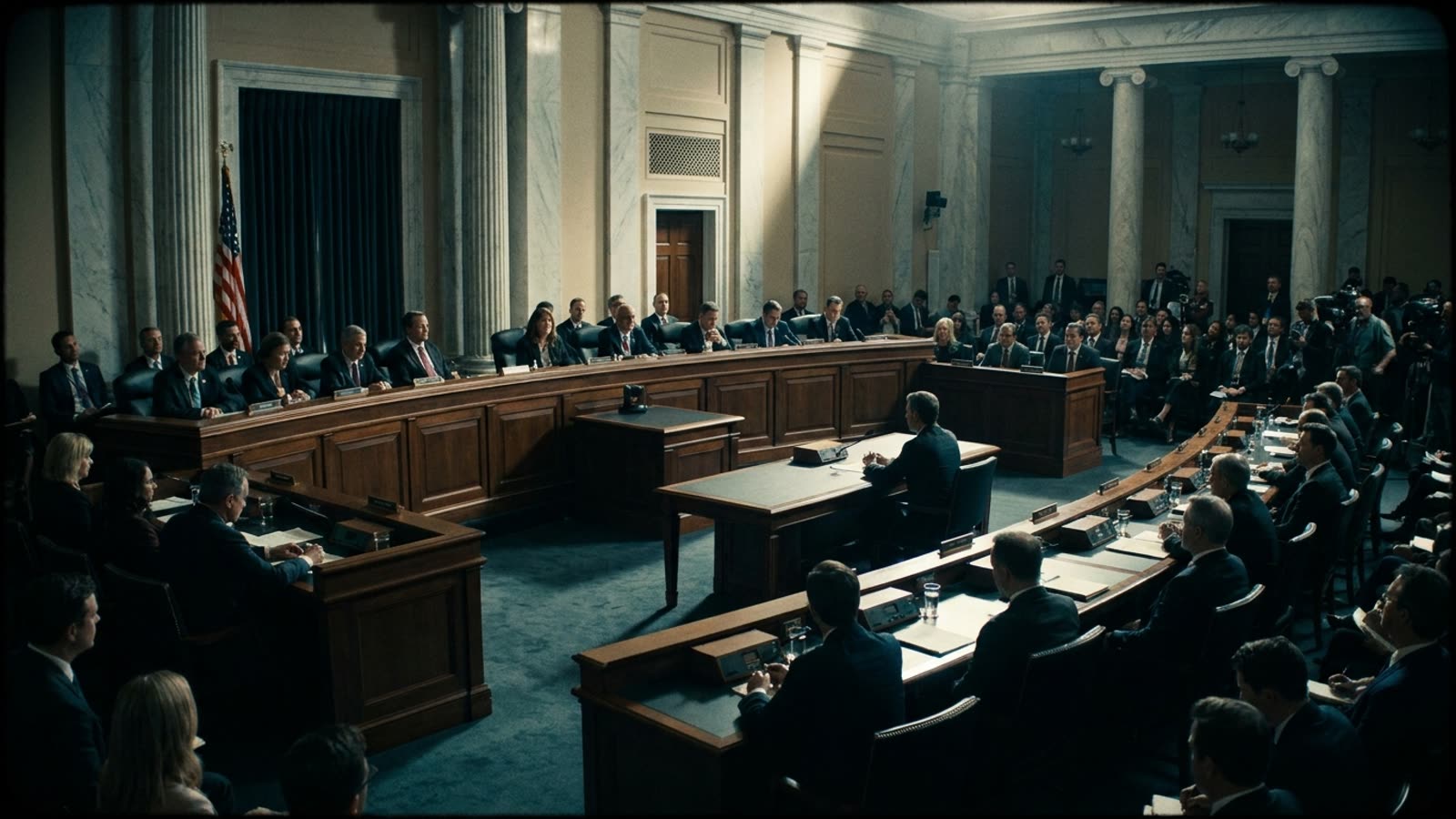
The no-confidence motion is democracy's most theatrical mechanism — a single vote that can evict a head of government between breakfast and dinner. Yet for all its drama, the procedure is widely misunderstood, treated by casual observers as a kind of parliamentary coup when it is, in practice, something far more mundane: an accounting exercise in loyalty.
In parliamentary systems from Westminster to Berlin to Ottawa, the executive governs only so long as it commands the confidence of the legislature. Lose that confidence, formally tested, and the government falls. The principle sounds revolutionary. The reality is that sitting governments almost never lose confidence votes they did not choose to lose. The mechanism's true function is not to surprise prime ministers but to discipline them — a loaded gun that rarely fires because everyone in the room knows it is loaded.
The mechanics of survival
A confidence vote, whether initiated by the opposition or attached by the government to controversial legislation, requires a simple majority in most systems. The arithmetic seems straightforward, but the political math is not. Backbenchers who vote against their own government do not merely register dissent; they trigger an election in which they must defend their seats, often against candidates handpicked by the party leadership they just betrayed. This asymmetry explains why confidence votes so reliably produce the result the whips expect.
Germany's constructive vote of no confidence, enshrined in the Basic Law after Weimar's instability, adds a further constraint: the Bundestag can only remove a chancellor by simultaneously electing a successor. The mechanism has been attempted twice and succeeded once, in 1982, when Helmut Kohl replaced Helmut Schmidt through a pre-negotiated coalition switch rather than a spontaneous revolt. The lesson is instructive — confidence votes succeed when the alternative government already exists, not when opposition merely coalesces around rejection.
When the gun actually fires
The exceptions prove the rule. Britain's James Callaghan lost a confidence motion in 1979 by a single vote after his Labour government's pact with the Liberals collapsed and Scottish National Party MPs, furious over a failed devolution referendum, switched sides. The defeat was not a surprise attack but the culmination of months of visible erosion. Similarly, Canada's Joe Clark fell in late 1979 after his minority Progressive Conservative government miscounted its own supporters before a budget vote. Both cases involved governments already weakened beyond recovery; the confidence vote was the coroner, not the assassin.
More common is the confidence vote as political theatre. Opposition parties table motions they know will fail, seeking not victory but a news cycle. Governments attach confidence to bills they expect to pass, converting routine legislation into tests of loyalty that silence dissent. The mechanism's power lies precisely in its predictability — it structures behavior long before any vote is called.
Our take
The no-confidence motion endures because it solves a genuine problem: how to remove a failed executive without waiting for a fixed election calendar. But its reputation as a dramatic check on power overstates the case. In healthy parliamentary systems, confidence is lost gradually, in polling and by-elections and caucus grumbling, long before any formal vote. The motion itself is usually the last act of a slow-motion collapse, not its catalyst. Understanding this makes the occasional genuine upset — a Callaghan, a Clark — all the more remarkable, and the theatrical failures all the more transparent.