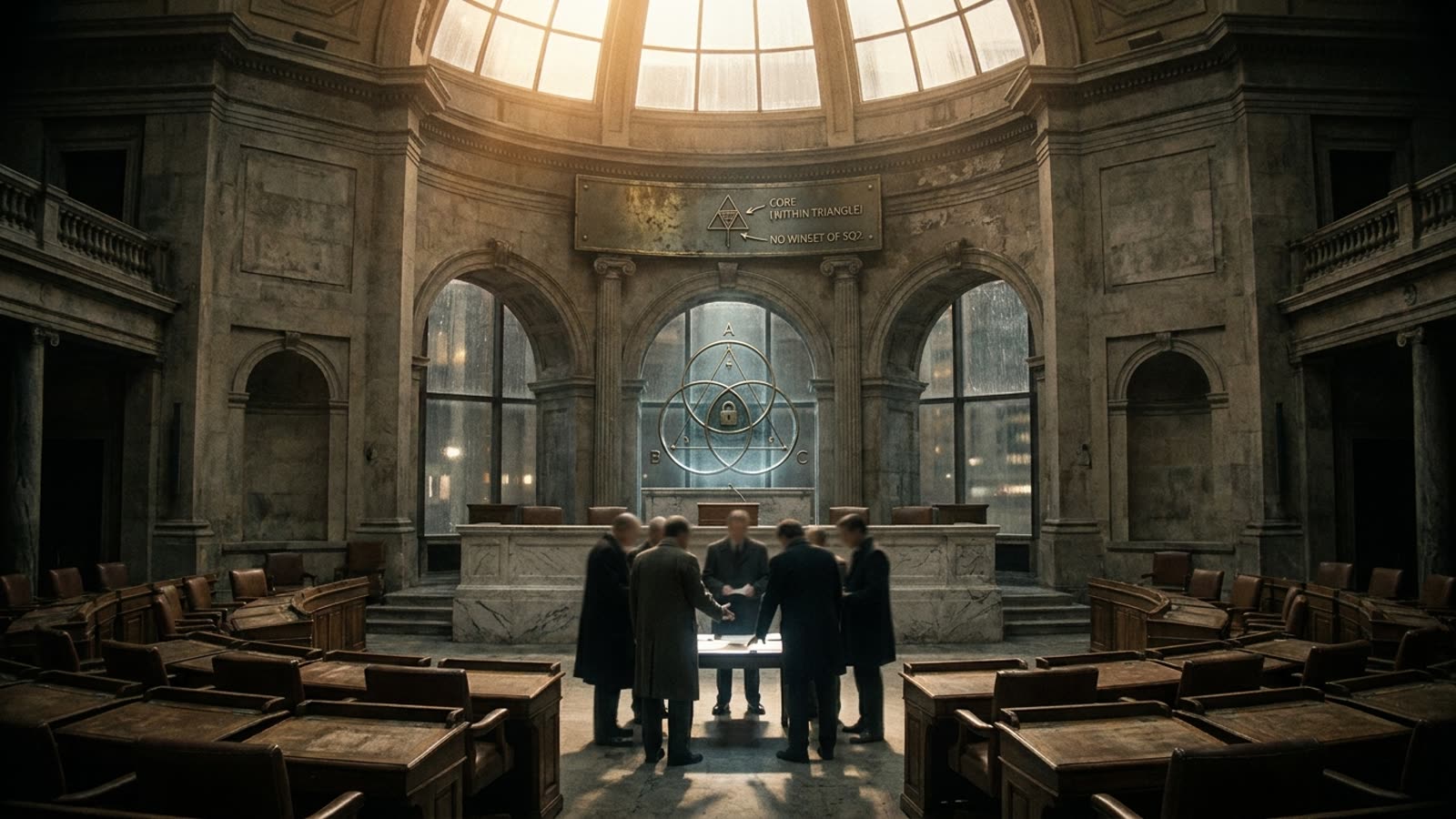
The fantasy of coalition government is that parties with different visions sit down, find common ground, and govern in the spirit of compromise. The reality is considerably more interesting: successful coalitions are machines for managing conflict, not resolving it. They survive precisely because they assume their members would betray each other given half a chance.
This is not cynicism. It is constitutional engineering.
The coalition agreement as treaty
When parties form a government together, they produce a document that reads less like a political manifesto than like an armistice. Germany's coalition agreements routinely exceed 150 pages. Israel's can run longer. These texts exist not to inspire but to constrain. Every ministry allocation, every policy commitment, every procedural rule for handling disputes is specified in exhausting detail because the parties know they will spend the next several years looking for reasons to blame each other.
The genius of a well-drafted coalition agreement is that it transforms political disagreements into contract disputes. When the junior partner wants to block a policy, they do not need to manufacture a crisis; they simply point to paragraph 47, subsection 3. The agreement becomes a shared language for managed antagonism.
The portfolio allocation game
Ministries are not distributed based on competence or even ideology. They are distributed based on veto power. A party that controls the finance ministry can starve its partners' initiatives of funding. A party that controls the interior ministry can slow-walk implementation of policies it dislikes. The allocation of portfolios is therefore a negotiation over which forms of obstruction each party will be permitted to deploy.
This explains why coalition negotiations often take months. The parties are not searching for philosophical alignment; they are constructing an elaborate system of mutual checks. Each side needs enough leverage to protect its core interests but not so much that it can dominate. The resulting distribution often appears arbitrary to outside observers. It is anything but.
The exit option as glue
Paradoxically, what holds coalitions together is the ever-present possibility of their collapse. Junior partners tolerate indignities because the alternative—early elections—might prove worse. Senior partners moderate their ambitions because pushing too hard could trigger a walkout. The threat of mutual destruction disciplines everyone.
This is why coalitions often become more stable as elections approach. When the next vote is years away, partners can afford theatrical confrontations. When it is imminent, the calculus shifts. The devil you know becomes preferable to the electoral uncertainty you do not.
Our take
Democracies that rely on coalition government are often described as unstable or gridlocked. The opposite is closer to the truth. They have simply made their instability visible and procedural rather than hidden and explosive. A system that forces rivals to share power and negotiate their conflicts in writing may be messier than one-party rule, but it is also more honest about what politics actually is: the management of disagreement among people who must somehow live together. The coalition agreement, for all its bureaucratic tedium, is one of democracy's underrated inventions.