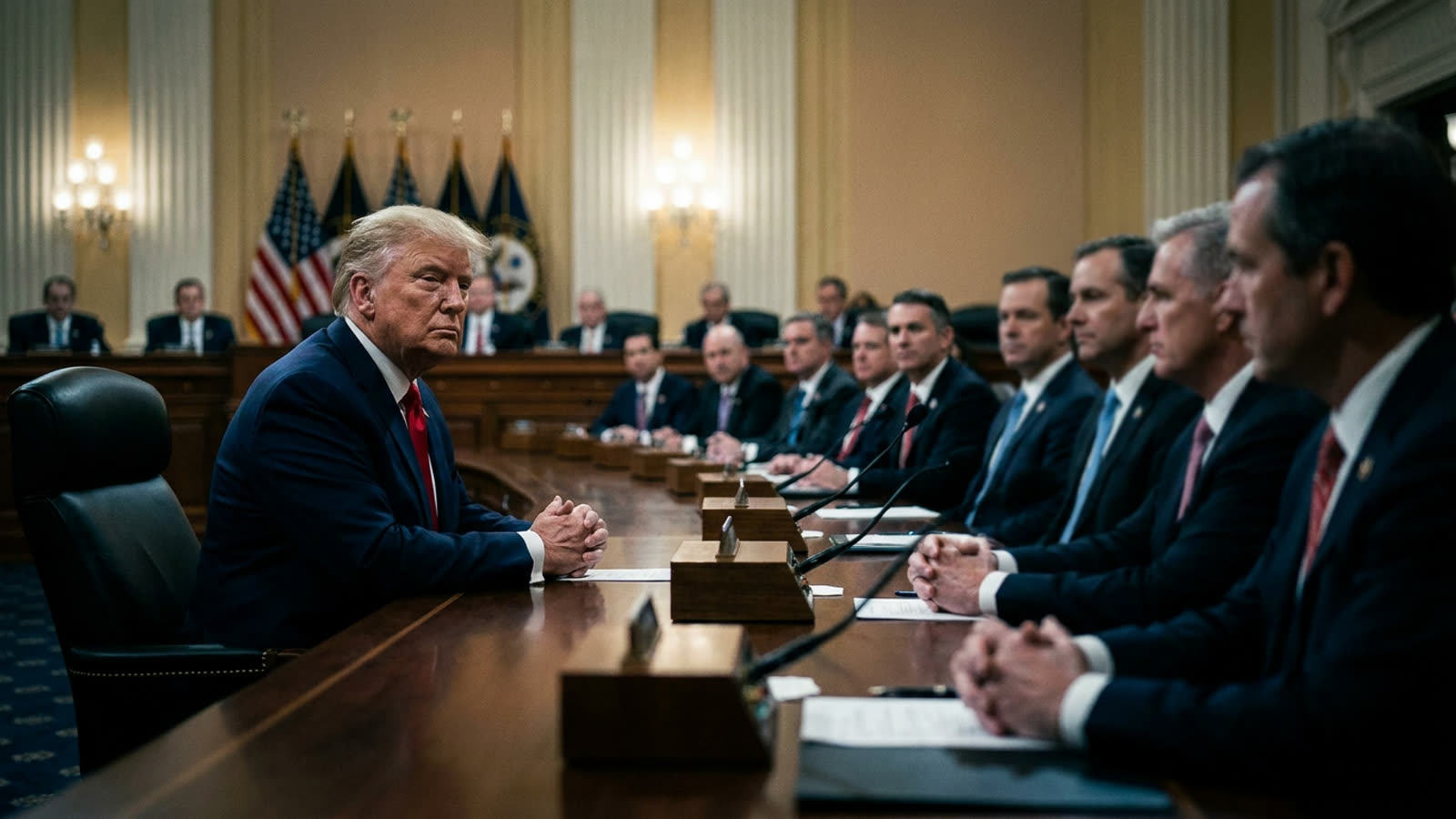
The prediction market industry's honeymoon with Washington is over. House Oversight Committee Chair James Comer has launched a formal investigation into potential insider trading on Kalshi and Polymarket, the two platforms that have transformed political gambling from a niche curiosity into a multi-billion-dollar phenomenon.
The probe arrives at a moment when prediction markets have never been more visible—or more controversial. During the 2024 election cycle, Polymarket processed over $3 billion in wagers on the presidential race alone, while Kalshi's CFTC-approved political contracts brought the practice into the regulated mainstream. Both platforms have since expanded aggressively, offering contracts on everything from Fed rate decisions to Supreme Court rulings.
The information asymmetry problem
The core concern is structural: prediction markets function only when participants have roughly equivalent access to information. But political betting attracts a particular class of participant—lobbyists, staffers, consultants, and others with genuine inside knowledge of legislative outcomes, regulatory decisions, and policy shifts. The question Comer's committee is asking is whether these insiders have been systematically exploiting their informational advantages.
Unlike securities markets, prediction platforms operate with minimal disclosure requirements. There's no equivalent of Form 4 filings revealing when a congressional aide takes a position on a bill she's helping draft. The platforms maintain that their terms of service prohibit trading on material non-public information, but enforcement mechanisms remain opaque at best.
A regulatory vacuum
The investigation exposes a genuine gap in American financial regulation. Kalshi operates under CFTC oversight as a designated contract market, but the agency's insider trading framework was designed for commodity futures, not political outcomes. Polymarket, meanwhile, operates offshore and serves U.S. customers through a legal gray zone that the CFTC has periodically challenged but never fully closed.
Both platforms have argued that their markets actually improve democratic transparency by aggregating dispersed information into price signals. The academic literature on prediction market accuracy is genuinely impressive. But accuracy and fairness are different values, and the former doesn't guarantee the latter.
Our take
This probe was inevitable and overdue. Prediction markets are useful precisely because they attract informed participants—but "informed" shades into "insider" faster in politics than in any other domain. The industry's growth has outpaced any coherent regulatory framework, and the platforms have been content to let that ambiguity persist. Comer's investigation may be politically motivated (the timing, just as markets show unfavorable odds for certain Republican initiatives, is convenient), but the underlying questions are legitimate. If prediction markets want to be treated as serious financial infrastructure rather than offshore casinos, they'll need to accept serious financial oversight. The alternative is a crackdown that makes the current CFTC skirmishes look quaint.