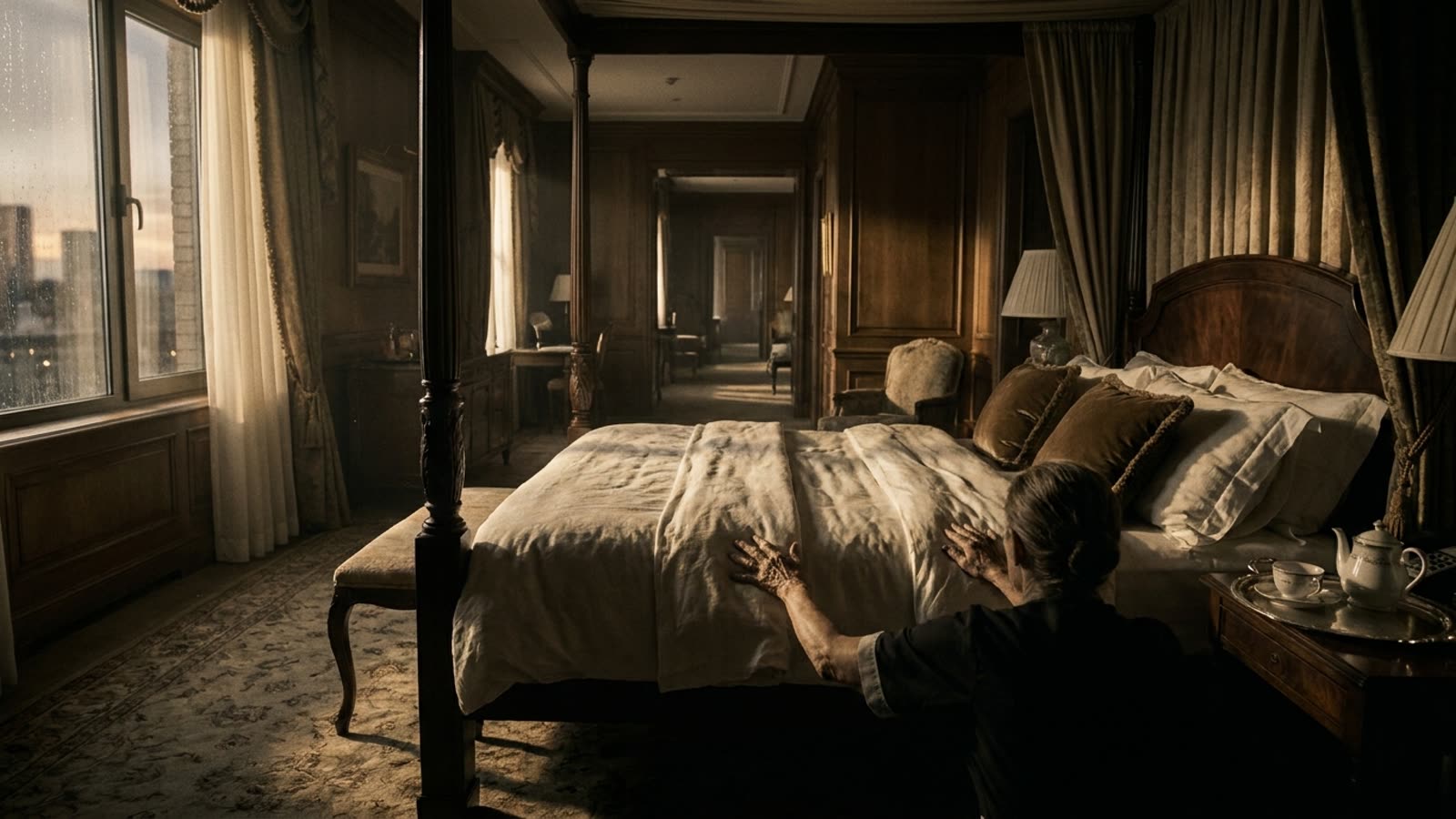
There was a time when the measure of a hotel could be taken at dusk. Around six o'clock, a housekeeper would slip into your room, draw the curtains against the fading light, fold back the duvet at a precise forty-five-degree angle, place slippers by the bedside, leave a chocolate on the pillow, and perhaps tune the radio to something classical. You would return from dinner to find your temporary home transformed into a cocoon. The message was unmistakable: someone has been thinking about your comfort while you were away.
That ritual, once standard at any hotel aspiring to respectability, has become genuinely rare. The decline accelerated during the pandemic, when housekeeping was reframed as an intrusion rather than a service. But the erosion began earlier, as hotels discovered that guests under forty often found the practice vaguely unsettling—the idea of a stranger entering their room while they dined felt less like care than surveillance. The economics were already unfavorable: turndown requires a dedicated evening shift, typically the hardest to staff, for a service that generates no direct revenue and that many guests actively decline.
The choreography of care
What made turndown meaningful was never the chocolate, which even at the Ritz was just a chocolate. It was the evidence of attention—the reading glasses moved to the nightstand, the robe hung within reach of the shower, the thermostat adjusted to sleeping temperature. The best turndown attendants operated like theatrical stagehands, resetting the room between acts so the guest could step into a new scene. The Mandarin Oriental in Hong Kong famously trained staff to note which side of the bed showed signs of use and turn down only that side. The Peninsula hotels would replace any toiletry used during the day. These were not efficiencies; they were extravagances, and that was precisely the point.
The practice descends from the great European houses of the nineteenth century, where valets and lady's maids prepared their employers' chambers each evening. Hotels adopted the ritual as they evolved from coaching inns into destinations for the leisured class. By the mid-twentieth century, turndown had become the hospitality industry's version of the fish fork: a marker of establishment, a signal that one had arrived at a certain stratum.
What replaced it
The contemporary luxury hotel has substituted technology for touch. You can now adjust your curtains, temperature, and lighting from an app. A text to the concierge will summon anything you need. The bed itself may cost more than a small car, engineered to eliminate the need for human intervention. These are genuine improvements in comfort. They are not the same thing.
Some properties have attempted compromise. A few offer turndown on request, transforming an automatic grace note into an opt-in transaction. Others have replaced the evening visit with an elaborate morning ritual—extensive breakfast service, wellness programming, the cult of the hotel gym. The Aman resorts, perhaps the most self-consciously ritualistic brand in hospitality, have leaned further into turndown as a differentiator, treating it as performance art. But these are exceptions. For most hotels, even those charging rates that would have seemed fantastical a generation ago, the evening knock has simply stopped coming.
Our take
The loss of turndown service is a small thing, and that is what makes it interesting. Hotels have gotten better at almost everything measurable—mattresses, water pressure, blackout curtains, connectivity. What they have gotten worse at is the unmeasurable: the sense that an institution is paying attention to you specifically, that your comfort has been someone's conscious project. The chocolate on the pillow was never about the chocolate. It was proof that while you were out living your life, someone was preparing for your return. That kind of care has always been inefficient. It may also be irreplaceable.