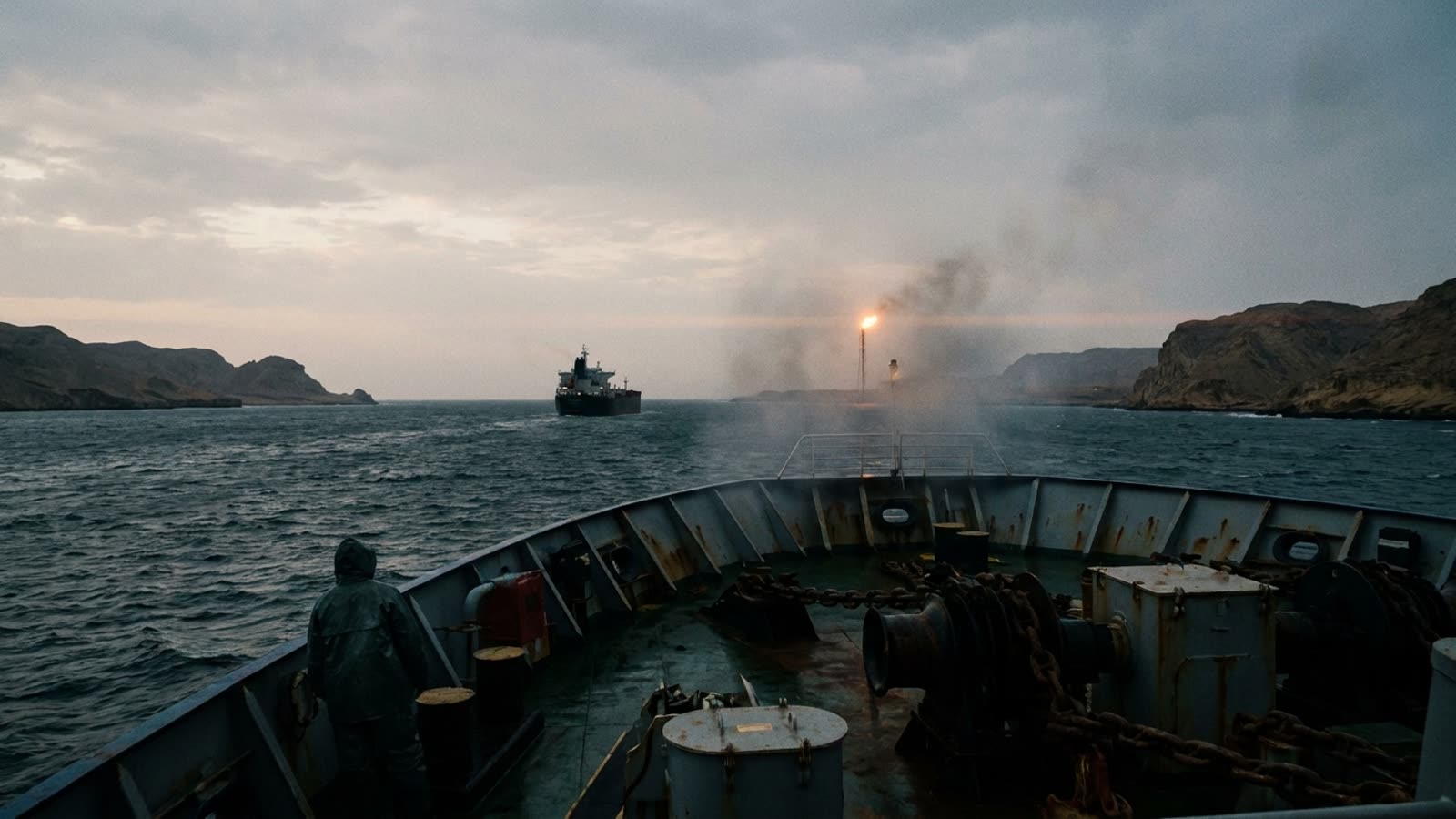
The Strait of Hormuz remains open for business, but the business has become ruinously expensive. Despite a sharp increase in attacks on commercial vessels transiting the narrow waterway between Iran and Oman—through which roughly a fifth of global oil supply passes—tankers continue to make the journey. Transportation costs, however, have skyrocketed to levels not seen since the height of Somali piracy, with some routes now commanding premiums three times their pre-escalation rates.
The resilience of Gulf oil flows in the face of mounting risk underscores both the strategic irreplaceability of the region and the willingness of shipping operators to price danger rather than avoid it. For now, the global energy market is absorbing the shock through higher freight charges rather than supply disruptions. That calculus could shift quickly if a major incident forces insurers to withdraw coverage altogether.
The new economics of risk
Insurance premiums for vessels entering the Strait have surged alongside transportation costs, with war-risk policies now adding seven-figure sums to each voyage. Lloyd's of London syndicates are reportedly requiring case-by-case underwriting for tankers calling at Gulf ports, a level of scrutiny typically reserved for active conflict zones. Some operators are self-insuring or sailing with reduced coverage, a gamble that works until it doesn't.
The attacks themselves—a mix of drone strikes, attempted boardings, and missile threats attributed to Iranian-backed militias—have not yet resulted in a catastrophic loss, but the frequency is climbing. Two tankers reported damage from drone impacts in the past month alone, and a Liberian-flagged vessel narrowly avoided a missile strike off the Omani coast. The pattern suggests a strategy of harassment rather than interdiction, designed to raise costs without provoking a military response that would shut the strait entirely.
Why the oil still moves
The simple answer is that there is no alternative. Saudi Arabia, the UAE, Kuwait, and Iraq collectively export more than 17 million barrels per day through Hormuz, and while some Gulf producers have built pipelines to bypass the strait, those routes cannot handle the volume. Rerouting shipments around Africa would add weeks to delivery times and require a fleet expansion the industry cannot execute on short notice.
Buyers, particularly in Asia, are also willing to pay the premium. China and India have continued to lift Gulf crude at elevated freight rates, viewing the cost as manageable compared to the disruption of switching suppliers. European importers, already grappling with energy security concerns after years of Russian supply volatility, have little appetite for adding Middle Eastern uncertainty to the mix. The result is a market that has quietly accepted higher costs as the price of continuity.
Our take
The Strait of Hormuz has always been a geopolitical pressure point, but the current escalation reveals something new: the threshold for what counts as "unacceptable risk" in global shipping has moved. Operators are now routinely navigating conditions that would have grounded fleets a decade ago, because the alternative—walking away from the Gulf—is economically unthinkable. That adaptability is impressive until it isn't. If a single catastrophic incident forces insurers to pull coverage en masse, the entire structure collapses overnight. For now, the oil flows, but the margin for error is thinner than the strait itself.