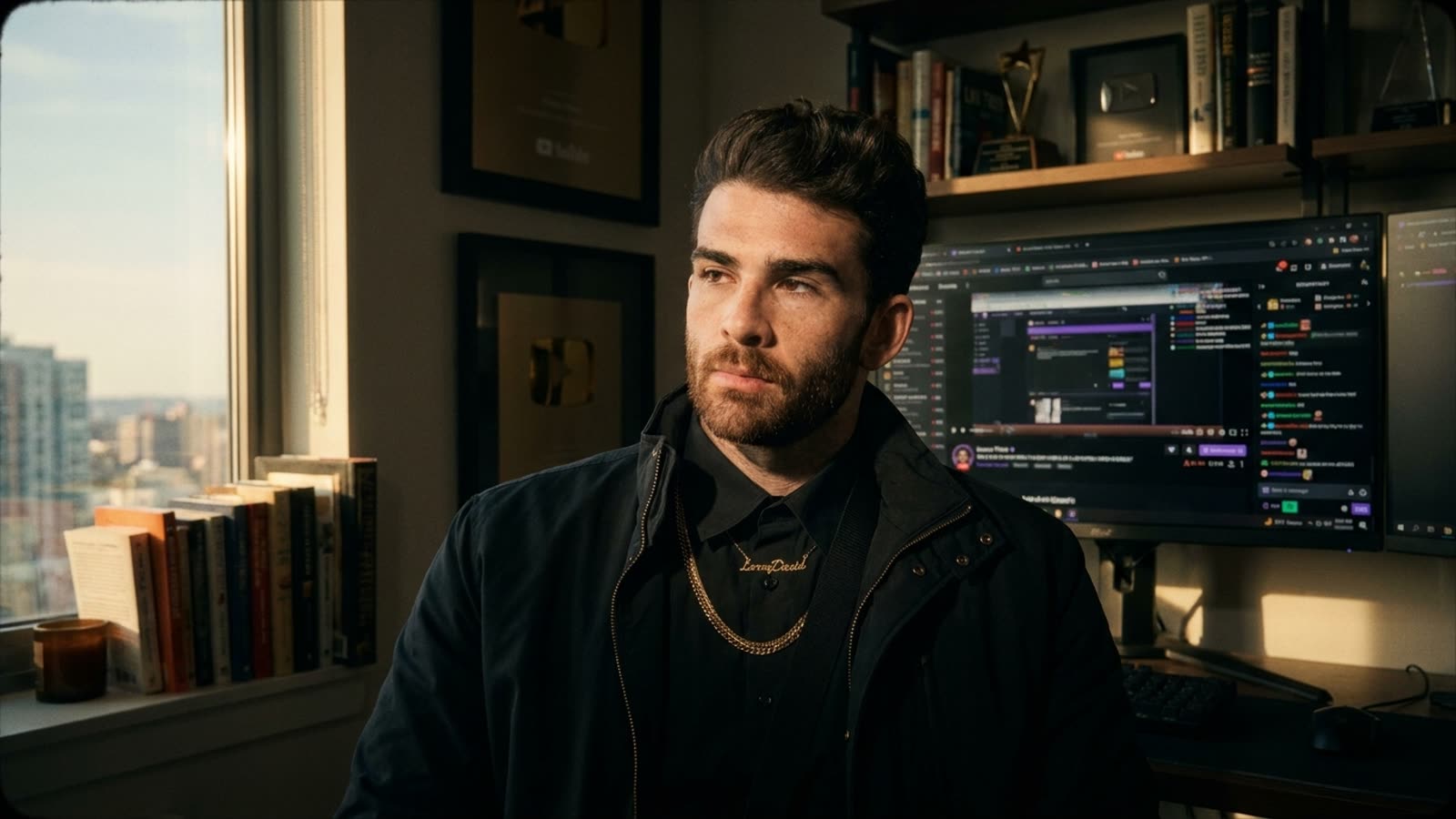
The most-watched political commentator in America doesn't work for a network, doesn't have a journalism degree, and spent his formative professional years reacting to videos while playing video games. Hasan Piker, the 34-year-old Twitch streamer who has amassed over 2.5 million followers on the platform, represents something traditional media executives find deeply unsettling: proof that their entire distribution model may be obsolete.
Piker's trajectory from Young Turks producer to solo streaming phenomenon has been well-documented, but 2026 marks something of an inflection point. His coverage of the Iran conflict has drawn viewership numbers that rival cable news programs, while his audience skews toward precisely the demographic—18-to-34-year-olds—that legacy outlets have hemorrhaged for a decade.
The parasocial advantage
What separates Piker from traditional pundits isn't ideology—the American left has plenty of voices—but intimacy. His streams run for eight hours or more, during which viewers watch him eat, argue with his chat, and occasionally lose his temper. This isn't a bug; it's the entire product. The parasocial relationship that develops over hundreds of hours of shared screen time creates a loyalty that no nightly news broadcast can replicate.
Critics, particularly on the right, have seized on Piker's more inflammatory moments and his willingness to platform controversial guests. But controversy has only fed the algorithm. Each clip that escapes to Twitter becomes free advertising, driving curious viewers back to the source.
The money question
Piker's income—reportedly in the millions annually from subscriptions, donations, and sponsorships—has itself become a recurring controversy. How can a self-described socialist live in a multi-million-dollar Los Angeles home? Piker's response, that individual consumption choices don't constitute political hypocrisy, satisfies his fans and enrages his detractors, which is probably the point. The discourse sustains the brand.
More interesting is what his success suggests about media economics. Piker operates with minimal overhead: no production staff in the traditional sense, no expensive sets, no union contracts. The margin on a Twitch subscription is almost entirely profit. Legacy media cannot compete on these terms.
Our take
Whether you find Piker insightful or insufferable is beside the point. He has identified something real: that younger audiences want commentary delivered by someone who feels like a person rather than a performance. The networks will continue to launch streaming initiatives and hire younger talent, but they cannot manufacture the authenticity that comes from a decade of building an audience one subscriber at a time. Piker isn't the future of political media—he's the present, and everyone else is playing catch-up.