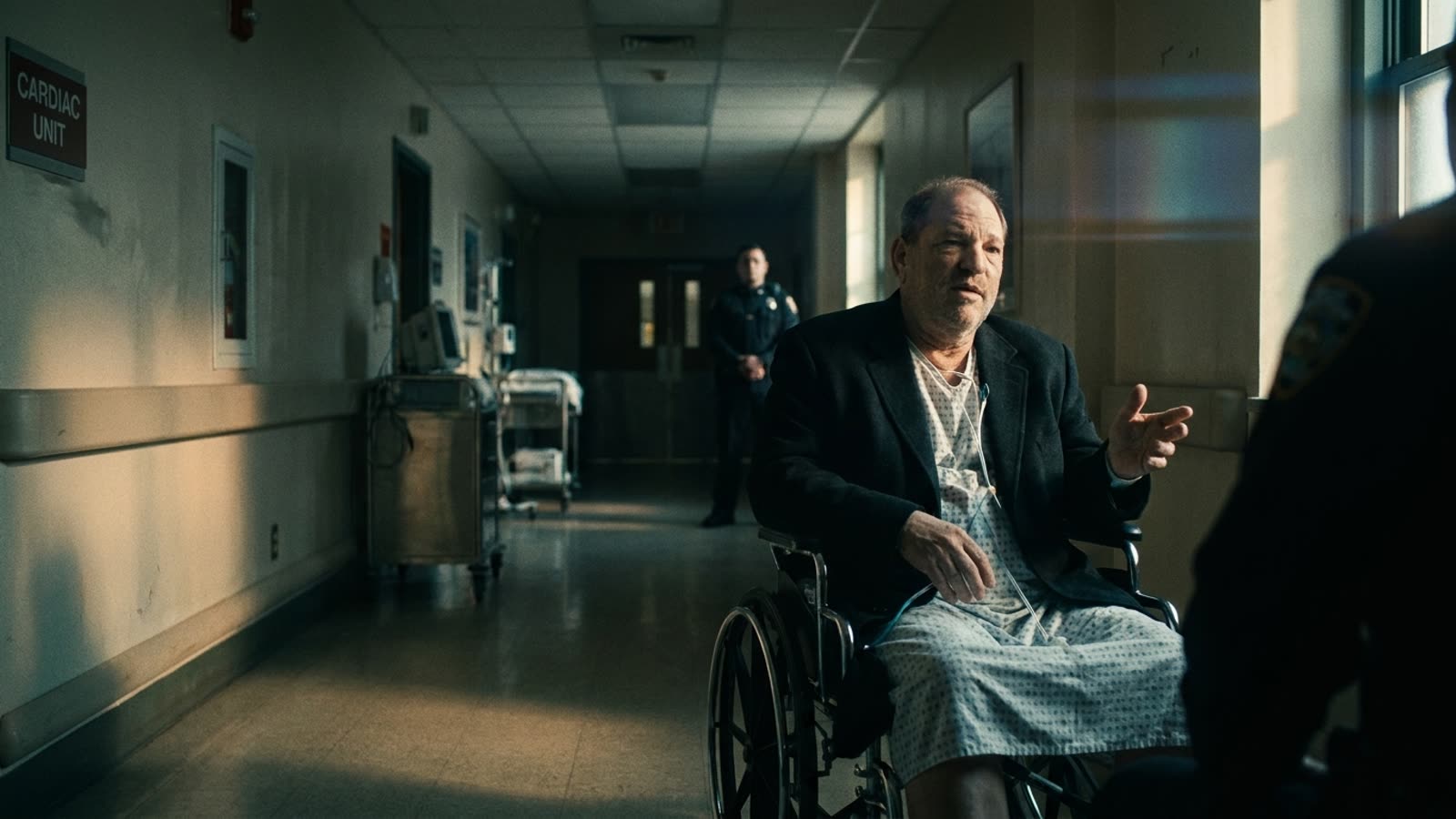
Seven years after his first conviction, Harvey Weinstein's body appears to be delivering its own verdict. The 74-year-old disgraced producer suffered heart failure at Rikers Island, according to sources familiar with his condition, adding a medical emergency to the legal catastrophe that has defined his final chapter.
Weinstein has been housed at the notorious New York jail complex while awaiting retrial on sexual assault charges after his original 2020 conviction was overturned on procedural grounds last year. His health has deteriorated markedly since his fall from power — he has appeared in court in a wheelchair, looking decades older than the bullying mogul who once terrorized assistants and demanded rewrites at 3 a.m.
The long decline
The man who built Miramax into an Oscar factory and later co-founded The Weinstein Company has watched his empire dissolve into bankruptcy proceedings and his name become shorthand for predatory behavior. His 2020 New York conviction — 23 years for criminal sexual assault and rape — was followed by a 2022 Los Angeles conviction adding another 16 years. The New York appellate court's decision to grant a retrial last year offered a flicker of legal hope, but Weinstein remains incarcerated on the California sentence regardless of New York outcomes.
Rikers Island itself has been under federal oversight due to violence and inadequate medical care, making it a particularly grim setting for an elderly inmate with serious health conditions. Weinstein's representatives have repeatedly sought medical furloughs, arguing that his various ailments — including a previous heart procedure — cannot be adequately treated in custody.
Hollywood's selective memory
The industry that once genuflected before Weinstein has largely moved on, treating him as an aberration rather than a symptom. The #MeToo movement he inadvertently catalyzed has produced institutional changes at studios and agencies, though critics argue the reforms remain superficial. His accusers, numbering in the dozens, have seen mixed results in civil litigation, with some settlements paid from insurance policies rather than Weinstein's own diminished assets.
What remains striking is how completely Weinstein has been erased from the cultural conversation about the films he championed. "Shakespeare in Love," "Pulp Fiction," "The English Patient" — these are discussed now without reference to the producer who bullied them into existence and Oscar glory. It is a peculiar form of historical revision, necessary perhaps, but incomplete.
Our take
There is no satisfaction to be found in an old man's heart giving out in a jail cell, even when that man caused immense suffering. Weinstein's crimes were about power — its accumulation, its abuse, its protection by a complicit system. His physical collapse is simply biology, not justice. The women he assaulted do not get their years back because his arteries are failing. But there is something fitting about the venue: Rikers, that monument to American incarceration's failures, housing a monument to American entertainment's failures. The system that couldn't stop him for decades now cannot adequately care for him. Nobody designed this irony, which is precisely what makes it feel true.