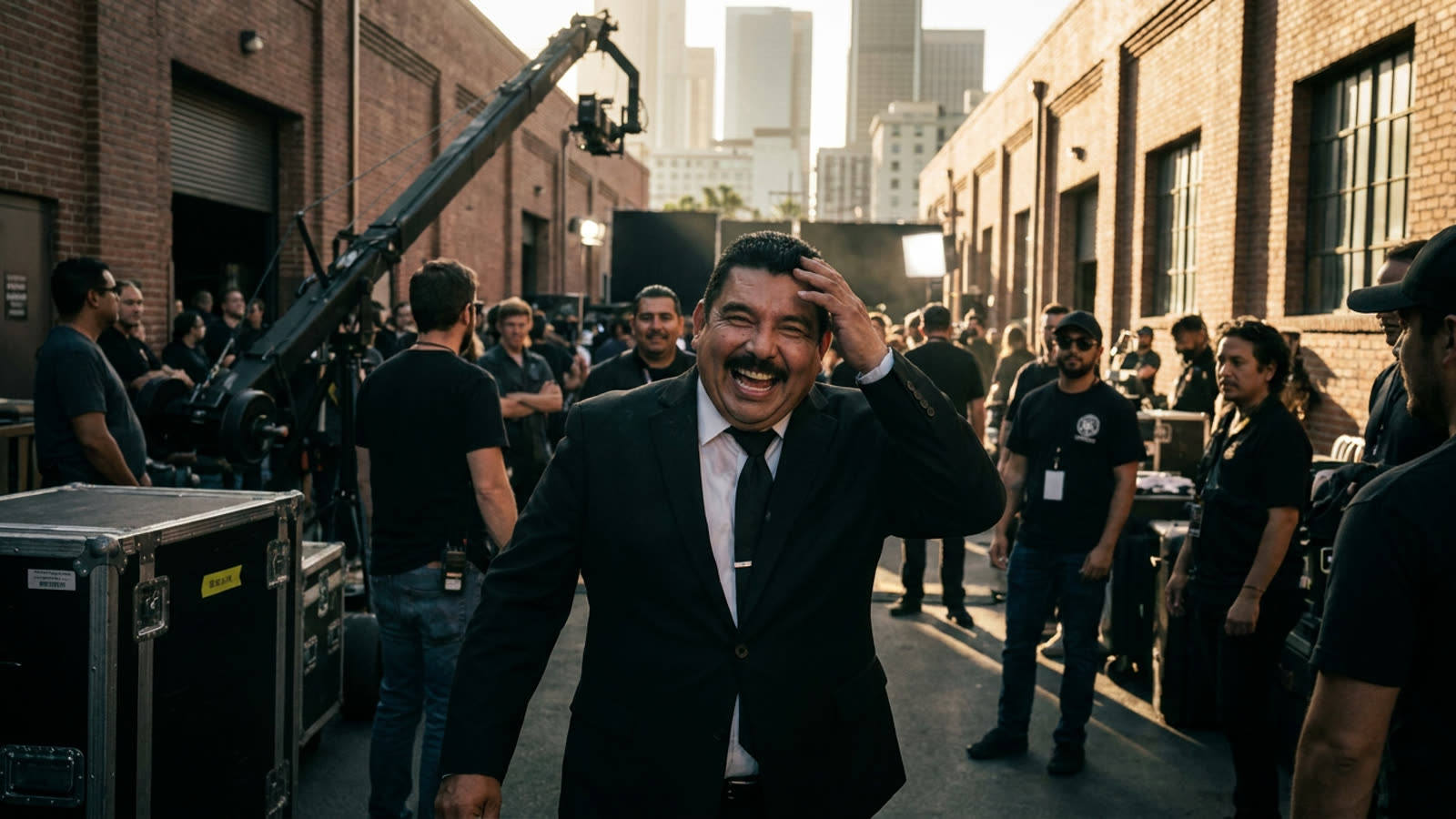
Guillermo Rodriguez was never supposed to be famous. He was supposed to check credentials and direct cars outside ABC's Hollywood studios, a job he took after emigrating from Mexico in the early 2000s. Two decades later, he has interviewed A-list celebrities on red carpets worldwide, appeared in Super Bowl commercials, and become so integral to Jimmy Kimmel Live! that his absence would fundamentally alter the show's chemistry. The trajectory says something uncomfortable about how we discover talent in entertainment: sometimes the most magnetic people are the ones nobody thought to audition.
Rodriguez's recent spotlight — including fresh appearances that have fans celebrating his enduring presence on the show — underscores a phenomenon that late-night executives have been slow to monetize. The sidekick economy, from Ed McMahon to Andy Richter to Guillermo, has always operated on the assumption that these figures exist to make the host look good. Rodriguez inverted the formula. His charm lies precisely in his refusal to perform charm. When he asks celebrities questions, they land differently because he seems genuinely unbothered by their celebrity. It reads as confidence. It might just be comfort in his own skin.
The accidental audition
The origin story has become late-night legend. Kimmel noticed Rodriguez working security, started putting him on camera for bits, and discovered that his unvarnished presence created comedy that scripted segments couldn't replicate. There's a lesson here about the limitations of traditional casting. Rodriguez would never have survived a conventional audition process — his English was imperfect, his comedic timing unconventional, his resume nonexistent. Yet audiences responded to something casting directors couldn't quantify: the sense that they were watching a real person rather than a performer playing one.
Why authenticity scales
The entertainment industry has spent the past decade chasing "authenticity" while mostly producing its simulation. Influencers perform relatability. Reality shows manufacture spontaneity. Rodriguez offers the genuine article, which is why his red-carpet segments consistently outperform more polished correspondents. Celebrities relax around him because he's not trying to generate a viral moment. The viral moments happen anyway.
His longevity also speaks to changing audience appetites. In an era when viewers have grown skeptical of media-trained responses and PR-approved soundbites, Rodriguez's interviews feel like accidental journalism. He asks the questions a normal person might ask, and occasionally gets answers that a normal interviewer wouldn't.
Our take
Guillermo Rodriguez's two-decade run is a quiet rebuke to an industry obsessed with optimization. He wasn't discovered through a talent search or a social media following or a prestigious comedy program. He was discovered because someone bothered to look at who was already there. The entertainment business loves to talk about finding fresh voices while running every candidate through the same homogenizing processes. Rodriguez suggests the freshest voices might be the ones who never learned the rules in the first place. At this point, he's not Kimmel's sidekick — he's the show's conscience, a nightly reminder that television is better when it stops trying so hard.