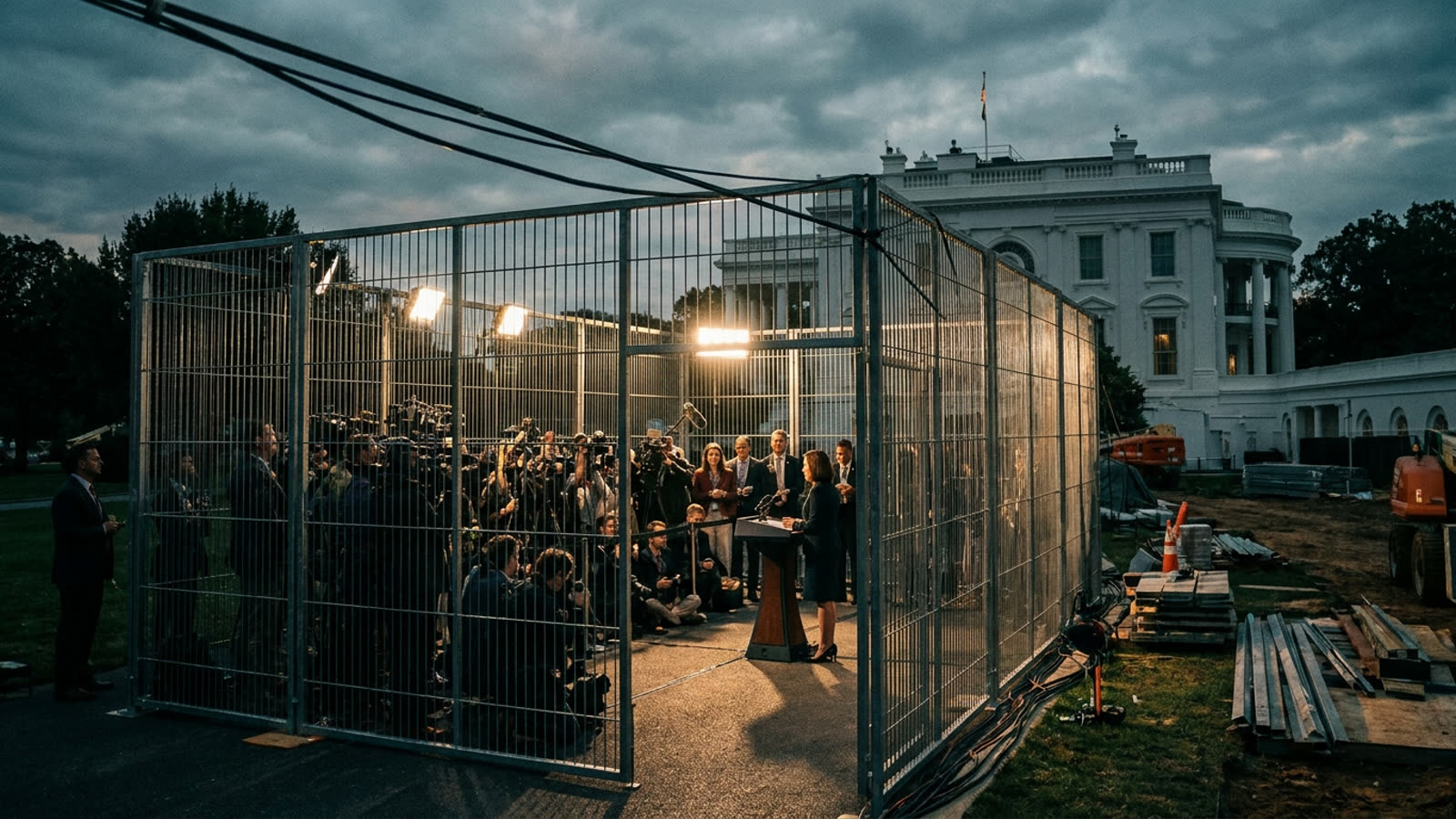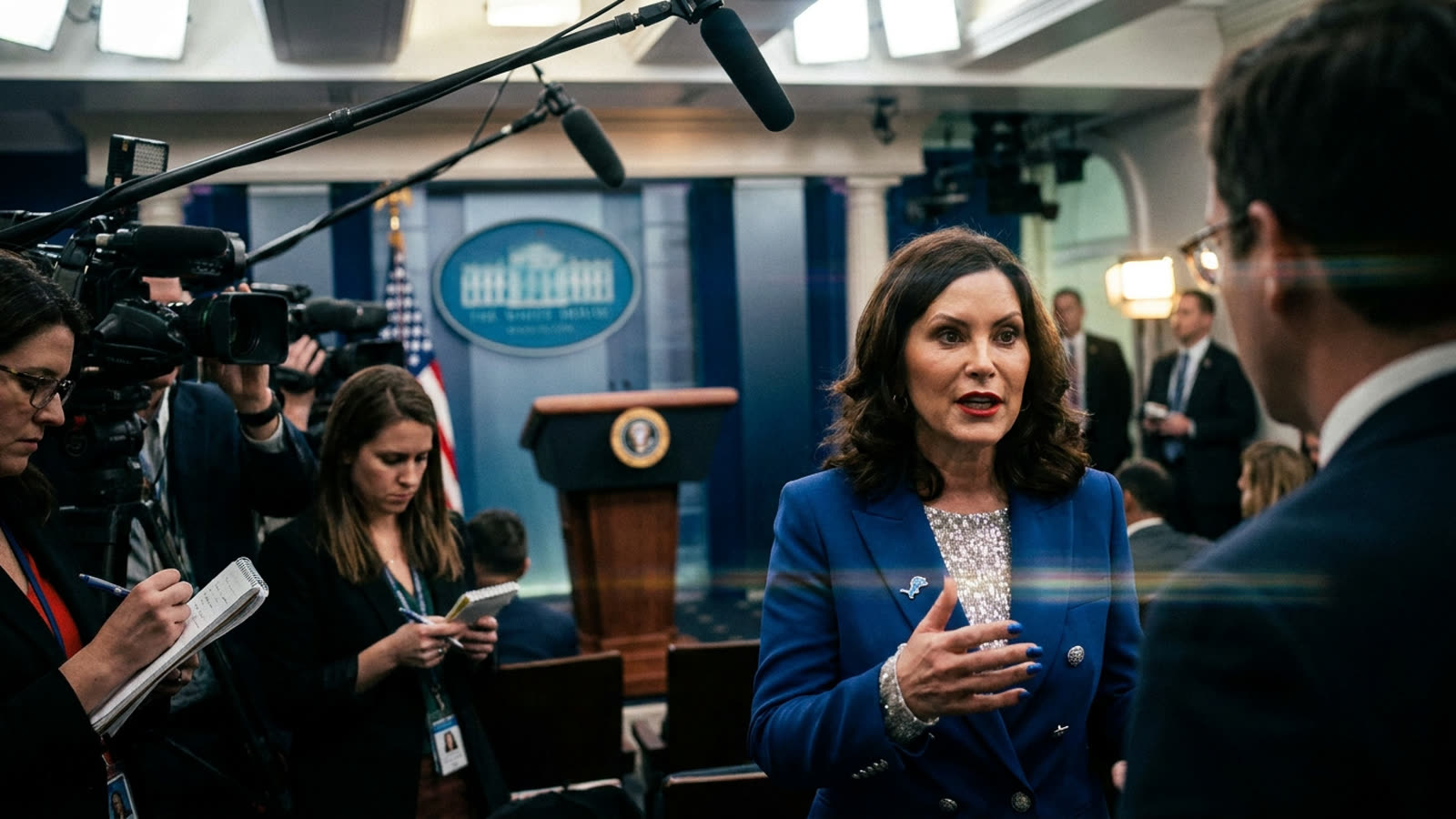
The Democratic Party's 2028 problem just became considerably more acute. Gretchen Whitmer, the two-term Michigan governor who has spent the better part of a decade cultivating a reputation as a pragmatic Midwestern progressive capable of winning in hostile territory, announced she will not run for president. The decision removes from contention one of the vanishingly few Democrats who could plausibly claim both executive experience and demonstrated crossover appeal in a battleground state.
Whitmer's exit is not a surprise to those who have watched her carefully calibrated public statements, but it lands with particular force given the party's current predicament. The Democratic roster of plausible 2028 contenders now consists largely of figures who have either never won a competitive general election, never held executive office, or both. Whitmer was the rare exception: a governor who survived a kidnapping plot, navigated pandemic politics without losing her coalition, and won reelection by nearly eleven points in a state that swung for Trump twice.
The Midwest calculus
Michigan matters to Democrats in ways that transcend its electoral votes. The state is a laboratory for the coalition politics the party must master to remain competitive nationally—union households, Black voters in Detroit, suburban moderates in Oakland County, and enough rural precincts to avoid catastrophic margins. Whitmer threaded that needle repeatedly. Her absence from the 2028 field means no candidate will enter the race with a proven template for reassembling the Midwest firewall that crumbled in 2016 and has remained shaky since.
The governor has cited a desire to focus on her remaining term and her family, the standard vocabulary of politicians stepping back from the arena. Whether that language conceals a more strategic calculation—perhaps a belief that 2028 will be another Republican year, or that the party's activist base would not tolerate her moderate positioning—remains opaque. What is clear is that Whitmer, at 54, is not foreclosing a future run; she is simply declining to make this one.
Who fills the vacuum
The immediate beneficiaries are the candidates who will now compete for the donors, operatives, and institutional support that would have flowed to a Whitmer campaign. Governors like Josh Shapiro of Pennsylvania and Wes Moore of Maryland will see their stock rise, though neither has yet faced a truly contested reelection. Senators with presidential ambitions—a category that never seems to shrink—will find the lane slightly less crowded. But none of these figures possesses Whitmer's particular combination of tenure, temperament, and geographic advantage.
The party's deeper challenge is structural. Democrats have struggled to develop a deep bench of governors and executives, in part because the party's energy and media attention have concentrated in Washington and on cultural flashpoints rather than statehouse governance. Whitmer was a product of patient, unglamorous coalition-building in a state that rewards it. Finding another such figure will require the party to invest in a theory of politics it has often neglected.
Our take
Whitmer's decision is rational for her and costly for her party. She preserves optionality while avoiding the meat grinder of a primary that could define her permanently. Democrats, meanwhile, lose a candidate who understood something increasingly rare in national politics: that winning in Michigan requires persuading people who do not already agree with you. The 2028 field will be crowded with senators, former cabinet officials, and long-shot dreamers. What it will lack is a governor who has actually done the job in a place where doing the job is hard.