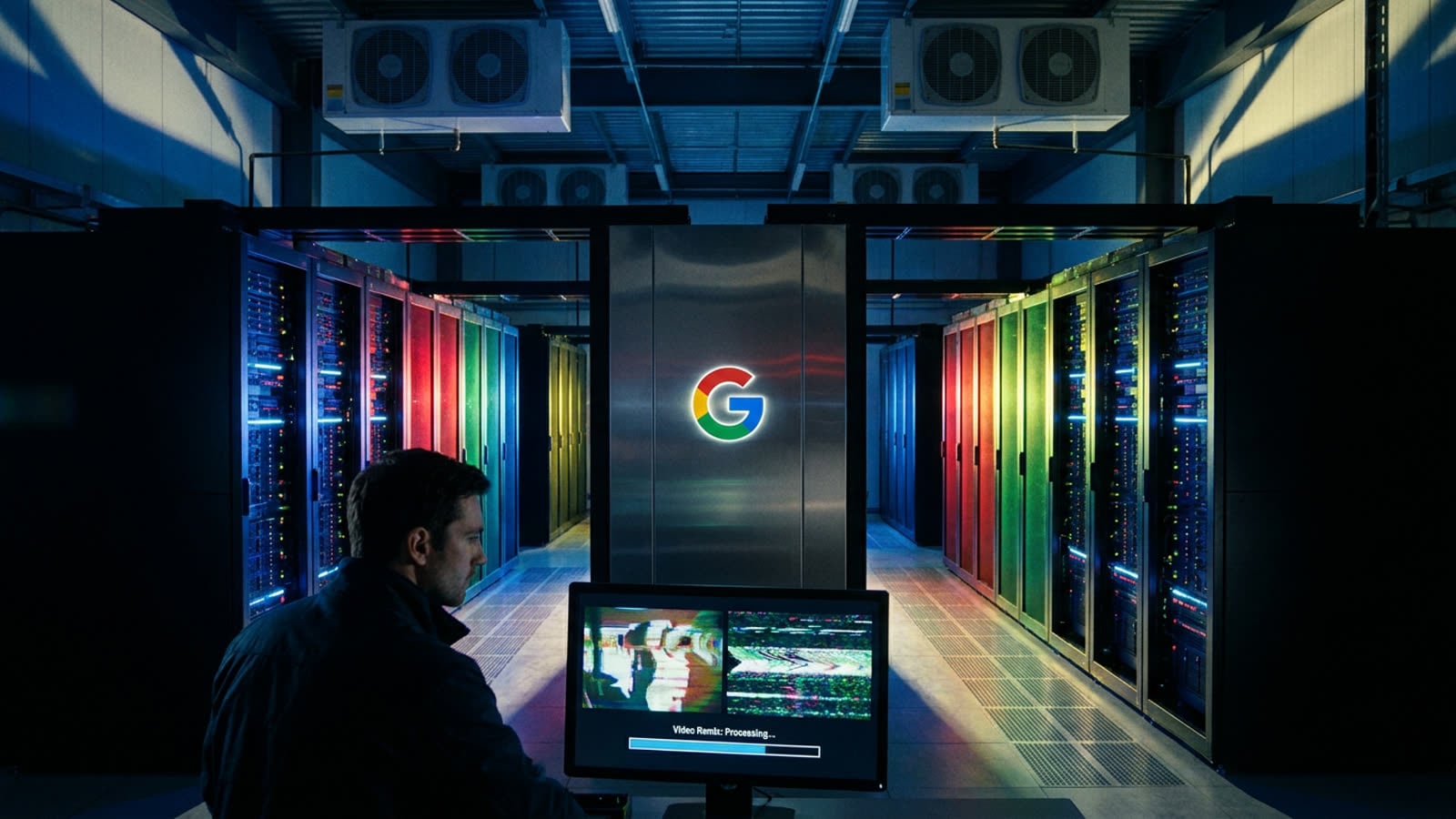
Google has quietly introduced a feature that crystallizes everything unsettling about the current AI moment: the ability to let algorithms reinterpret your most personal visual records. Video Remix, rolling out to Google Photos users this week, applies generative AI to transform home videos into stylized montages—think your child's birthday party rendered as a Wes Anderson tableau, or your wedding reception reimagined with cinematic color grading and AI-generated transitional footage.
The technical achievement is genuinely impressive. The tool analyzes existing footage, identifies key moments, and generates connecting material that maintains visual coherence while applying user-selected aesthetic filters. Google's engineers have solved genuine problems in temporal consistency and style transfer that plagued earlier attempts at video generation.
The memory authenticity problem
But technical prowess obscures a more fundamental question: should we want this? Personal video archives serve a documentary function that stylization inherently undermines. When your phone's photo library becomes a canvas for algorithmic reinterpretation, the boundary between record and fabrication dissolves. That slightly blurry clip of your grandmother's 80th birthday, shot on a phone with a cracked screen, carries authenticity precisely because of its imperfections. The AI-smoothed, color-corrected, cinematically paced version is no longer a memory—it's a production.
Google frames Video Remix as creative empowerment, another tool in the democratization of video editing. The company's blog post emphasizes user control: you choose the style, you approve the output, you decide whether to save or discard. But this framing elides how defaults shape behavior. When the polished version sits alongside the raw original, which one gets shared? Which one gets preserved?
The training data question returns
Video Remix also reopens the perpetual wound of AI training consent. Google Photos houses billions of hours of intimate footage—children's first steps, family reunions, private moments never intended for public consumption. The company insists Video Remix processing happens on-device or in secure cloud environments without contributing to model training. But Google's track record on such assurances is, charitably, inconsistent. Just this week, separate reporting confirmed that Google Search usage feeds AI training unless users navigate an obscure opt-out process.
The feature arrives as competitors race toward similar offerings. Apple's rumored "Memory Movie" feature for iOS 20 reportedly takes a more conservative approach, limiting AI intervention to editing suggestions rather than generative content. Meta, meanwhile, has signaled interest in AI video tools for its Ray-Ban smart glasses ecosystem—a prospect that combines surveillance hardware with memory manipulation in ways that should concern anyone paying attention.
Our take
Google Photos Video Remix is a solution to a problem that exists primarily in marketing presentations. Most people do not watch their home videos wishing they looked more like Super Bowl commercials. They watch them to remember. The imperfections—the shaky camera, the bad lighting, the uncle who won't stop talking over the birthday song—are not bugs to be fixed but features that anchor footage to reality. Google has built an impressive technical tool that fundamentally misunderstands why people keep videos in the first place. The company that already knows too much about us now wants to help us forget what actually happened.