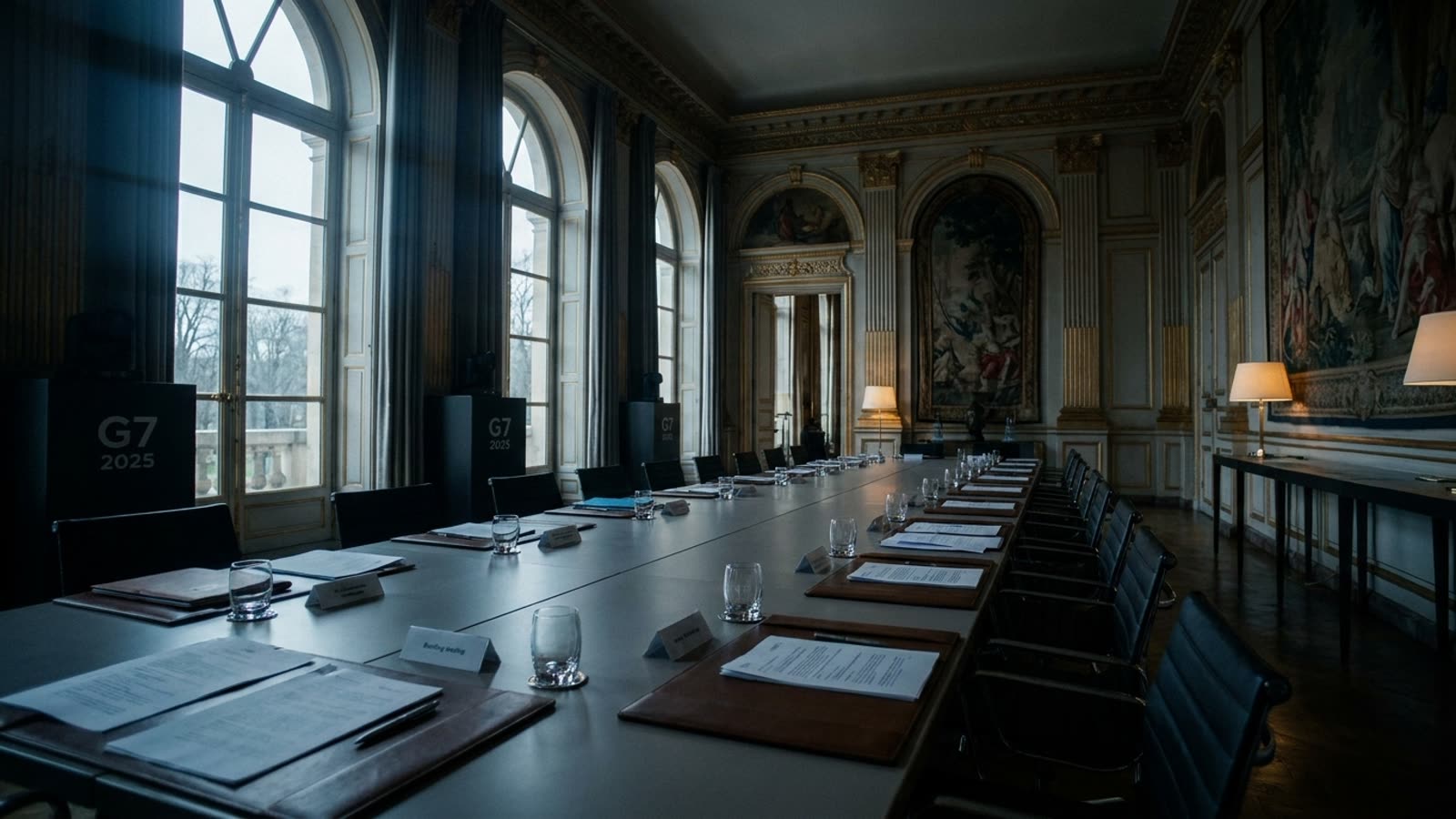
The last time Western finance ministers gathered with this much urgency, they were trying to prevent a banking collapse. This week in Paris, the threat is older and cruder: oil.
The G7 summit convening Monday arrives at a moment when the global economy is being squeezed from multiple directions simultaneously. The Strait of Hormuz—through which roughly a fifth of the world's oil passes daily—remains functionally closed amid the Iran standoff. Energy prices have surged accordingly, with Brent crude holding above levels not seen since the early months of Russia's invasion of Ukraine. And bond markets, already jittery, are now pricing in the kind of persistent inflation that central banks spent two years trying to vanquish.
The Transmission Mechanism
What makes this moment particularly treacherous is the speed at which energy shocks now propagate through financial markets. The bond sell-off that accelerated Monday—with both US Treasury and Japanese government bond yields climbing sharply—reflects a dawning realization among investors that the inflation battle may not be over. Higher energy costs feed directly into transportation, manufacturing, and food prices. Central banks that had been contemplating rate cuts are now frozen in place, or worse, contemplating the opposite.
The political calendar compounds the economic pressure. President Trump, facing cratering approval ratings ahead of the midterms, issued fresh warnings to Tehran over the weekend that did little to calm markets. European leaders, meanwhile, are caught between their dependence on American security guarantees and their economies' acute vulnerability to prolonged energy disruption.
What Paris Can Actually Accomplish
The honest answer is: not much, at least in the short term. Finance ministers can coordinate on sanctions policy, discuss emergency oil reserve releases, and signal resolve. But they cannot reopen the Strait of Hormuz. They cannot force a diplomatic breakthrough that has eluded negotiators for months. And they cannot wish away the inflationary impulse now working its way through supply chains.
What they can do is prevent the energy crisis from metastasizing into a financial one. That means reassuring markets that fiscal and monetary authorities are aligned, that liquidity will be available if credit markets seize, and that the major economies will not engage in beggar-thy-neighbor policies that would deepen the pain. The 2022 energy shock demonstrated that coordinated action—however imperfect—beats fragmented panic.
Our take
The Paris summit will produce a communiqué full of measured language about stability and cooperation. Markets will parse it for hints of concrete action and likely come away disappointed. But the real significance of this gathering lies elsewhere: it marks the moment when Western policymakers formally acknowledged that the Iran crisis is no longer a regional security problem but a first-order threat to the global economy. That recognition, however belated, is the necessary precondition for the harder choices ahead. Whether those choices come in time is another matter entirely.