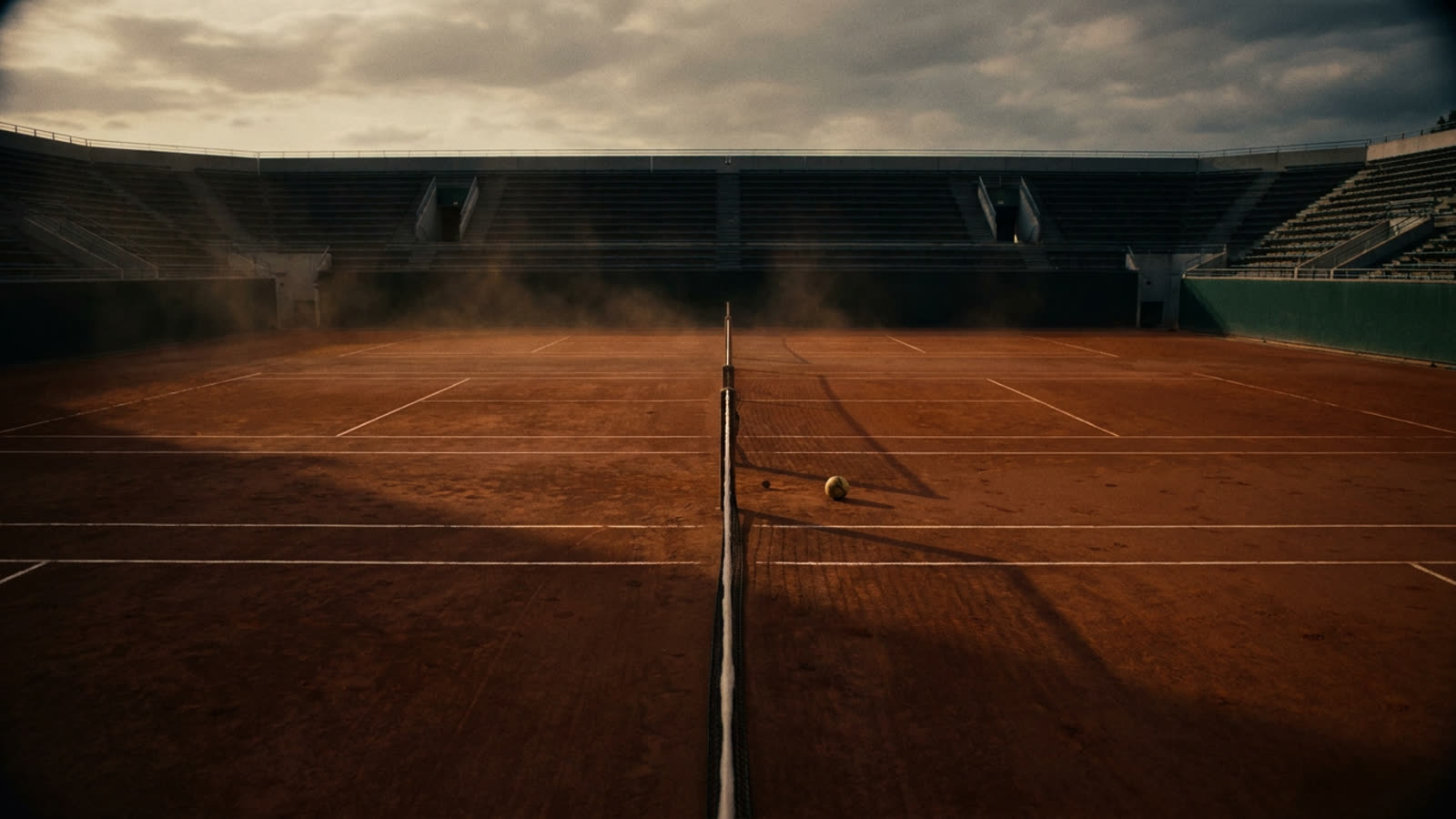
For the first time in over a decade, the clay courts of Roland Garros will host a Grand Slam where the betting markets resemble a shrug more than a prediction. The 2026 French Open, beginning this weekend, features no dominant favorite in either draw — a rarity that speaks to tennis's ongoing, occasionally chaotic generational shift.
The men's side has spent years waiting for the post-Big Three era to arrive. It has now arrived, and nobody seems quite sure what to do with it. Carlos Alcaraz enters as the nominal favorite, but his clay-court form this spring has been inconsistent enough to invite skepticism. Jannik Sinner, the world number one, has looked beatable on slow surfaces. The usual suspects — Medvedev, Zverev, Rune — each carry enough question marks to fill a press conference.
The women's draw looks even more unpredictable
Iga Świątek's dominance at Roland Garros once seemed as inevitable as Nadal's. But her 2026 season has featured uncharacteristic early exits and a coaching change that disrupted her rhythm. Aryna Sabalenka has the power game but not the patience for best-of-three-set clay marathons. Coco Gauff's development continues, though her ceiling on this surface remains unclear. The result is a draw where a dozen players could credibly reach the second week, and perhaps half of them could win the title.
This uncertainty is not a crisis for tennis — it's a correction. The sport spent so long under the thumb of transcendent champions that fans forgot what competitive parity actually looks like. Federer, Nadal, and Djokovic warped expectations so thoroughly that any tournament without a preordained winner now feels vaguely incomplete. It isn't. It's normal.
The commercial implications cut both ways
Broadcasters and sponsors prefer narratives, and narratives prefer protagonists. A French Open without a clear storyline is harder to market than "Nadal's Fifteenth" or "Djokovic's Calendar Slam Bid." But the trade-off is genuine drama — matches where the outcome feels uncertain beyond the quarterfinals, upsets that matter because they aren't just speed bumps on a champion's path.
The scheduling also matters. This French Open sits weeks before the grass-court season and months before the US Open, meaning players are calibrating effort against injury risk. Some will peak here; others are saving their best tennis for later. Reading those intentions from the outside is nearly impossible.
Our take
Tennis spent years complaining about the Big Three's stranglehold while secretly enjoying the simplicity it provided. Now the sport has what it claimed to want: a genuinely open field where talent, form, and fortune will determine the champion. The 2026 French Open may not produce an iconic winner, but it will produce an honest one — and that's a reasonable trade for fans willing to watch without a rooting guide.