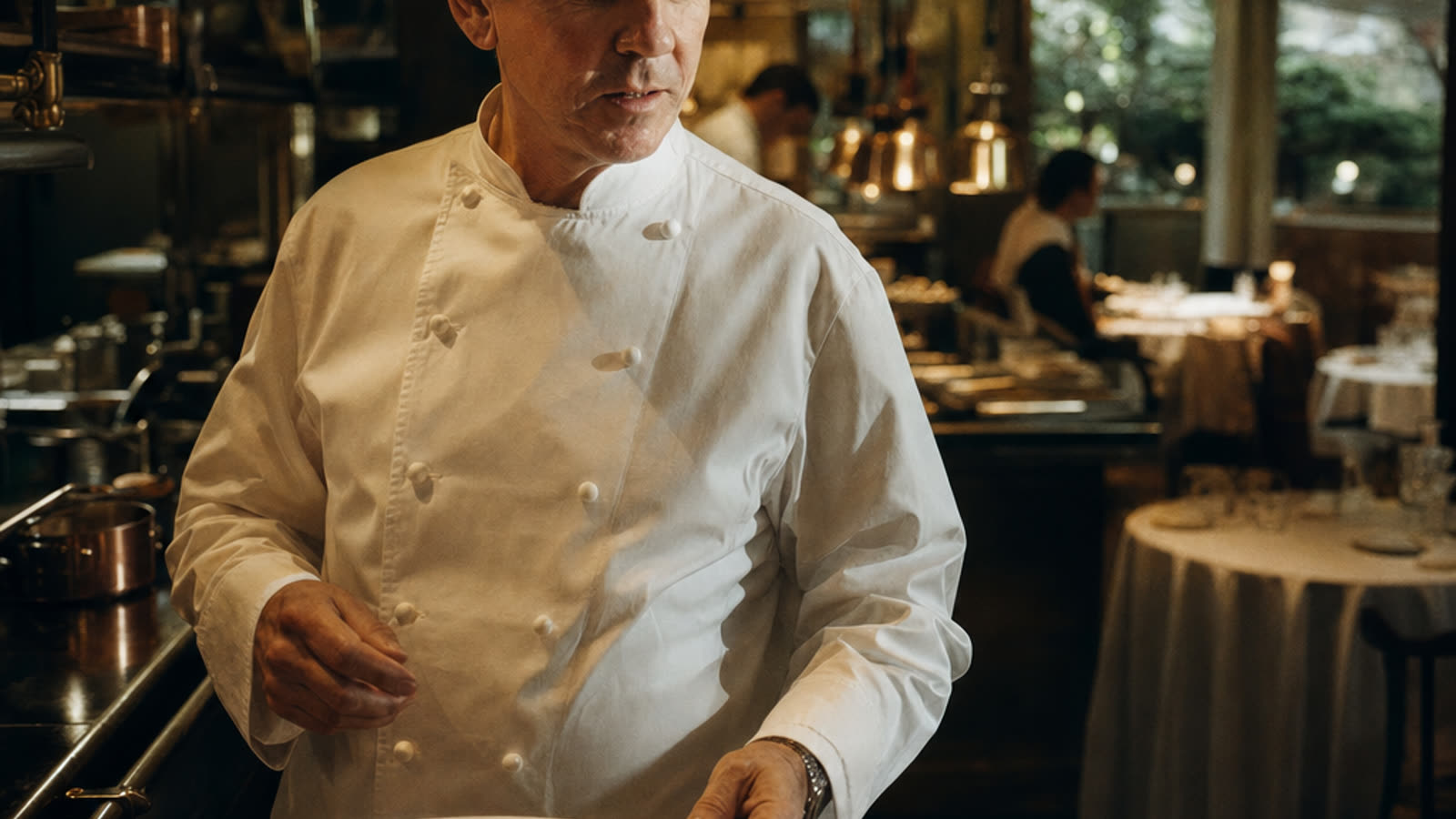
Before Yountville, the American fine-dining playbook was borrowed wholesale from France: white tablecloths, continental sauces, a menu you ordered from like a catalog. Thomas Keller's French Laundry, which opened in a stone cottage in Napa Valley in 1994, proposed something different—a meal as a single, continuous composition, each course a sentence in an argument the chef was making about pleasure, restraint, and surprise. The tasting menu existed before Keller, but he turned it into the dominant grammar of serious restaurants.
The architecture of anticipation
A nine-course tasting menu is not simply nine dishes served in sequence. It is a narrative arc: a light opening to awaken the palate, a gradual escalation of richness, a strategic intermezzo, a crescendo of protein, a gentle descent into sweetness. Keller codified this rhythm with obsessive precision, and a generation of chefs—Grant Achatz, Corey Lee, countless alumni who fanned out across the globe—absorbed it as doctrine. The format solved a commercial problem too: a fixed menu at a fixed price lets a kitchen control inventory, reduce waste, and charge a premium for the privilege of surrendering choice. The guest pays for trust.
Luxury as editing
Keller's influence extends beyond structure to philosophy. His famous "law of diminishing returns" holds that the first bite of any dish delivers the most pleasure, so portions should be small and courses should be many. This is a radical inversion of American abundance. Where a steakhouse says "more is more," the tasting menu says "enough is everything." The approach reframed luxury not as excess but as curation—an idea that now saturates fashion, hospitality, and even tech product design. Apple's minimalism and Keller's nine-course dinner share a conviction: the author knows what you want better than you do.
The backlash and the staying power
Critics have spent years declaring the tasting menu dead. It is too long, too expensive, too dictatorial. Casual fine dining, the counter-service taco bar, the omakase-lite concept—all have been positioned as correctives. And yet reservations at the French Laundry remain among the hardest tickets in American dining, and the format persists at the top of every major city's restaurant hierarchy. The reason is simple: no other structure so completely transforms eating into event. A tasting menu is a performance, and people still want to be in the audience.
Our take
Keller's real innovation was not culinary but experiential. He understood that diners at a certain price point are not buying food; they are buying submission to someone else's vision. That transaction—pay a great deal, relinquish control, receive wonder—has become the template for luxury in the twenty-first century. Whether you find it liberating or infantilizing probably says more about you than about the nine courses on the table.