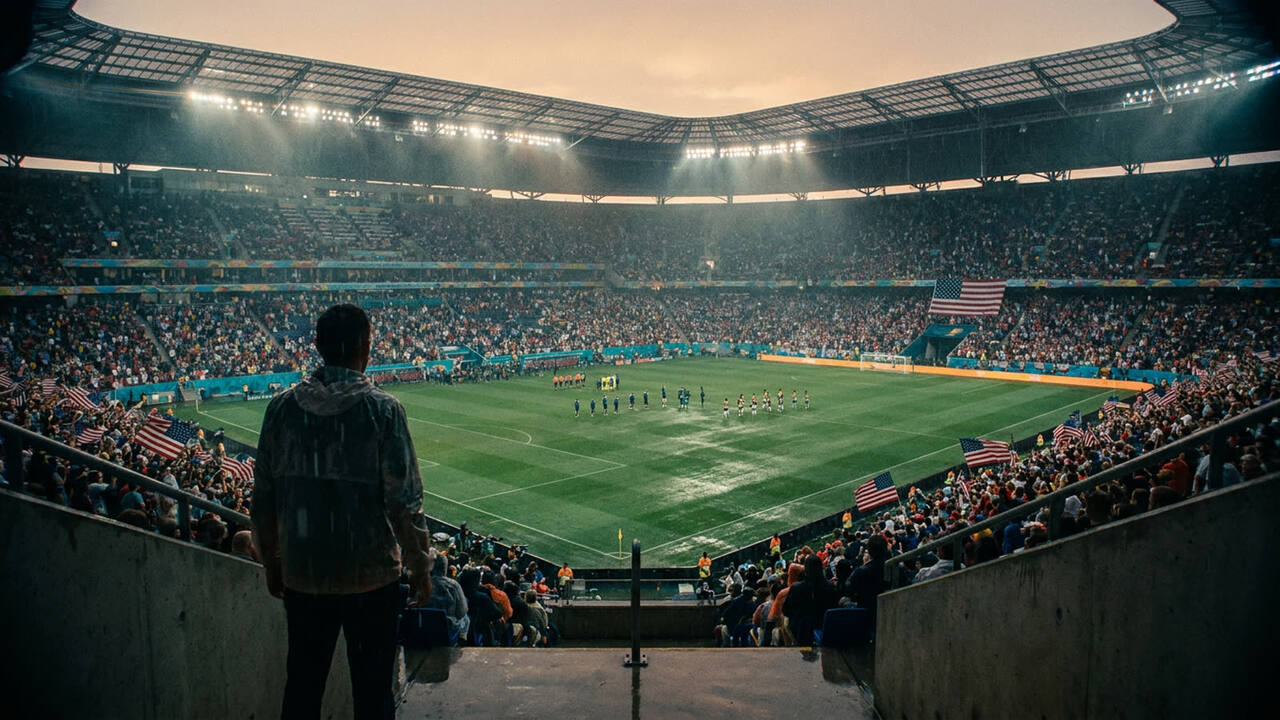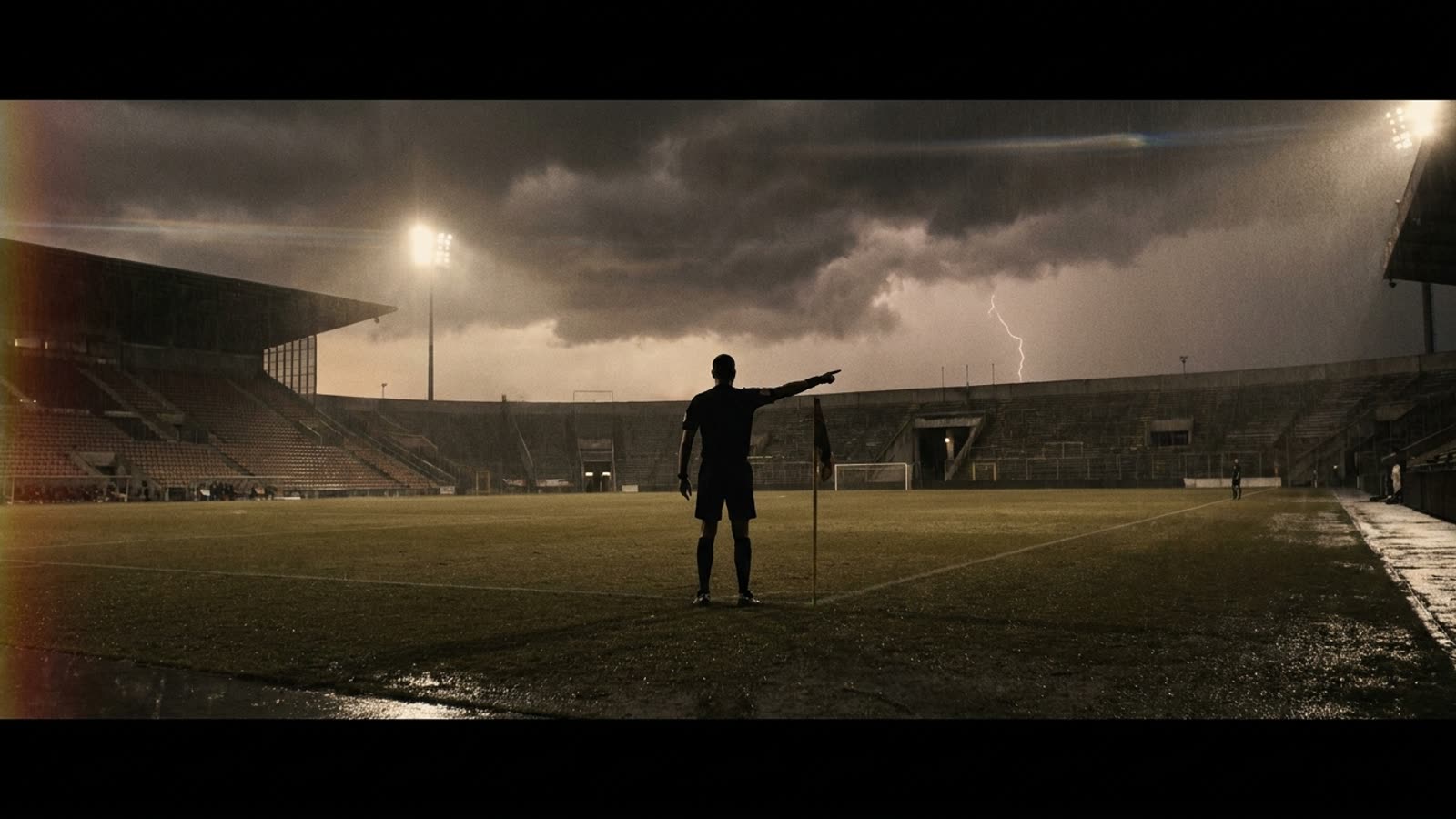
When lightning forced players off the field during France's Group F match against Iraq in Dallas on Sunday, it wasn't just an inconvenience — it was a glimpse of football's increasingly fraught relationship with the climate.
The suspension, which lasted approximately forty minutes before play resumed, represents just the second weather-related stoppage in the ninety-six-year history of the men's World Cup. The first came during the 2014 tournament in Brazil, when a match in Recife was briefly halted for similar conditions. That two such incidents have now occurred within twelve years, after none in the preceding eight decades, is not coincidental.
The American summer problem
FIFA's decision to award the 2026 tournament to the United States, Canada, and Mexico always carried meteorological risk. Unlike the temperate European summers that host most major football, or the controversial winter scheduling forced upon Qatar 2022, this World Cup runs through the American South and Southwest in late June and July — peak severe weather season.
Dallas, where Sunday's match was played at AT&T Stadium's retractable-roof venue, sits squarely in what meteorologists call "Tornado Alley's" extended summer thunderstorm zone. The city averages more than thirty thunderstorm days between June and August. That the roof was open — standard practice for evening matches when temperatures permit — meant the match was exposed to the elements in ways European tournaments rarely face.
What the protocols actually say
FIFA's weather protocols, last updated in 2024, mandate play suspension when lightning is detected within a specified radius of the stadium. Officials then monitor conditions in thirty-minute windows before determining whether to resume, relocate to a backup venue, or postpone entirely. The France-Iraq match fell into the first category, with conditions clearing sufficiently to complete the group stage fixture.
But the protocols were designed for rare emergencies, not recurring events. Should extreme weather delays become a regular feature of summer tournaments — as climate models suggest they might — the current framework offers no guidance on cumulative schedule impacts or player welfare across multiple disrupted matches.
Our take
Football's governing bodies have spent years debating the ethics of winter World Cups and the carbon footprint of continental tournaments. What they haven't seriously confronted is whether the sport's traditional calendar — built around European seasons and Northern Hemisphere summers — remains viable as weather patterns destabilize. A lightning delay in Dallas is a minor disruption. The question it raises about where and when major tournaments can safely be held is not.