The difference between a stadium that feels alive and one that feels merely occupied is rarely an accident. It is architecture.
When Liverpool's Anfield underwent its Main Stand expansion in 2016, the club hired acoustic consultants alongside structural engineers. The goal was not simply to add seats but to ensure that the famous Kop's voice would carry across the new space rather than dissipate into the sky. The solution involved a carefully angled roof designed to reflect sound back onto the pitch, creating what engineers call a "reverberation chamber" effect. Visiting players have long described the sensation of noise pressing down on them. That sensation is not psychological. It is physics.
The geometry of noise
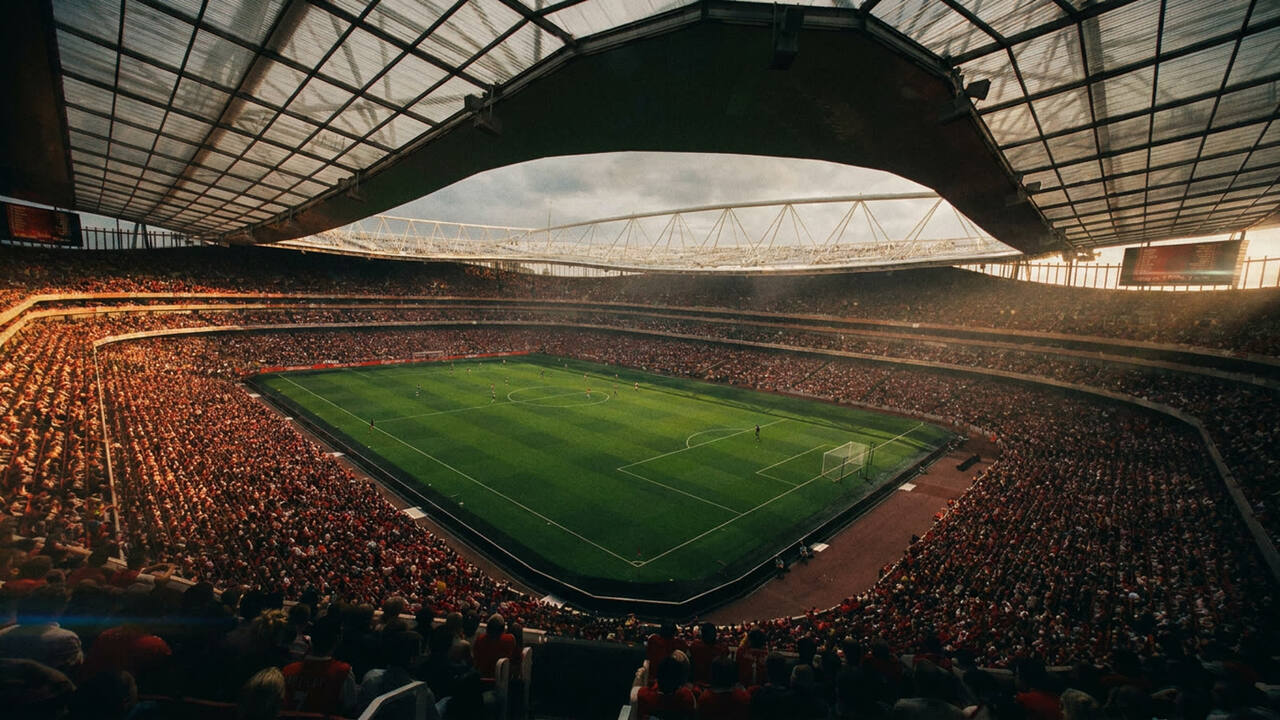
Stadium acoustics operate on principles that seem counterintuitive to casual observers. Larger venues often produce less intimidating atmospheres than smaller ones, because sound energy disperses across greater distances and open roofs allow noise to escape vertically. The most oppressive stadiums tend to share certain features: steep stands that position supporters close to the pitch and at sharp angles, continuous rooflines that trap and redirect sound waves, and minimal gaps between seating tiers that prevent acoustic leakage.
Borussia Dortmund's Westfalenstadion, with its 25,000-capacity standing terrace behind one goal, generates measured decibel levels that rival venues holding twice as many people. The standing configuration allows supporters to pack more densely than seated arrangements permit, and the terrace's steep rake creates a wall of sound aimed directly at opposing goalkeepers. The psychological effect on penalty takers is well documented by players who have faced it.
Modern mistakes and deliberate choices
The stadium-building boom of the early 2000s produced several cautionary examples. Many new venues, designed primarily for corporate hospitality and multi-use flexibility, sacrificed acoustic intensity for commercial considerations. Running tracks around pitches pushed supporters away from the action. Retractable roofs, while impressive engineering achievements, often created acoustic dead zones. Executive boxes, positioned at optimal sightlines, absorbed sound rather than reflecting it.
Some clubs have learned from these errors. Tottenham's new stadium, which opened in 2019, incorporated a single-tier south stand holding 17,500 supporters specifically to replicate the atmospheric intensity of older English grounds. The architects studied German standing sections and consulted with supporter groups about optimal proximity to the pitch. The result is measurably louder than the club's previous home at White Hart Lane, despite being more than twice the capacity.
The human variable
Architecture can only amplify what supporters provide. The most brilliantly designed acoustic chamber remains silent if the crowd lacks the cultural tradition of organized support. This explains why certain nations consistently produce more intimidating home venues regardless of architectural quality. Turkish, Greek, and Argentine football cultures emphasize coordinated chanting and tifo displays that fill acoustic space in ways that polite applause cannot.
Clubs attempting to manufacture atmosphere through artificial means—piped-in crowd noise, designated "singing sections," or stadium announcers prompting cheers—typically fail because they misunderstand the feedback loop between design and culture. Supporters respond to environments that reward their participation. When architecture carries their voices effectively, they sing louder. When their noise disappears into the void, they eventually fall silent.
Our take
The next time a commentator attributes a result to "the home crowd," consider that this is not mere cliché. The difference between a stadium that unsettles opponents and one that merely houses them is a matter of deliberate engineering choices, most of which are made years before the first supporter takes their seat. The clubs that understand this—that treat acoustic design as seriously as pitch drainage or sightlines—gain an advantage that compounds over seasons. Home-field advantage is real, and increasingly, it is something you can blueprint.