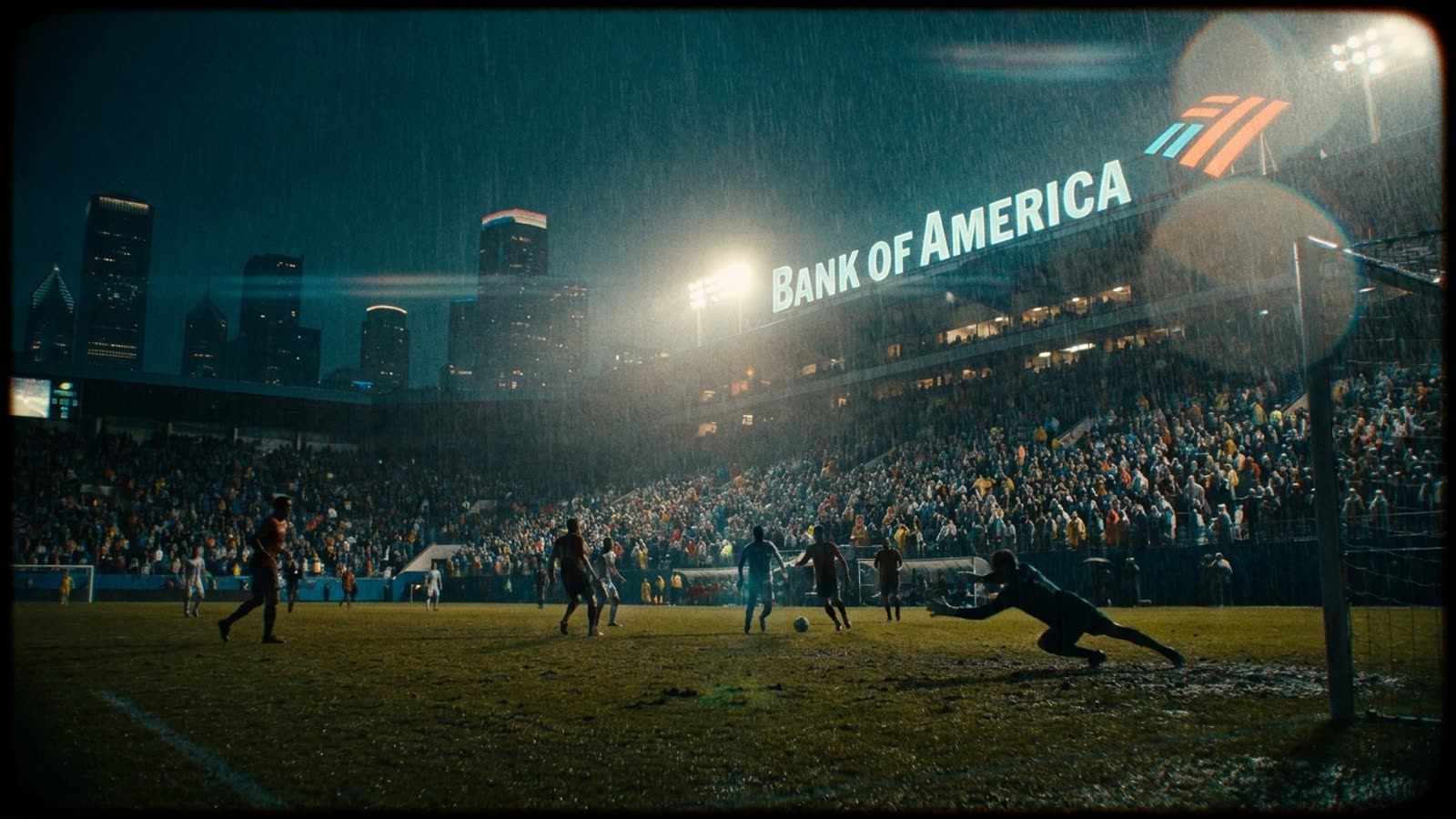
The number nine used to be the simplest position in football. Stand near the goal, receive the ball, put it in the net. Gerd Müller did not need to drop deep or drift wide; he needed to be in the right six-yard box at the right moment. For decades, the center-forward was the apex predator of the sport, and the system fed him accordingly.
Then Pep Guardiola started playing Lionel Messi between the lines, and the entire food chain collapsed.
The geometry of confusion
The false nine is not merely a striker who drops deep—deep-lying forwards existed long before Guardiola arrived at Barcelona. The innovation was systematic: by vacating the central channel entirely, the false nine creates a defensive crisis that cannot be solved by man-marking. If the center-backs follow the dropping attacker, they leave a canyon of space behind them. If they hold their line, the false nine receives in the pocket between defense and midfield with time to turn and conduct play.
Guardiola's Barcelona made this dilemma existential. Messi operating as a false nine against Real Madrid in 2009 produced one of the most tactically lopsided Clásicos in memory—a 6-2 demolition where the home defense simply had no protocol for a striker who refused to behave like one. The problem was not athleticism or effort; it was that the defensive grammar of football had no verb for what was happening.
The extinction of the target man
The ripple effects took years to manifest fully. Youth academies began prioritizing technical facility over physical presence. The hulking target man—once the default template for a number nine—became a niche specialist rather than a standard option. Clubs that had built their identity around direct, aerial football found their developmental pipelines producing players who wanted to combine in tight spaces rather than attack crosses.
This was not purely a stylistic preference; it was economic rationality. The false nine system demanded players who could pass, dribble, and think quickly under pressure. Traditional strikers who could do only one thing—finish—became less valuable in a market that prized versatility. Transfer fees reflected the shift: mobile, technically gifted forwards commanded premiums, while prolific but limited goal-scorers found fewer suitors.
The counter-reformation
Football's tactical pendulum never stops swinging. By the late 2010s, coaches began rediscovering the value of a genuine presence in the box. The false nine had been so thoroughly absorbed into defensive coaching that teams learned to cope with the dropping movement, compressing the midfield and denying space between the lines. Suddenly, having someone who could stretch a defense vertically—who would make runs in behind rather than coming short—became a differentiator again.
The modern elite forward is now expected to do both: drop like a false nine when possession demands it, attack depth when the defensive line is high, press from the front when out of possession. The position has not returned to its pre-Guardiola simplicity; it has accumulated complexity. Erling Haaland's success at Manchester City is instructive—he functions as a traditional finisher within a system that was originally designed to eliminate the need for one, a testament to how thoroughly the false nine reshaped expectations even for players who do not play the role.
Our take
The false nine was never just a formation tweak; it was an argument about what football should look like, and the argument won so completely that its innovations became invisible. Every modern attacking system carries its DNA, whether or not a team deploys the position explicitly. The traditional striker did not disappear—but he now operates in a world that the false nine built, and he must speak its language to survive.