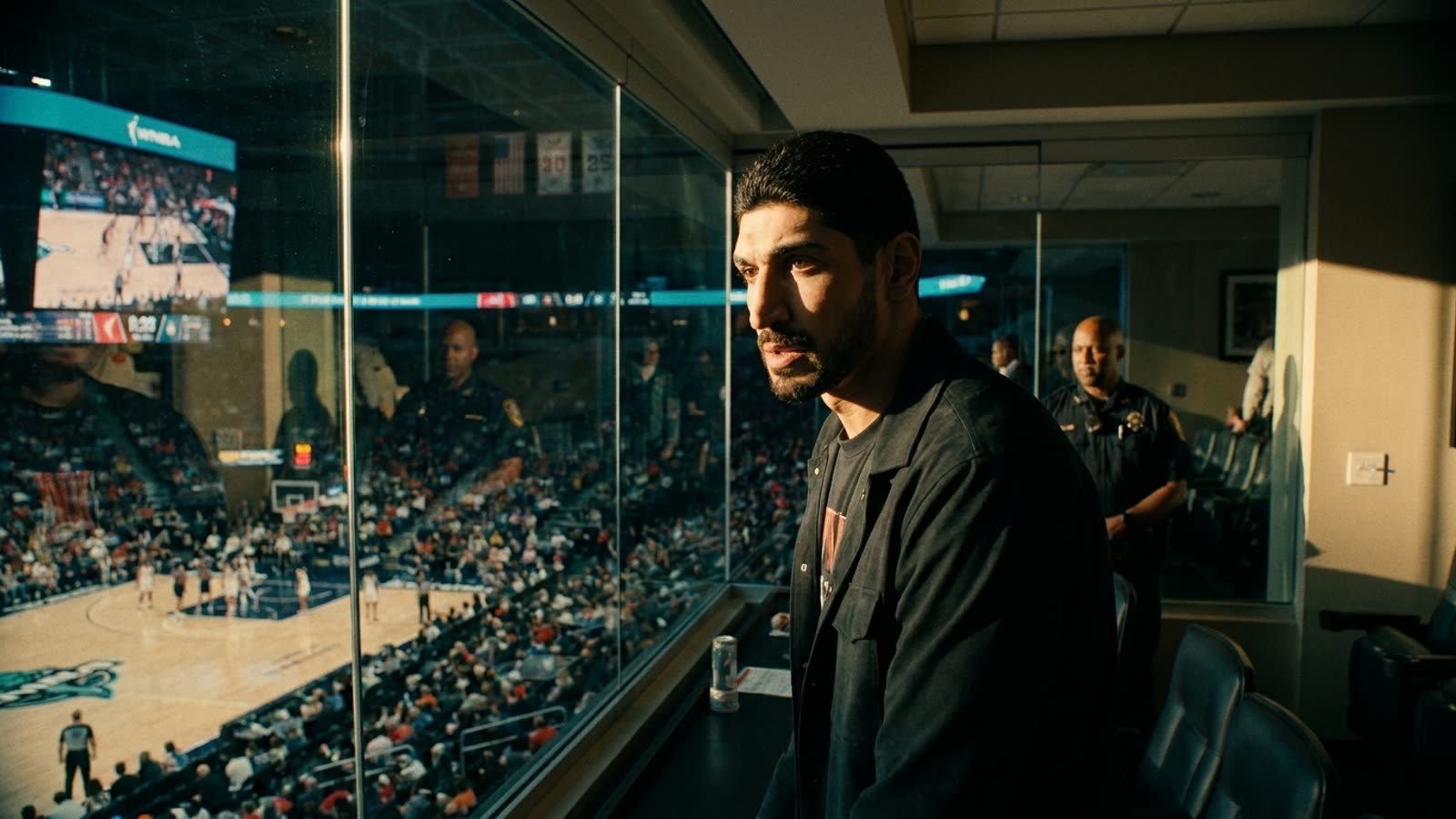
A former NBA center required a private suite and personal security detail to attend a WNBA Finals game in Atlanta on Wednesday night. Not because Enes Kanter Freedom is a celebrity seeking VIP treatment, but because the Turkish government has placed a bounty on his head, and the Dream organization determined that seating him among general-admission fans posed unacceptable risk.
The arrangement, coordinated between the Dream and State Farm Arena, underscores an uncomfortable truth: American professional sports venues are no longer neutral ground. They are spaces where international political grievances can materialize with little warning, and where athletes-turned-dissidents must calculate threat matrices before cheering courtside.
The backstory that won't fade
Kanter Freedom, who became a U.S. citizen in 2021 and legally changed his name to include "Freedom," has spent years as one of the most visible critics of Turkish President Recep Tayyip Erdoğan. Turkey revoked his passport in 2017, issued an Interpol red notice (later suspended), and has repeatedly sought his extradition on terrorism charges that human-rights organizations have called politically motivated. His father was imprisoned in Turkey; family members have been harassed.
Since his NBA career wound down, Kanter Freedom has remained outspoken on human-rights abuses globally—criticizing China's treatment of Uyghurs, calling out Nike's labor practices, and testifying before Congress. This has made him a hero to some and a pariah to others, including, evidently, anyone who might recognize him in a crowded arena.
What the Dream's decision signals
The franchise's willingness to accommodate Kanter Freedom's security needs is commendable, but the fact that such accommodation was necessary is the real story. Professional sports leagues have long navigated political sensitivities—think NBA-China tensions after Daryl Morey's Hong Kong tweet—but those conflicts typically play out in boardrooms and broadcast negotiations. This is different. This is a team acknowledging that a specific individual cannot safely sit in the stands of an American arena because a foreign autocrat wants him silenced.
State Farm Arena holds roughly 17,000 fans. The Dream and the Valkyries are playing for a championship. And somewhere in the building, a man who once averaged a double-double in the NBA watched from behind glass, separated from the crowd for his own protection.
Our take
Sport has always been political, despite what commissioners and sponsors prefer to pretend. But Kanter Freedom's suite at the WNBA Finals represents something more unsettling than a player kneeling or a jersey message: it is the physical manifestation of transnational repression on American soil. The Dream did the right thing. The fact that they had to do it at all should trouble anyone who believes arenas are places where the outside world pauses for a few hours. For Enes Kanter Freedom, it never does.