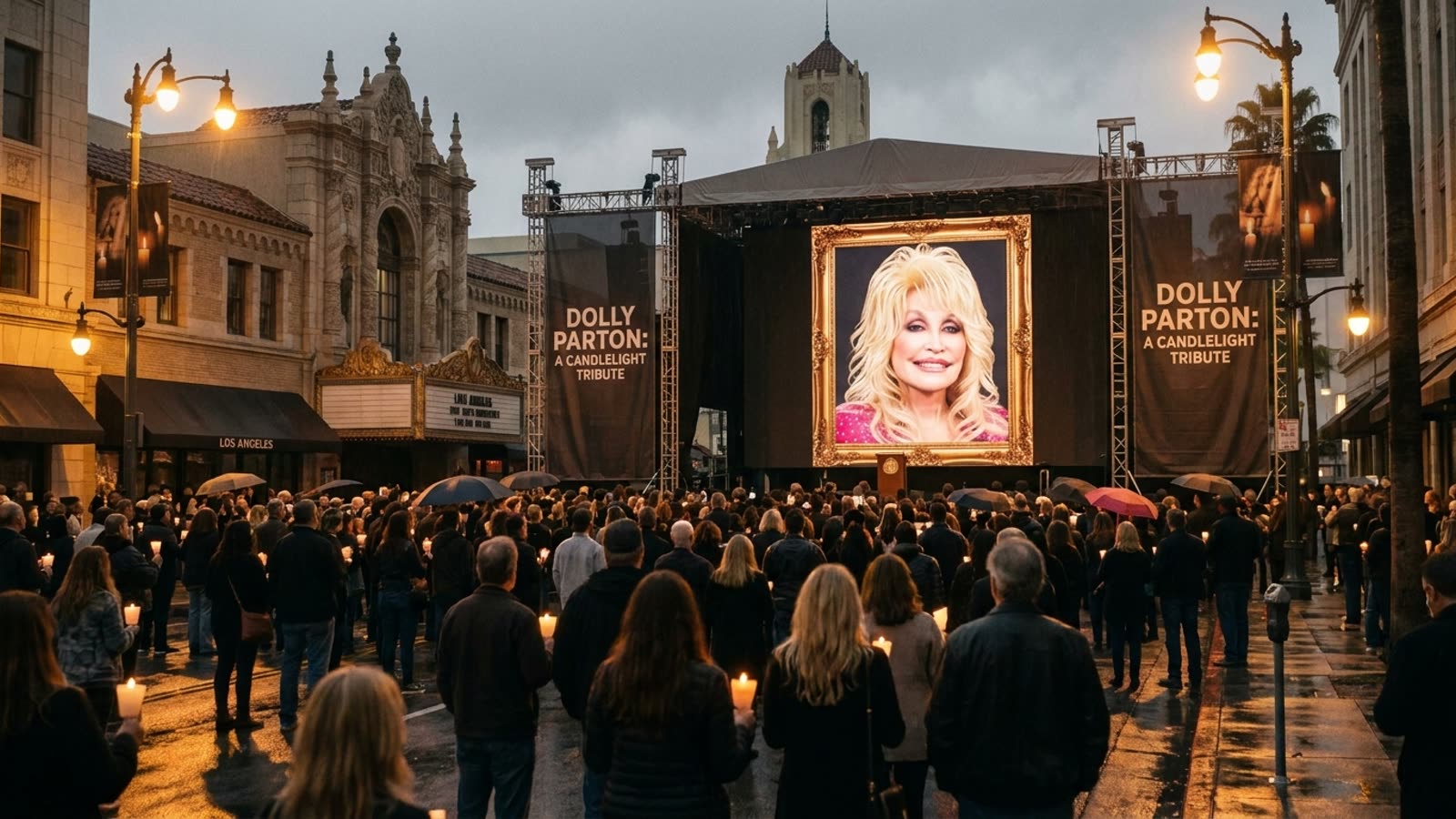
The candles will be electric, the grief will be real, and the renditions of "Jolene" will be played on strings rather than sung by the woman who made it immortal. Fever's Candlelight concert series—the global phenomenon that transforms pop catalogs into hushed, Instagram-ready classical experiences—has announced a Dolly Parton tribute at the Ritz-Carlton in Los Angeles, arriving barely two months after the singer's death in August at 80.
The speed is striking. The reverence is not in question. But the format reveals something about how we process loss in 2026: quickly, aesthetically, and with tickets starting around the price of a decent Nashville dinner.
The Candlelight industrial complex
Fever has built an empire on the premise that any beloved catalog can be improved by removing the original artist entirely. The company stages hundreds of these events monthly across dozens of cities, cycling through Taylor Swift, Coldplay, ABBA, and now Parton with assembly-line efficiency. The formula works because it offers something streaming cannot: presence, exclusivity, and the vague sense of cultural participation that looks excellent in Stories.
Parton's catalog is particularly suited to the treatment. "I Will Always Love You," "9 to 5," and "Jolene" have long since transcended their country origins to become universal American texts. Hearing them stripped of Parton's singular voice—that high, aching soprano that could pivot from comedy to devastation within a single verse—will either feel like sacrilege or meditation, depending on how much wine the Ritz-Carlton has poured.
The memorial economy
What's changed is the timeline. When Prince died in 2016, it took years for tribute concerts to reach this scale of polish. When Parton passes, the infrastructure is already in place—Fever simply slots her into the rotation alongside living artists, blurring the line between celebration and mourning. The company has not disclosed whether the Parton tribute was already in development before her death, though the speed suggests at minimum that contingency planning has become standard practice in the memorial economy.
This is not cynicism, exactly. Parton herself spent decades building a brand predicated on accessibility and joy; she would likely appreciate that her songs are being performed in a fancy hotel rather than locked in a vault. But it does represent a new phase in how celebrity deaths are processed—less as ruptures than as content opportunities, scheduled and promoted with the same algorithmic precision as a new album drop.
Our take
Dolly Parton deserves every tribute, instrumental or otherwise. She was a songwriter of genuine genius, a philanthropist of uncommon generosity, and a cultural diplomat who made country music palatable to people who had never set foot in Tennessee. The Candlelight series will introduce her work to audiences who might otherwise never encounter it. But there is something faintly unsettling about the efficiency of it all—the sense that even grief has been optimized, packaged, and priced for the brunch crowd. Parton spent her life making art that felt personal even at stadium scale. The challenge for any tribute is to honor that intimacy rather than merely monetize the nostalgia.