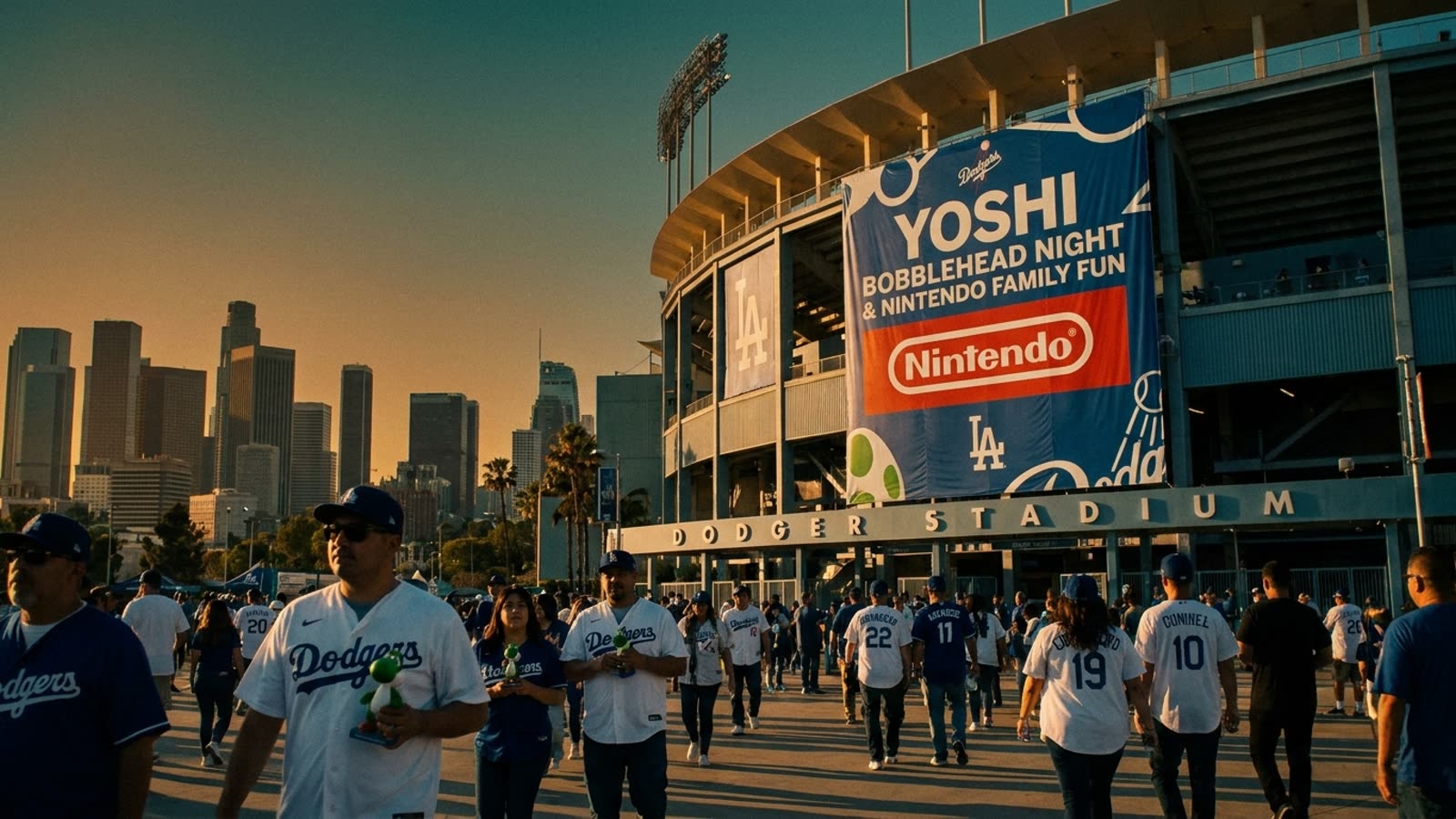
When the Los Angeles Dodgers hosted Yoshi Night at Chavez Ravine this weekend, distributing bobbleheads of Nintendo's green dinosaur to thousands of fans, the promotion registered as charming kitsch — a bit of crossover whimsy for families who grew up mashing buttons on Super Mario World. But the evening was also a small data point in a much larger phenomenon: the systematic integration of Japanese entertainment intellectual property into American sports, a trend accelerating faster than most observers appreciate.
The Dodgers, of course, have particular reasons to court Japanese cultural affinity. Shohei Ohtani's presence has transformed the franchise into appointment viewing across the Pacific, and the team has leaned into that connection with everything from Japanese Heritage Night to partnerships with Japanese sponsors. But Yoshi Night wasn't really about Japan — it was about Nintendo, a company that has spent the past decade methodically expanding its footprint beyond gaming consoles into theme parks, films, and now the peculiar American tradition of promotional stadium giveaways.
The bobblehead as brand vehicle
Stadium promotions have always been exercises in corporate synergy, but the nature of the partnerships has shifted. Where teams once offered generic player likenesses or sponsor-branded tchotchkes, they now compete to secure recognizable entertainment IP that drives attendance independent of the team's record. Nintendo, flush with cash from the Switch's success and emboldened by the Super Mario Bros. Movie's billion-dollar box office, has the leverage and the appetite.
The calculus is straightforward: a Yoshi bobblehead attracts families who might not otherwise attend a July baseball game, while Nintendo gets its mascot into American living rooms through a channel that bypasses the usual advertising clutter. Both parties benefit from the parasocial warmth that comes from physical objects — bobbleheads are kept, displayed, photographed for social media. They are tiny billboards that people actually want.
Sports as cultural distribution network
What makes this moment distinctive is the directionality. For decades, American sports leagues exported their brands to Japan — MLB opened seasons in Tokyo, the NBA cultivated Yao Ming's Chinese fanbase. Now the flow increasingly runs the other way. Japanese companies don't just sponsor American teams; they embed their characters, their aesthetics, their narrative universes into the rituals of American fandom.
This is not limited to Nintendo. Sanrio's Hello Kitty nights have become fixtures across MLB and MLS. Anime-themed promotions proliferate. The trend reflects both the globalization of entertainment IP and the desperation of American sports franchises to attract younger, more diverse audiences who may care more about a cartoon dinosaur than a seventh-inning stretch.
Our take
There is something faintly melancholic about watching American sports become distribution platforms for foreign entertainment conglomerates — a reversal of the cultural imperialism that once defined the relationship. But there is also something clarifying. Sports have always been about selling attention, and attention increasingly belongs to whoever owns the most beloved characters. Nintendo understood this before most American media companies did. The Dodgers are just renting Yoshi for the night. Nintendo is playing a longer game.