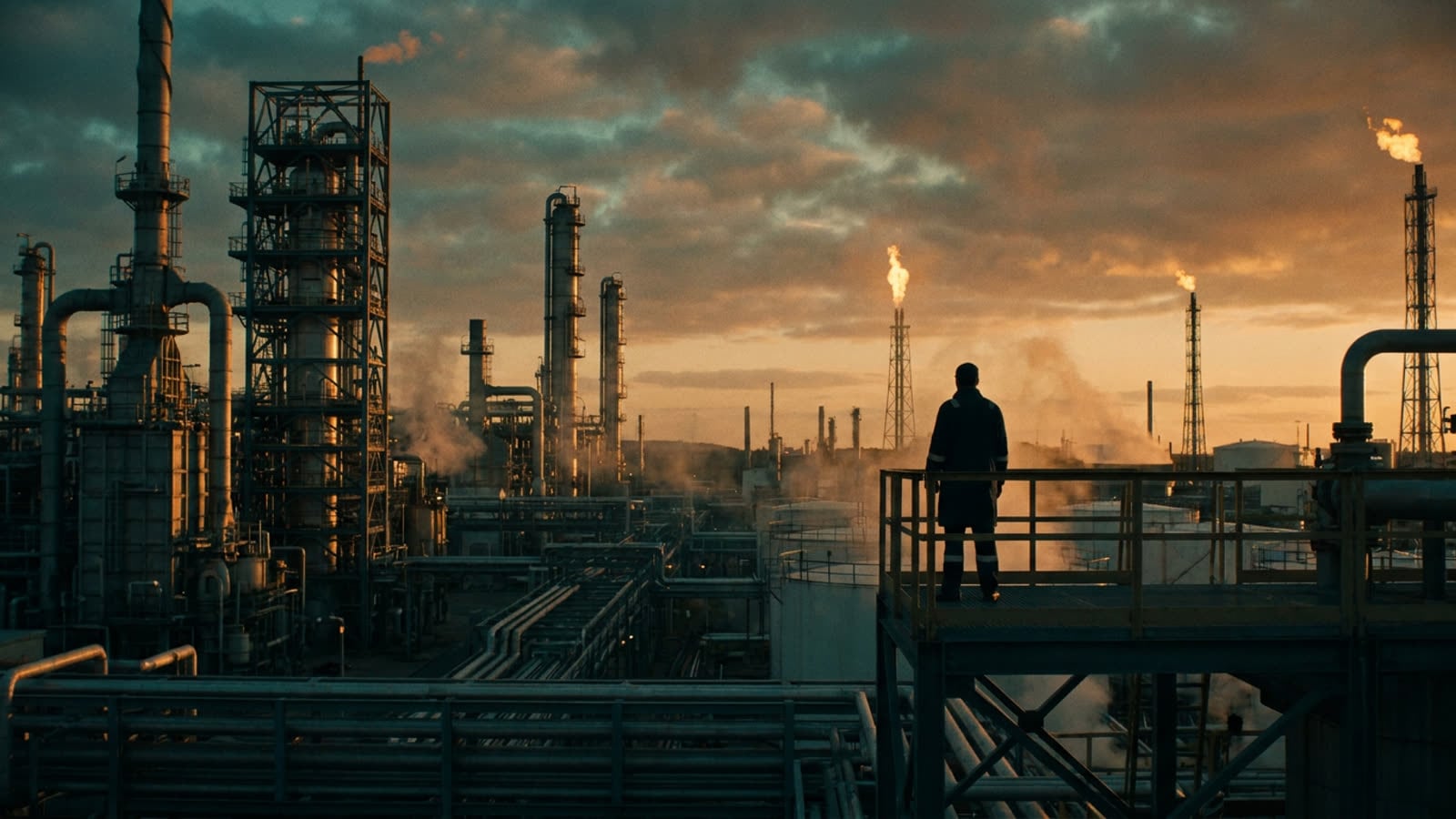
The Democratic Party's decade-long crusade against fossil fuels has collided with a gallon of $4.89 gasoline, and the gasoline is winning.
Across battleground states, Democratic candidates who once pledged to "keep it in the ground" are now calling for increased domestic oil production, expedited drilling permits, and — in a particularly striking reversal — the reopening of federal lands to new leases. The shift is not subtle, nor is it being hidden. It is being marketed.
The arithmetic of political survival
The math is brutally simple. Since the Iran conflict escalated in late May, crude oil has surged past $95 a barrel, with Brent briefly touching $102 last week. Gasoline prices have followed, jumping more than 40 cents nationally in two weeks. In swing states like Pennsylvania, Michigan, and Nevada, pump prices now exceed pre-pandemic highs — and voters are noticing.
Polling from the first week of June shows energy costs have displaced inflation broadly as the top economic concern among independent voters. For Democrats defending slim congressional majorities, the political calculus has become existential. Climate commitments that played well in 2024 primaries now read as liabilities in general election surveys.
Senator-elect Maria Torres of Arizona, who campaigned on a Green New Deal platform just eighteen months ago, last week called for "an all-of-the-above energy strategy that includes responsible domestic production." She is not alone. At least seven Democratic incumbents in competitive districts have made similar pivots since Memorial Day.
The policy machinery in motion
The White House has responded with characteristic pragmatism. The Interior Department is reportedly fast-tracking permit reviews for Gulf of Mexico drilling projects that had languished in regulatory limbo. The Strategic Petroleum Reserve, already depleted by previous drawdowns, may see another release — though officials acknowledge the gesture would be more symbolic than substantive at current reserve levels.
More consequentially, the administration has signaled it will not oppose bipartisan legislation to streamline environmental reviews for new pipeline projects. This represents a significant departure from the posture that defined Biden's first term and the early months of the current administration.
Environmental groups are apoplectic but largely powerless. The Sierra Club issued a statement calling the reversals "a betrayal of the movement that elected these candidates," but offered no credible threat of primary challenges with filing deadlines already passed in most states.
The climate movement's structural weakness
What the current moment reveals is less about Democratic cynicism than about the climate movement's failure to build durable political infrastructure. The coalition that powered climate activism through the Trump years was always more comfortable with protest than with the grinding work of making clean energy economically inevitable.
Solar and wind capacity has expanded dramatically, but not fast enough to insulate consumers from oil shocks. Electric vehicle adoption has accelerated, but 85% of American cars still run on gasoline. The transition was always going to take decades; the political patience required was always going to be measured in months.
Our take
This is not hypocrisy so much as democracy functioning as designed — which is to say, responsively and often incoherently. Politicians who promised transformation are discovering that transformation requires either sustained popular will or economic conditions that make the alternative painless. Neither exists at present. The climate left will call this a betrayal. Realists will call it Tuesday. The planet, indifferent to electoral calendars, will continue warming regardless of which talking points prevail in November.