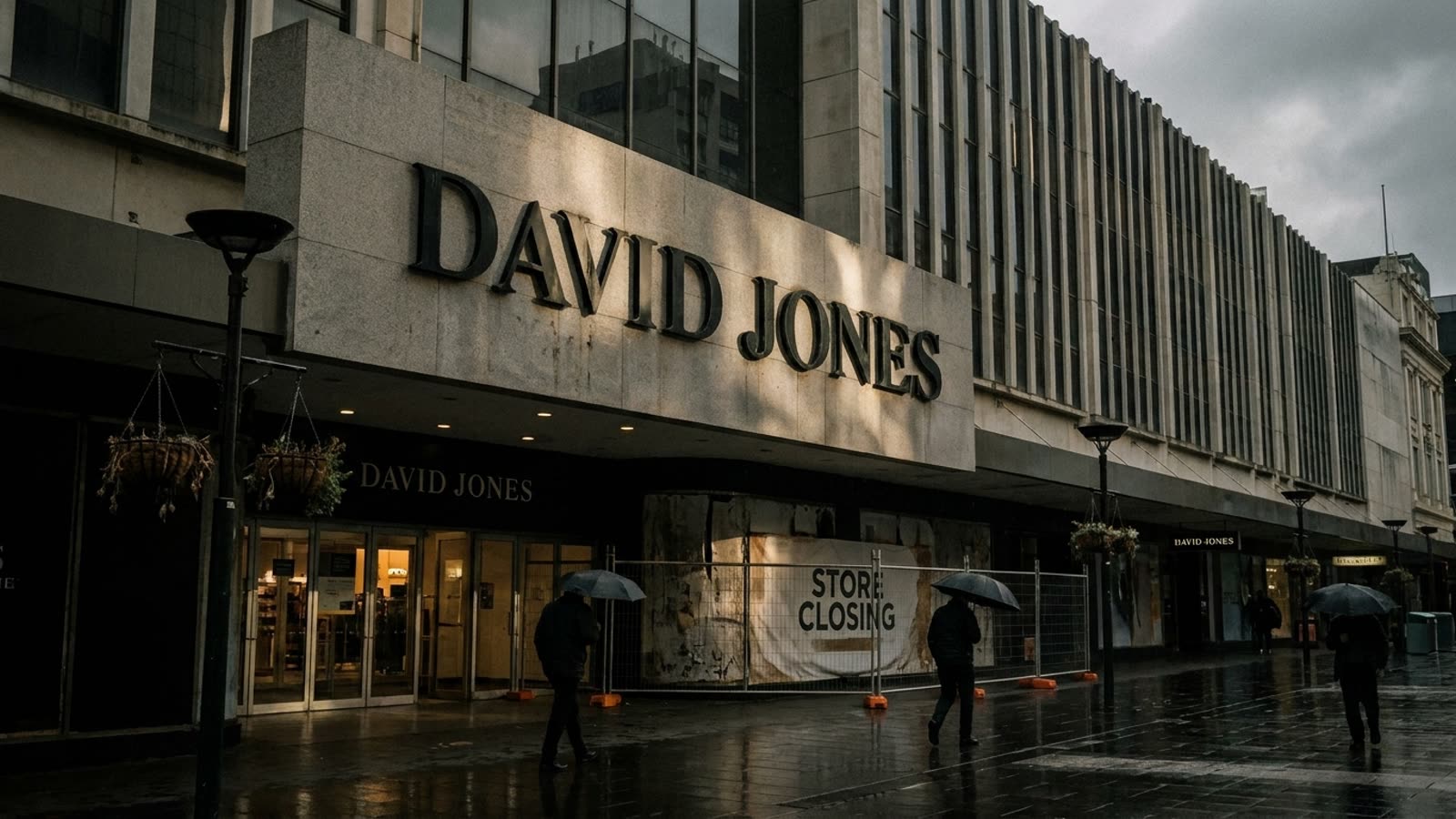
Some brands are so woven into a nation's commercial fabric that their failure feels less like a bankruptcy and more like a death in the family. David Jones, founded in Sydney in 1838, has entered receivership after nearly two centuries of selling Australians everything from haberdashery to haute couture—a timeline that predates the country's federation by more than sixty years.
The immediate cause is familiar: too much debt, too little foot traffic, too slow a pivot to digital. The deeper cause is structural. Department stores everywhere are caught between the convenience of Amazon and the cachet of standalone luxury boutiques, offering neither the best price nor the best experience. David Jones, despite its heritage, proved no exception.
The numbers behind the nostalgia
The company's 38 physical stores and online operations will continue trading while receivers assess options, but the prognosis is grim. South African parent Woolworths Holdings has been trying to offload David Jones for years, having written down its investment repeatedly since acquiring the chain in 2014. What was once a jewel of Australian retail became a drain on the balance sheet, hemorrhaging value as consumer habits shifted and pandemic-era debts compounded.
The broader Australian retail sector has been under pressure for years, squeezed by wage stagnation, rising interest rates, and the relentless efficiency of e-commerce. David Jones's collapse is the most symbolic casualty, but it won't be the last. Myer, its perennial rival, has struggled with similar headwinds, and mid-market chains across the country are watching nervously.
A global pattern, an Australian accent
David Jones joins a grim international roll call: Debenhams in the UK, Barneys in New York, countless regional chains across Europe. The department store model—born in the 19th century to aggregate goods under one roof—has been unbundled by technology. Why browse three floors when you can browse three million SKUs from your couch?
Yet the Australian case carries particular poignancy. David Jones wasn't just a store; it was a cultural institution, its flagship Sydney location a destination in itself. Generations of Australians bought their first suit there, their wedding gifts, their Christmas hams. The brand's food halls were temples of aspiration for a country that once saw itself as provincial and now finds itself wondering what, exactly, it's lost.
Our take
Nostalgia is not a business model, and David Jones learned that lesson the hard way. The company had years to reinvent itself—to become a platform, a curator, an experience—and instead it remained a very nice place to buy towels. The receivers will likely find a buyer for the name, perhaps even a few flagship locations, but the sprawling network of suburban stores is almost certainly finished. Australia's retail landscape is poorer for it, though the market, as always, is indifferent to sentiment.